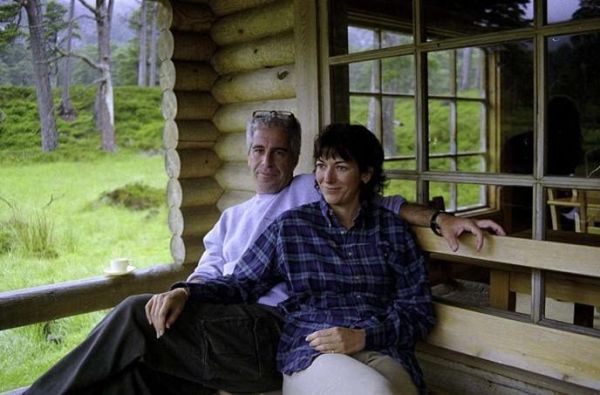
Global Investigations: Newly released documents connected to the Jeffrey Epstein case have brought renewed attention to historical email exchanges involving Ghislaine Maxwell and an unidentified individual referred to as “A.” These communications, dating back more than two decades, form part of a large set of legal files made public as part of a court-mandated disclosure in the United States. While the content of the emails has generated public interest and speculation, authorities and media organizations continue to stress that the presence of names or messages in the documents does not, by itself, establish criminal conduct.
Background of the Released Epstein Files
The documents are part of over eleven thousand records unsealed by the United States Department of Justice as part of ongoing transparency measures related to investigations into the late financier Jeffrey Epstein. These records include emails, contact lists, and internal correspondence gathered during multiple criminal inquiries. The release follows a congressional mandate requiring the full publication of materials by December 19, although officials have confirmed that not every document has yet entered the public domain.
These disclosures are intended to provide historical clarity rather than legal conclusions. Investigators have repeatedly noted that many individuals mentioned in the files were never charged, and references alone do not imply guilt or wrongdoing.
Email from Balmoral and the Use of an Alias
One of the most discussed messages is an email dated August 16, 2001, sent to Ghislaine Maxwell from an individual signing off as “A.” The sender stated that they were staying at Balmoral, a well-known royal residence in Scotland, and casually mentioned being at a summer retreat connected with the Royal Family. Within the same message, the sender asked whether Maxwell had found “new inappropriate friends,” a phrase that has attracted significant attention due to the broader context of the Epstein investigation.
The email was sent from an address using the title “The Invisible Man.” In a reply sent the same day, Maxwell wrote that she had only been able to find appropriate friends, adding a tone of dismissal rather than agreement. No direct evidence within the exchange points to illegal activity, but the informal language has been widely scrutinized.
Continued Correspondence and Travel Discussions
Further emails released from early 2002 show continued communication between Maxwell and the same alias. These later messages focus on potential travel plans to Peru, including references to meals, sightseeing, and horse riding. One forwarded message, originally written by a third party, included remarks about arranging social company, mentioning age and suitability in vague terms.
In a response sent from a second email address associated with the same alias, the sender expressed flexibility regarding travel arrangements and left social planning entirely to Maxwell and the local contact. The exchanges end with affectionate sign-offs, reflecting familiarity but offering no direct confirmation of criminal conduct.
Connections to Prince Andrew and Official Responses
A separate detail within the released files links one of the email addresses to a contact labeled Duke of York in Epstein’s phone records. This has led to renewed media inquiries involving Prince Andrew. Representatives for the Duke have been contacted for comment, and he has consistently denied any involvement in illegal activities connected to Epstein or Maxwell.
In previous public statements, Prince Andrew has said he did not witness or suspect any behavior that later led to Epstein’s arrest and conviction. Official records included in the release also clarify that he was not designated as a target of the US investigation, and that no evidence had been gathered indicating he committed any offense under American law.
Role of the US Department of Justice
Among the documents is a formal request from the US Department of Justice dated April 2020, seeking assistance from UK authorities to interview Prince Andrew. The request stated that he may have been a witness or participant in events relevant to the investigation, while simultaneously emphasizing that he was not accused of a crime. The outlined interview topics focused on his associations and recollections rather than allegations.
References to Donald Trump in the Files
The newly released materials also include references to Donald Trump. One internal email from 2020 suggested that Trump may have traveled on Epstein’s private jet more frequently than previously reported. Trump has publicly denied ever flying on the aircraft and has rejected any implication of wrongdoing. The Department of Justice has cautioned that some claims within the files are unverified and sensational in nature.
Understanding the Broader Context
The Epstein files represent a complex collection of historical records compiled over many years. Legal experts and investigators emphasize the importance of careful interpretation, noting that inclusion in documents does not equate to legal responsibility. As further records are expected to be released, public understanding will continue to evolve based on verified facts rather than assumptions.
-
NEET 2025 Face Biometric Trial Successful, Live Photo to be Mandatory in NEET-JEE from 2026; Know the Full Details
-
TECH EXPLAINED: How Much Water is AI Consuming? A New Study Reveals Shocking Findings. Here's the Full Information
-
We use these words every day, but do you know the meaning of "mobile" and "bank"?

-
Your WhatsApp account will be completely safe from hackers and scams, just follow these tips

-
This Healthcare Company is Launching the Last IPO of the Year; Find Out When You Can Bid.