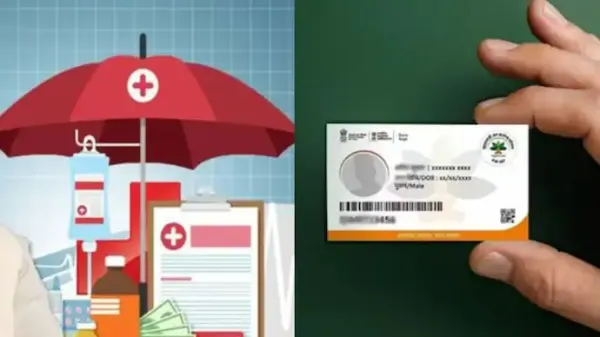
Ayushman Card Fraud Exposed: The Special Task Force of Uttar Pradesh has exposed a large-scale fraud involving the misuse of the Ayushman Bharat–Pradhan Mantri Jan Arogya Yojana, one of India’s most ambitious public healthcare programs. The investigation revealed how a well-organized network created thousands of fake Ayushman cards for ineligible individuals, resulting in financial losses amounting to several crores of rupees. Acting on concrete intelligence, the Special Task Force arrested seven people, including the alleged mastermind, from the Khargapur area of Gomti Nagar Extension in Lucknow.
Background of the Ayushman Card Scam
Ayushman Bharat–Pradhan Mantri Jan Arogya Yojana is designed to provide free medical treatment to economically weaker sections of society. However, this very objective made it vulnerable to exploitation. According to investigators, the fraud ring managed to generate more than 2,000 Ayushman cards for people who were not eligible under the scheme. These fake beneficiaries later availed free treatment at hospitals, directly draining public funds meant for genuine patients.
Investigation and Official Statement
Senior police officials confirmed that the scam came to light after a suspicious Ayushman card was detected during routine verification. Additional Superintendent of Police Vishal Vikram Singh stated that multiple teams are actively searching for other members who are still absconding. The probe uncovered deep-rooted manipulation of the digital verification system, along with systematic bribery of officials across different levels.
How the Cyber Café Became the Entry Point
The mastermind, Chandrabhan Verma, opened a cyber café in Khargapur in 2024. During a visit to Lohia Hospital for his sister’s medical treatment, he noticed posters advertising Ayushman card services with a contact number. This encounter introduced him to the illegal possibility of generating cards for ineligible people by paying a fixed amount.
Testing the Illegal Process
To verify the authenticity of the offer, Verma charged a customer Rs 6,000 and paid Rs 3,000 to the contact person. The card was successfully generated and later used for free medical treatment. This successful test convinced him that the loophole could be exploited on a large scale.
Digital Manipulation and Verification Bypass
The gang used a specific online portal meant for updating beneficiary details. Instead of using the OTP of the legitimate family head, they bypassed the process by entering the Aadhaar-linked OTP of the ineligible person being added. This technical manipulation allowed unauthorized names to be inserted into eligible family records without raising immediate suspicion.
Role of Implementation Support Agencies
Once a fake member was added, the application moved to the Implementation Support Agency for approval. Here, insiders played a crucial role. Rajesh Mishra, an executive at Medi Assist Insurance TPA Private Limited, allegedly approved applications in exchange for bribes. Initially, the cost was Rs 1,500 per card, which later increased to Rs 2,000.
Continuation After Staff Changes
After Rajesh Mishra left his position in August 2025, the approval work was reportedly handled by Saurabh Maurya and Sujit Kanojia, who were also associated with Medi Assist. The bribery rates remained unchanged, ensuring uninterrupted continuation of the fraudulent operation.
High-Level Approvals at State Health Agency
If an application was rejected at the Approving Authority level, it was forwarded to the State Health Agency. An associate named Vishwajeet Singh allegedly approved rejected cards for a higher bribe of Rs 5,000 per card. This step ensured that almost no fraudulent application was permanently denied.
Involvement of Hospital Staff
The investigation also pointed towards hospital-level complicity. Staff at certain hospitals reportedly failed to verify the authenticity of Ayushman cards during patient admission. This lack of scrutiny allowed fake beneficiaries to receive treatment without detection for a long period.
Arrests and Seized Evidence
The STF arrested seven individuals, including cyber café operators, agency executives, and hospital-linked staff. During raids, authorities seized mobile phones, laptops, ATM cards, cash, vehicles, and fraudulent documents belonging to 129 individuals. Seventy fake Ayushman cards were also recovered, providing strong documentary evidence of the scam.
Broader Impact and Ongoing Investigation
This case highlights serious vulnerabilities in digital welfare systems and emphasizes the need for stricter monitoring and accountability. The investigation is ongoing, and authorities believe more arrests may follow. Strengthening verification mechanisms and reducing human interference in approvals are now being discussed as preventive measures to protect public welfare schemes in the future.
-
8 Common Health Problems That Can Be Solved By Eating A Single Banana

-
Top Tricky Questions in UPSC Interviews Every Candidate Should Know

-
Is frequent mouth ulcers a stomach problem or something else? Doctor told! – News Himachali News Himachali
-
These 10 rules are going to change from the new year, will directly affect your pocket
-
Vastu Tips: These things eat the positive energy of the house like termites, throw them out now