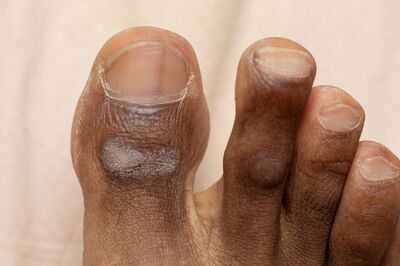
The NHS has issued a warning on its website, alerting people to a "common" issue. Urging people to seek help, it notes that if not treated, it could spread.
On its official website, it discusses athlete's foot - a "common fungalinfection that affects the feet." Whilst it can be treated, such as with cream from a pharmacy, it can return many times.
However, as mentioned, if left untreated, it could spread to your nails and cause a more severe fungal infection. Many people can contract it for various reasons - you can even catch it from others.
- Doctor's 10-minute rule warning over common habit - and when to see GP
- Spaghetti bolognese is a 'super easy' midweek meal with 1 surprise ingredient
You're more at risk of getting it if you:
- walk barefoot in places where someone else has athlete's foot – especially changing rooms and showers
- touch the affected skin of someone with athlete's foot
- have wet or sweaty feet
- have skin on your feet that is damaged
- Itchy white patches between your toes
- Sore and flaky patches on your feet - the skin can look red, but this may be less noticeable on brown or black skin
- Your skin may become cracked or bleed
- Your soles or sides of your feet may develop fluid-filled blisters
It's best to seek help straight away. Whilst not a medical emergency, "if it's not treated, the infection can spread to your toenails and cause a fungal nail infection."
You can get help from your local pharmacy or a GP, but it's "unlikely" that it will improve on its own. It's for this reason that it is wise to seek help and buy antifungal medicines (creams, sprays or powders) from a pharmacy which usually take a few weeks to work.
See a GP
You have athlete's foot and:
- treatments from a pharmacy do not work
- you're in a lot of pain
- your foot or leg is hot, painful and red (the redness may be less noticeable on brown or black skin) – this could be a more serious infection
- the infection spreads to other parts of your body such as your hands
- you have diabetes – foot problems can be more serious if you have diabetes
- you have a weakened immune system – for example, you have had an organ transplant or are having chemotherapy
Do
dry your feet after washing them, particularly between your toes – dab them dry rather than rubbing them
use a separate towel for your feet and wash it regularly
wear clean socks every day – cotton socks are best
Don’t
do not scratch affected skin – this can spread it to other parts of your body
do not walk around barefoot – wear flip-flops in places like changing rooms and showers
do not share towels, socks or shoes with other people
do not wear the same pair of shoes for more than 2 to 3 days in a row
do not wear shoes that make your feet hot and sweaty
-
Major Exam in Bihar Postponed, Was Scheduled for January. Read the Details

-
NBEMS Exam 2026: NBEMS releases exam calendar for 2026, check when which exam will be held?

-
UPSC Releases Final Results for CDS-I Exam, Here's How to Check Your Results

-
ChatGPT remembers everything you say, but these tricks will prevent it from learning too much about you.

-
PAN Card May Become Inactive After December 31st, These Important Tasks Will Be Halted, Link It Immediatel