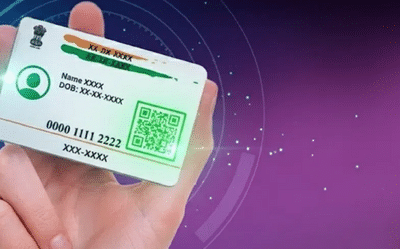
The Aadhaar card, India’s most widely used identity document, is set for its biggest transformation yet. The central government and UIDAI are preparing a new system under which details like address and date of birth will no longer be printed on the Aadhaar card. In the new format, the card will display only the holder’s photograph and a secure QR code.
Why details will disappear
UIDAI CEO Bhuvnesh Kumar explained that this move aims to protect citizens’ privacy and prevent misuse of personal information. Sensitive details such as address, father’s name, and date of birth are currently printed on the physical card, and people often share photocopies freely at hotels, events, and SIM stores. This increases the chances of data theft and misuse.
To prevent this, UIDAI plans to store all details digitally inside a secure QR code instead of printing them on the card. Kumar said, “If the card continues to carry details, people will keep treating it as the only document. This leads to misuse. Going forward, only a photo and QR code should remain.”
Goodbye to photocopy culture
The system of submitting photocopies of Aadhaar for hotel check-ins, events, or rentals is likely to end. A new rule—expected in December—will mandate online authentication only. In the future, Aadhaar will be verified digitally via number or QR code, making physical copies useless and preventing duplication of identity.
New Aadhaar ‘Super App’ coming soon
UIDAI is also preparing to replace the existing mAadhaar app with an all-new, more secure Aadhaar Super App. Developed under the Digital Personal Data Protection Act (DPDP Act), the app will roll out within the next 18 months. Key upcoming features include:
• Easy address updates from home
• Adding non-mobile family members
• Face authentication for mobile number updates
• QR-based entry and verification everywhere
Face will become the primary identity
Without printed details, verification will rely on technology. The process will work like this:
You show your QR code to a verifier’s OVSE scanner.
The system asks for face verification.
Once your face matches the UIDAI database, your identity gets instantly confirmed.
This system will also strengthen age verification—preventing minors from using fake IDs for restricted areas or services.
-
Suman Pahuja: Weight loss inspiration and diet plan

-
Dengue in Diabetes Patients: How dangerous is dengue for diabetes patients? Researchers advised special care and vaccine

-
Prince William and Prince Harry could reunite for Princess Diana’s 30th anniversary

-
Progress in business: Know the true difference between Satvik worship and Tantrik experiment…

-
Daily Tarot Horoscopes For Monday, July 27, 2026