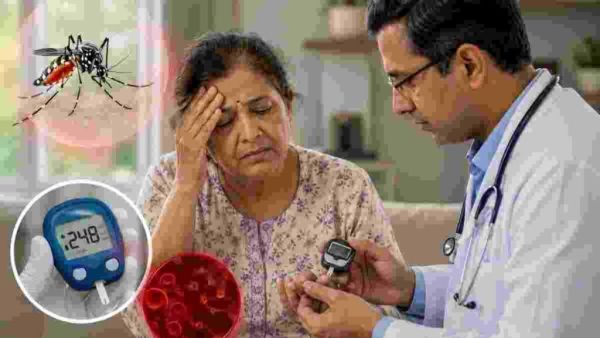
With the monsoon season, there is a sharp rise in dengue cases across the country. Along with common people in this season Type-2 Diabetes Patients suffering from diabetes need to take special precautions.
According to a review paper published in the ‘International Journal of Diabetes & Technology’, not only does the dengue virus spread faster in diabetic patients, but their risk of reaching a serious and life-threatening condition is also much higher than that of normal people.
Why is dengue more dangerous for diabetic patients?
Famous Diabetologist Dr. Jothidev Kesavadev and Jandra Healthcare Dr. Rajeev Kovil According to, due to high blood sugar, the immune system of the patients is already weak. In such a situation, when a dengue mosquito bites:
-
Drop of platelets: Platelet count in the body can fall down suddenly and rapidly.
-
Internal bleeding: The possibility of internal bleeding increases from the gums, nose or internal parts of the body.
-
Dengue Shock Syndrome: As the patient’s condition worsens, the risk of dengue shock syndrome increases manifold, which can prove fatal.
-
Additional risks: Not only diabetes, but the increasing age of the patient, obesity, kidney disease, high blood pressure and uncontrolled blood sugar (Uncontrolled Glycemic Control) also make the situation serious.
Why is dengue vaccine important for diabetic patients?
According to Dr. Kesavadev, more than 10 crore people in India are affected by diabetes and the blood sugar level of most of them is not properly controlled. In such patients, the risk of developing complications from any infection is 2 to 4 times higher.
Researchers and experts suggest that diabetes should be included in the regular healthcare routine of diabetes patients living in dengue affected areas. Dengue Vaccine should be seriously considered to reduce the risk of serious infection and mortality.
Which symptoms should not be ignored at all?
1. Early common symptoms:
-
high fever
-
Severe pain in joints, muscles and body
-
Headache and pain behind the eyes
-
Vomiting, nausea or skin rashes
2. Serious/emergency symptoms (contact doctor immediately):
-
severe and persistent pain in the stomach
-
persistent vomiting
-
bleeding gums or nose
-
extreme drowsiness, weakness, or dizziness
-
sudden decrease in urine volume
-
Sudden drastic fluctuations in blood sugar level
Important measures for prevention and management of dengue
-
Protection from mosquitoes: Wear full sleeve clothes and use good quality mosquito repellent.
-
Prevent waterlogging: Do not allow water to accumulate in pots, coolers or open utensils in and around your house.
-
Blood Sugar Monitoring: Check your sugar level regularly and try to keep it under control.
-
Drink plenty of water: Keep the body well hydrated and take a satvik and balanced diet.
-
Change in medicines: According to Dr. Vijay Negalur of KIMS Hospital, in case of dengue, temporary adjustments in the dosage of diabetes medicines may be needed depending on the hunger, dehydration and health of the patient. Therefore, do not take or stop any medicine without doctor’s advice.
-
Speed, edge and hunting… Mayank Yadav again took the wicket on the first ball, record equal in just 6 matches

-
India's 4x200m freestyle relay team finishes sixth; Australia win gold

-
Word of the day: Bollard

-
Exclusive - Juhi Mui actor Vijayendra Kumeria on his criteria for picking new roles: 'I don't enjoy repeating myself'

-
Inside Kriti Sanon's duplex sea-facing penthouse worth Rs 78 crore, which has a clubhouse, yoga desk, swimming pool and more