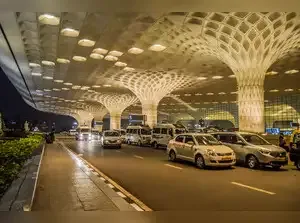
New Delhi: Passengers using the airports at Delhi and Mumbai may have to pay significantly higher user charges, which may surge up to 22 times following an order by the Telecom Disputes Settlement and Appellate Tribunal (TDSAT).
In its order, the tribunal redefined the formula for calculating tariffs for the five-year period between FY09 and FY14, which has resulted in a situation where the two airports are now owed an amount of over ₹50,000 crore, due to under recovery in those years. The amount is to be collected in the form of passenger fees, landing and parking charges that are likely to end up making tickets more expensive, seen hindering passenger growth.
The order has been challenged in the Supreme Court by the Airports Economic Regulatory Authority (AERA), domestic airlines as well as foreign ones such as Lufthansa, Air France and Gulf Air. The case will be heard by a bench of justices Aravind Kumar and Nilay Vipinchandra Anjaria on Wednesday.
People aware of the development said that if the order is implemented, user development fee (UDF) levied on domestic passengers at Delhi airport may increase to ₹1,261 from ₹129, and that for international passengers to ₹6,356 from ₹650. At Mumbai airport, this could rise to ₹3,856 from ₹175 for domestic passengers.

It would be ₹13,495 from ₹615 for international flyers in the financial capital.
TDSAT is the appellate tribunal responsible for adjudicating disputes and appeals related to both telecom and airport economic regulatory matters.
Government officials are worried such a sharp increase in charges will hit passenger growth. “Irrespective of the merits of the order, passengers shouldn’t become victims of protracted legal battles between airports and airlines,” said a government official. “This will be a body blow to passengers as overnight, there will be a massive ticket price increase. Airports are natural monopolies and airlines will have no other option but to pass on the charges to passengers.”
The dispute began almost two decades ago, when the first round of airport privatisation took place in 2006.
While AERA fixes charges for airports for five-year slots based on investments made by the operator and revenue earned, the regulator was only set up in April 2009. That’s about three years after ownership of airports passed from Airports Authority of India (AAI) to DIAL and MIAL. DIAL is part of GMR Group. MIAL, now run by Adani Group, was with GVK at the time.
Since data on assets and investment prior to the handover were unreliable, an agreement between the government and the two private operators made in 2006 provided for the Hypothetical Regulatory Asset Base (HRAB). This determined the asset value for the period from April 1, 2008, to March 31, 2009. HRAB reflects the notional value of assets used by the regulator to set tariffs, or charges, when the actual amount is not available.
While fixing the tariff for FY09-14, AERA only took into account the value of aeronautical assets — infrastructure and facilities directly required for flight operations and passenger processing, such as runways, terminals and check-in counters.
However, DIAL and MIAL moved TDSAT, saying AERA must consider the value of non-aeronautical assets too. These assets include the likes of duty free shops, car parking and lounges, among others.
AERA’s methodology — that HRAB applied only to aeronautical assets — was upheld by the tribunal in 2018 and the Supreme Court in 2022. The two airport operators then filed an application in the Supreme Court citing a 2011 letter by the ministry of civil aviation, seeking to reopen the case.
The court passed the matter back to the tribunal, which, in July, overturned its previous order and supported the airport operators, saying non-aeronautical assets should have been considered by AERA.
The tribunal said in its defence that during the period under dispute, airport tariffs were being calculated based on the value of non-aeronautical assets as well.
In its order, the tribunal redefined the formula for calculating tariffs for the five-year period between FY09 and FY14, which has resulted in a situation where the two airports are now owed an amount of over ₹50,000 crore, due to under recovery in those years. The amount is to be collected in the form of passenger fees, landing and parking charges that are likely to end up making tickets more expensive, seen hindering passenger growth.
The order has been challenged in the Supreme Court by the Airports Economic Regulatory Authority (AERA), domestic airlines as well as foreign ones such as Lufthansa, Air France and Gulf Air. The case will be heard by a bench of justices Aravind Kumar and Nilay Vipinchandra Anjaria on Wednesday.
People aware of the development said that if the order is implemented, user development fee (UDF) levied on domestic passengers at Delhi airport may increase to ₹1,261 from ₹129, and that for international passengers to ₹6,356 from ₹650. At Mumbai airport, this could rise to ₹3,856 from ₹175 for domestic passengers.
It would be ₹13,495 from ₹615 for international flyers in the financial capital.
TDSAT is the appellate tribunal responsible for adjudicating disputes and appeals related to both telecom and airport economic regulatory matters.
Government officials are worried such a sharp increase in charges will hit passenger growth. “Irrespective of the merits of the order, passengers shouldn’t become victims of protracted legal battles between airports and airlines,” said a government official. “This will be a body blow to passengers as overnight, there will be a massive ticket price increase. Airports are natural monopolies and airlines will have no other option but to pass on the charges to passengers.”
The dispute began almost two decades ago, when the first round of airport privatisation took place in 2006.
While AERA fixes charges for airports for five-year slots based on investments made by the operator and revenue earned, the regulator was only set up in April 2009. That’s about three years after ownership of airports passed from Airports Authority of India (AAI) to DIAL and MIAL. DIAL is part of GMR Group. MIAL, now run by Adani Group, was with GVK at the time.
Since data on assets and investment prior to the handover were unreliable, an agreement between the government and the two private operators made in 2006 provided for the Hypothetical Regulatory Asset Base (HRAB). This determined the asset value for the period from April 1, 2008, to March 31, 2009. HRAB reflects the notional value of assets used by the regulator to set tariffs, or charges, when the actual amount is not available.
While fixing the tariff for FY09-14, AERA only took into account the value of aeronautical assets — infrastructure and facilities directly required for flight operations and passenger processing, such as runways, terminals and check-in counters.
However, DIAL and MIAL moved TDSAT, saying AERA must consider the value of non-aeronautical assets too. These assets include the likes of duty free shops, car parking and lounges, among others.
AERA’s methodology — that HRAB applied only to aeronautical assets — was upheld by the tribunal in 2018 and the Supreme Court in 2022. The two airport operators then filed an application in the Supreme Court citing a 2011 letter by the ministry of civil aviation, seeking to reopen the case.
The court passed the matter back to the tribunal, which, in July, overturned its previous order and supported the airport operators, saying non-aeronautical assets should have been considered by AERA.
The tribunal said in its defence that during the period under dispute, airport tariffs were being calculated based on the value of non-aeronautical assets as well.