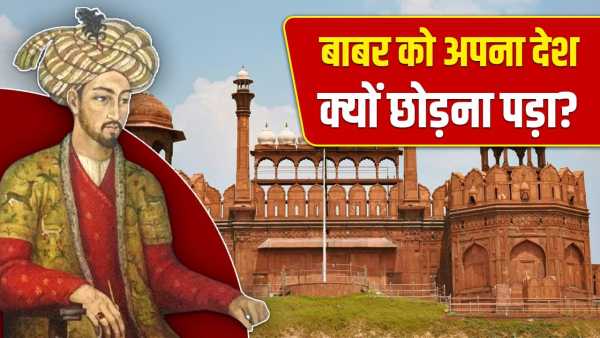
After defeating Ibrahim Lodi in the first battle of Panipat in the year 1526, Babur established the Mughal Empire in India.
Mughals have an important place in Indian history. Before the arrival of the British, the throne of Delhi was ruled by the Mughals, whose empire spread far and wide. After defeating Ibrahim Lodi in the first battle of Panipat in the year 1526, Babar established the Mughal Empire in India, the Mughals continued to rule India for the next three hundred years. However, this was the same Babur who was ousted from his own empire located in Uzbekistan. After this, he tried several times but could not take back his kingdom permanently, so he moved to Kabul-Kandahar and finally came to India and established a new empire. Let us know who ousted the Mughal ruler Babar from his Uzbekistan empire?
Zahiruddin Muhammad Babur, who established the Mughal Empire in India, was born on 14 February 1483 in Anjidan city of Fergana, which is part of modern Uzbekistan. At one time this Uzbekistan was a part of the Soviet Union. Babar was a descendant of Timur from his father's side and Mongol Genghis Khan from his mother's side. Babar was called Mughal because of his connection with the Barlas tribe of Mongolia. However, this tribe left no stone unturned in adopting Persian and Turkish culture and language, because it was also related to the Turk Timur. Babar's father Omar Mirza was the Amir (ruler) of Fargana. His mother's name was Kutlak Khan.
When Babar became the ruler of Fargana
This is the year 1494. Babar's father Omar Mirza passed away. Babar was very young at that time but due to his height, he was considered very strong. Therefore, he was made the ruler of Fargana in place of his father. However, Babar's uncles, cousins and maternal uncles also kept an eye on his power. Taking advantage of Babar's young age, his uncles soon ousted him from the throne. After this Babar had to spend many years in exile. Then only some farmers and relatives supported him.
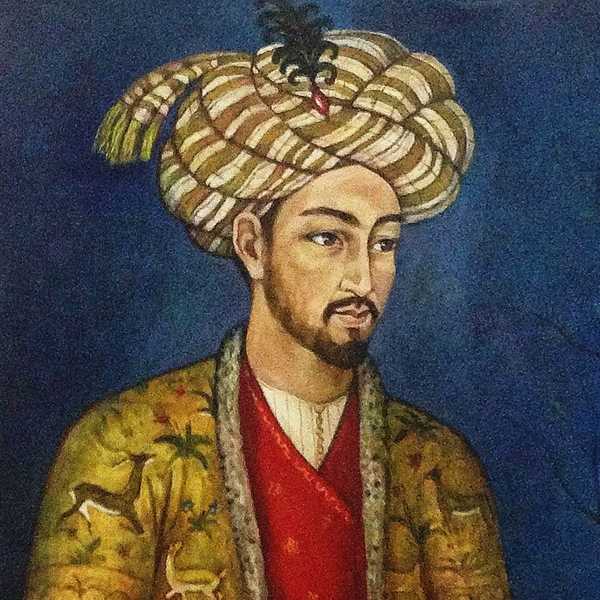
Babar laid the foundation of the Mughal Sultanate in India.
Uzbek ruler Shaibani Khan expelled from Samarkand
While making preparations while in exile, Babur attacked the Uzbek city of Samarkand in the year 1496. Seven months later, in the year 1497, he captured Samarkand, which was famous for the Silk Route. Meanwhile, while Babur was engaged in the battle of Samarkand, a feud broke out in Andijan between his uncles and local chieftains and a military chieftain captured Fargana. Seeing this, Babar set out to save his birthplace. Due to this, his dominance over Samarkand ended and his army also left him and Fargana also continued to be lost.
However, by the year 1501, he again captured Samarkand and Fargana. But this time he was challenged by Uzbek ruler Muhammad Shaibani. Shaibani Khan badly defeated Babar in the field of Samarkand. In this way Babar's rule ended in Uzbekistan.
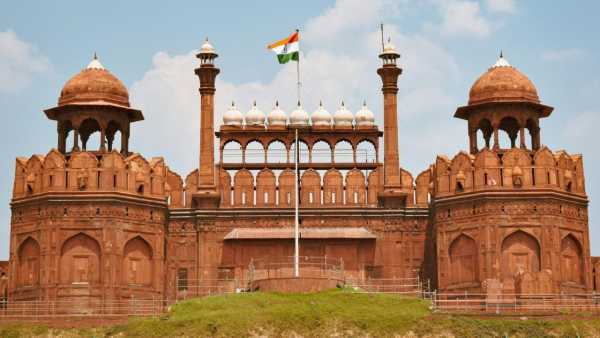
Babar and his generations ruled India for more than 300 years.
Got a chance to rule again
After losing Samarkand and Fargana, Babar escaped with some of his trusted soldiers and kept trying to form a new army for three years. In the year 1504 AD, he crossed the peaks of Hindukush mountain and captured Kabul. At that time, Herat was ruled by Hussain Baikrah of Taimur dynasty, with whom Babar made a treaty that he would help Muhammad Shaibani in recovery. However, when Hussain Baikrah died in the year 1506, Babar captured Herat. Due to lack of resources, he had to leave Herat and return to Kabul, where within two years one of his leaders rebelled and Babar had to flee Kabul also.
Soon Babur again captured Kabul. On the other hand, in the year 1510, Ismail I, the ruler of the Safivi dynasty of Persia, defeated Muhammad Shaibani and killed him, so Babar made a compromise with Ismail I. In this way, once again Babar got the opportunity to rule Samarkand as the representative of Ismail I.
Uzbeks again snatched Samarkand
Meanwhile, Babur conquered Bukhara with the help of Ismail I and the local people welcomed him as he was of Taimur's lineage. After this, Babar stopped taking help from the ruler of Persia and in the year 1511 again attacked Samarkand and won it. Here too, people welcomed Babar for liberating them from the Uzbeks, but this situation did not last long and within eight months the Uzbeks again captured Samarkand. After this Babar started focusing his attention on the southern part of Asia.
Meanwhile, India was also attacked many times. Ultimately, when the Governor of Punjab invited Babar against Ibrahim Lodi, he attacked and defeated Lodi in the battle of Panipat, ended the Delhi Sultanate and established the Mughal Sultanate in India.
Despite this, Babar's attachment to Kabul and Fargana remained. That is why later his tomb was also built in Kabul. Even after Babar, the Mughals never succeeded in confronting the Uzbeks. Kabul and Kandahar also kept coming under the control of the Mughals.
-
Nagaland Statehood Day 2025: 7 Extraordinary Cultural Traditions That Truly Set The State Apart

-
Why e-Vitara Is A Born EV: Maruti's Partho Banerjee Explains Constraints Of ICE Platforms

-
NSE, BSE Holiday List December 2025: Markets Shut For 9 Days, Check Complete Calendar

-
JEE Main 2026: Application Form Correction Window Open at jeemain.nta.nic.in, Know How to Make Changes

-
India Has Lived Democracy: PM Modi Ahead Of Parliament Winter Session
