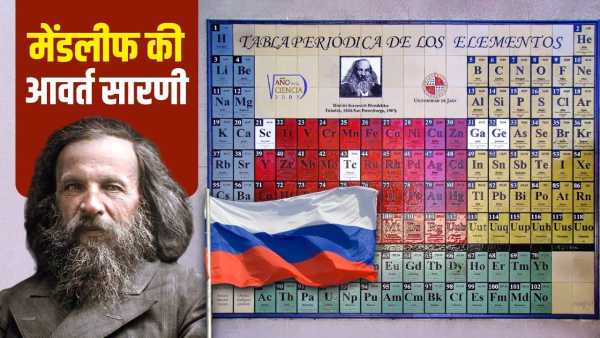
Russia has come into limelight due to President Vladimir Putin's visit to India.
Putin's Visit to India: The friendship between India and Russia is years old. Russian President Vladimir Putin's two-day visit to India is proof of this. Russia has created history from the world of space to the defense sector. The Russian scientist also created a thing which is still taught compulsorily to the students studying chemistry in India. That is the periodic table, which contains all the chemicals that have been discovered so far.
Interestingly, the foundation of the Periodic Table was laid by a Russian chemist Mendeleev. Russian chemist Dmitri Mendeleev invented the first version of the periodic table in 1869 by arranging chemical elements based on their atomic masses and properties. Let us understand in simple language what is the periodic table, how special was this discovery and what is its role?
What is periodic table?
If understood in simple language, periodic table is a table with the help of which special information present in different chemicals is obtained. Like its chemical properties, atomic number and number of protons. For example, group 1 includes alkali metals like sodium, potassium. At the same time, group-18 contains inert gases like helium and neon. With the help of periodic table, many things including chemicals and chemical reactions can be known.

periodic table.
When and how was it made?
Russian chemist Dmitri Mendeleev prepared the initial structure of chemicals in 1869 on the basis of their properties. This was called periodic table. However, it was not easy. Mendeleev was studying the atomic weights of chemicals being discovered by European scientists in the 1860s. In the initial phase he had got information about 63 elements.
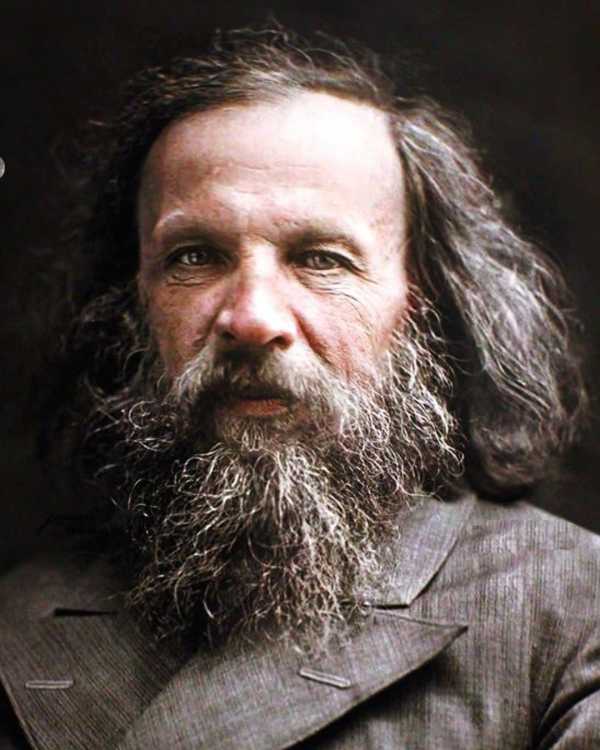
Russian chemist Dmitri Mendeleev.
Dmitry started arranging these elements by writing them on cards so that chemicals with similar properties would stay together. When an element did not fit in its place, Mendeleev left a blank space in the table and predicted that this element had yet to be discovered. He even wrote the properties of these unknown elements.
Mendeleev's ideas were accepted throughout the world. He prepared the initial structure of the periodic table but the work of completing the periodic table was done by Henry Moseley. Elements were arranged on the basis of atomic number instead of atomic mass.
The periodic table is a part of the chemistry subject of the Indian education system. Students studying this subject definitely read the table. This table explains to them the properties of chemical elements.
-
Hyderabad’s closest Cruise destination, just three hours away

-
Rachakonda, Cyberabad police websites hacked for a week; restored

-
I'm A Celeb star on unseen filming 'chaos' as they detail panic over safety

-
Stardom Meets Startups: Here Are The Top Celebrity Startup Investors Of 2025

-
Five reasons Netflix needs to cut all ties with Meghan Markle immediately