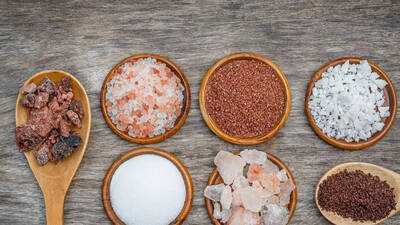
Salt is undeniably one of the most essential elements used in day-to-day cooking, but little do we know that there are three different types of salt and each one comes with its own set of advantages and disadvantages. For years, most people have grown up using regular salt, but there are many unique types of salt that deserve a try! Here are three common types of salts you must know before adding them to the daily diet.
Why these salts?
Much like regular salt, there are other two types of salt that are considered as healthier alternatives to regular salt, but are they actually healthy? Let’s find out! Well, himalayan salt and table salt are often considered as healthy alternatives to regular salt, but these two varieties often pose long-term health risks when consumed in excessive amounts. This is because of the excessive sodium intake , which can lead to hypertension, heart disease, stroke, and kidney strain, as both exceed 97% sodium chloride with no meaningful difference in core risks.
All about Himalayan salt?
Himalayan salt lacks iodine fortification, risking thyroid disorders like goiter over years, while table salt's additives may cause minor digestive irritation in sensitive individuals. Unrefined Himalayan salt's trace minerals like iron, magnesium that offer negligible benefits and potential heavy metal contamination from mining, but evidence shows no superior safety profile.Both salts contribute to high blood pressure when exceeding 2,300mg daily sodium (about 1 tsp), increasing cardiovascular events by 20-30% long-term. Himalayan salt's coarser grains lead to underestimation of intake, amplifying risks without added electrolytes balancing it significantly.
Iodine Deficiency
Table salt's iodization prevents iodine shortfall, crucial for metabolism and fetal brain development; long-term Himalayan use correlates with higher hypothyroidism rates in non-fortified regions. Switching entirely risks 10-20% prevalence in iodine-poor areas.
Contaminants and Additives
Himalayan salt may harbor lead or microplastics from ancient deposits, though levels stay below safety thresholds; table salt's aluminum-based agents pose allergy risks but ensure purity. Neither shows cancer links from long-term use.
Recommendations
Limit total salt to 1,500-2,300mg daily regardless of type; use Himalayan for flavor if supplementing iodine elsewhere, or iodized table for reliability. Monitor blood pressure and thyroid via annual checks.
Disadvantages
Long-term use of Himalayan salt and table salt presents largely similar health risks, principally due to their high sodium content. Excessive intake of either type can lead to increased blood pressure, kidney strain, fluid retention, and elevated risks of heart disease and stroke. However, Himalayan salt lacks significant iodine, essential for thyroid function, so prolonged exclusive use without iodine supplementation may contribute to iodine deficiency and related thyroid issues. In contrast, iodized table salt helps prevent such deficiencies due to added iodine. Additionally, Himalayan salt can contain trace impurities like lead or arsenic from natural mining sources, but these are generally within safe limits if sourced well. Table salt may include anti-caking agents, which some sensitive individuals might react to, though these are considered safe at usual consumption levels. Overall, moderation and variety with attention to iodine intake are key to minimizing health risks from both salts.
-
Inside the World Cup 2026 draw including decision that could cost UK millions

-
'Friendsmas' grows in popularity as nearly a third of adults to celebrate this year

-
Instagram down: Global outage as hundreds of users face 'audio unavailable' error

-
K'taka to declare Sep 13 as Women Employees' Day, announces CM Siddaramaiah

-
ITV I'm A Celebrity's Martin Kemp 'to miss final' as star dealt blow before live show