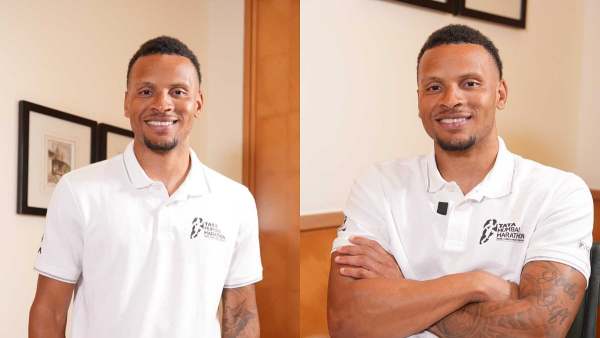
Seven-time Olympic medallist Andre De Grasse said he hopes to compete at the 2028 Los Angeles Games, calling Tokyo 2020 his most memorable Olympics. Speaking in Mumbai ahead of the Tata Mumbai Marathon 2026, the Canadian sprinter reflected on his 200m gold, intense training, and gratitude for representing his country across three Olympic Games.
Mumbai: Andre De Grasse is one of the greatest and most accomplished athletes of this generation and a seven-time Olympic medallist from Canada, who has relentlessly chased excellence on the track.
In the 'Maximum City' for the Tata Mumbai Marathon 2026, the sprint sensation from Toronto spoke exclusively to The Free Press Journal in a candid, free-wheeling interview.
Excerpts..
Just looking at your amazing career so far, you know, with seven Olympic medals, including gold. How do you see your entire Olympic journey up until now?
Yeah, I mean, I feel like I've had a great run. I'm looking forward to probably doing one more Olympics in 2028, LA Olympics, before, you know, it's all said and done. But, yeah, I've had a lot of success, you know, coming into my first Olympic games in Rio, all the way to Tokyo, to Paris. So, I'm just happy that I've had such great opportunities to represent my country at the highest level. And not a lot of people can even get three Olympics. So, I'm really excited. I'm very grateful and very thankful to be able to do that. And I'm hoping, like I said, to, you know, get one more. So, that's the plan.
Which Olympics, in your opinion, was the most memorable one for you? You know, you've had your experiences. So, if you could recollect and say which was the most memorable one.
That's a great question. I mean, all of them have a special place in my heart. I mean, it's hard to say which one, like, is the top ranked. But, if I had to choose, then, you know, I would say, probably, Tokyo. I mean, I won my first gold medal. The 200 metres. And that was a special moment. But, I mean, all of them have been so special. I mean, Paris, winning the 4x100 with my team. My first one, 2016, racing against Usain Bolt. So, like, all of them hold such a special place in my heart. But, yeah, I would say, if I had to choose, maybe Tokyo. But, just by a little bit. Just a little bit (smiles).
I was just doing a bit of research on your career, Andrew. And, you know, I just figured that you're the first Canadian sprinter to win three medals in a single Olympics. And it happened at Tokyo in 2020. What makes it even more incredible is your 200 meters gold at Tokyo, which is the first track gold for Canada in 25 years. And the first 200 meters gold for Canada in 93 years. So, it was an incredible achievement winning that gold in the 200s. So, what was running through your mind when you did that?
Yeah..I was in shock. I was a little bit in disbelief. It felt like an unreal moment because, you know, you train so hard. You work so hard to be able to accomplish that. And for it to finally happen, it didn't really sink in, like, at that moment. Like, I think the next day, like, when I got my actual medal on the podium and I heard the national anthem, that's when I'm like, oh, wow, like, I actually did it. So, for me, that was really just like a special moment for me. I was so happy. I was so excited. You know, my family, my friends, like, they're all texting me, calling me.
So, yeah, that was just a dream. Like, a dream come true for me. So, I mean, to be able to do that on a high level and, you know, it's been a long time since anybody has done that in Canada. And then to be able to create history like that, I couldn't ask for any more. So, I'm just really grateful and, you know, for everybody, like, not just myself, but everybody that's helped me get there to that moment.
And what kind of preparation went into that Olympics? What was the kind of training you had or what kind of mindset were you in at that point of time?
Yeah, the training at that time, it was very intense. You know, I had to go away from, you know, my family for a long time. We did a training camp in Europe. We spent a lot of time there, two, three months. Then, you know, having to go to Tokyo and spend some more time there.
So, yeah, we were just training six days a week. Right. At the track, you know, five, six, seven hours a day. So, that was a pretty, like, intense moment, intense time in my career. But I knew it was going to be a, you know, I had to do something special. You know, I had to make sure that I had all the pieces together, my team, my physio, my coach, everybody, like, just in my corner helping me to get there because, you know, I felt like I was in great shape. I felt like this was the time for me to do something special. I had just ran a personal best previous to the Tokyo Olympics. I was winning Diamond Leagues. I was winning major meets. So, I felt like I was ready to go, and I didn't want to miss that moment. So, that was kind of a special time for me during that year. And especially, you know, during a pandemic, during that time, I had to make sure that I was just, like, focused at all times.
How much of a role did your coach Rana Reider play during that period, you know, when you were so successful and, you know, you were winning pretty much everything?
Yeah, my coach, my physio, my doctor, just my whole team. Like, everybody played a big role in helping me get to that moment. You know, they're just like, Andre, you know, this is the time. You're running these amazing times in practice. Now, you got to go out there and show the world and prove it. Yes, and execute. So, you know, I didn't want to let them down because, you know, we put in all this hard work, put in all this training. And yeah, I mean, it all came together at the right time. So, I mean, I was super happy, super excited. And yeah, it was just really just a special time. I remember that year, it was definitely, the training was very hard. It was very rough, but it all paid off in the end.
At the 2016 Rio Olympics, you ran the legendary Usain Bolt pretty close and both of you, you know, that famous picture of both of you grinning at each other. Just tell me a little bit about that. And how was that moment?
Yeah, I remember. So, that moment was, yeah, it was special because, first of all, at that time, you know, social media was now taking off, but I wasn't really on social media. I was just kind of just focused on my race. So, I don't even like, I didn't even know that that was going on at that time until like afterwards. And then I saw the pictures. So, I didn't even know, but I remember just even before that race, like my coach was telling me, you know, hey, Andre, you need to qualify top two to make it to the finals. He's like, just do enough to get to the finals, you know, run a hard 150 meters and just see where you're at. Look around, make sure you're okay. He's like, obviously, you have Usain Bolt in your heat, so you need to like push it a little bit because, you know, he's going to be running hard. And yeah, so I remember I just coming off that turn and I got about 160, 170 in and I only saw Usain Bolt there on the side of me and I saw nobody else. And I was like, oh, well, time to like kind of save some energy for the finals. So, I looked around and of course, he's doing the same thing looking around as well. And it was just one of those moments where like, oh, like he was smiling, I was smiling and we're like trying to see who's, you know, who's going to, you know, try to save as much energy as possible. So, I just remember after the race, like he was kind of like waving his, you know, waving his hand and waving his finger.
Just talking about Bolt, Andre, what is it that makes him so special?
Yeah, I mean, he's an outlier. I mean, he's 6'6", 6'7", I believe. I remember the first time I raced him in 2014, you know, watching him on TV as a young kid in 2008, 2012 at the Beijing or London Olympics. You know, you don't realize how, as a kid, how tall a person is. But now, two years later, in 2014 at the Commonwealth Games, I'm lying up beside him in a 4x100 metre relay. And I'm looking up and I'm like, oh, wow, this guy's pretty tall. This guy's like a basketball player almost, you know? So, I was like pretty nervous at that time racing against him. But I knew that one day I was like, I want to be, you know, just as good as him or be one of the best, the way the crowd kind of just cheers him on. Because he's the benchmark, he set that. Yeah, yeah. So, he definitely was a very, like, inspiration for me to, you know, be one of the best. And, like, I wanted to... And even him, like, just giving me advice and throughout the year saying, you know, hey, I have what it takes to be one of the best.
That gave me a lot of confidence in myself to do good things. Just to get that appreciation from him.
Andre, from 2015 until 2023, you won a medal in every Olympic and World Championship final. You know, you've been that consistent.
How do you manage to achieve that kind of consistency? How do you sustain that?
Yeah, I mean, it's a lot of work. It's tough. But, yeah, I just try to work hard. I mean, I try to believe in myself. Of course, having that team around me with my coach, knowing when to, like, have a, knowing when to peak at the championships, you know, he's always, like, telling me, don't worry, stay patient. You know, sometimes you might have some early races where it's not going great, so you're not running as fast. But he said, you know, just don't worry, you know, calm. You know, we're going to, when the championships come, we're going to run fast.
We're going to do, we're going to do good things. You just have to continue to trust the process. So, for me, that was all I did. I just meant, you know, listen to my coach, make sure that I listen to my body as well, and just have a good support system around me to make sure that when I get to the games, I have everything that I need, nutrition, hydration, make sure I get enough sleep. And those things all played a role.
So, when I was able to do that and go to the championship, I knew I was ready. And once I put on that Canada kit, and I represent my country, and I go out to the stadium, like a light bulb just switches, and I know it's game time, and I know I'm ready to compete.
Just tell me about your family, and, you know, how much of a role have they played? What was the motivation for you to get into athletics?
I can tell you the story. I mean, I got into athletics very, very late. I was about 16, 17 years old at the time. I came from like a basketball, soccer background, or as you guys call it football. I just remember the one day. So, I was going on the bus. We have like the, you know, the bus. I don't know if you guys have buses here. Yeah, we do. We do, yeah. The transit for the streets. And I was on my way going home, and I bumped into one of my friends. At the time, and he was going to track practice. We were catching up, and he was telling me, hey, you know, where are you going? I said, I'm going home. I mean, where are you going? He said, I'm going to track practice. And he's like, I said, you're going to track practice? I'm like, you can run fast? Like, you're fast? He's like, yeah, I'm very fast. So, he was asking you. Yeah, and I was like, no way you're fast. Like, I don't believe that. So, he's like, no, come out to the track meet next week, next weekend on Saturday, and come run. Let's race. And, you know, as a kid, you're like, okay, all right, I'll take you up on that.
And, yeah, so I remember going back to my school. I asked my professor and said, hey, can I join the track team? And they said, yeah, come. Yeah, we have space. And the next week later, I went to the track meet, and I had no idea, like, how track was at this time. I mean, of course, I watch it on TV, but I never saw it physically in person. And I see everybody lining up in spikes, and they have, like, all this competitive, you know, gear on.
And I was like, I don't have that. You know, I have just my running shoes at the time. So I had to ask a friend.
I said, hey, can I borrow a pair of your spikes for the race? He said, yeah, no problem. You know, I borrowed the spikes. And now I go to the race, and I see starting blocks, and I have no idea how to use these starting blocks. So instead, I just stand up straight and, you know, like kind of like in, I don't know, a baseball position. I stand to the left, and I look at the starting block. So you were clueless. I was clueless. Yeah, I had no idea. And I ended up still winning. I ended up still beating my friend, and I ran 10.90 seconds. And that's when my first coach, Tony Sharp, he was an Olympian in the 1984 LA Olympics. He said, hey, kid, hey, Andre, you are very fast. Like, I've never seen anything like this before. He said, you should come join my track club. And I joined the track club, and kind of that's how I got into the sport.
And now what's the next big target for you? I mean, L.A. Olympics is two years away. So, you know, focusing on that now?
Yeah, I mean, this year, of course, we have the Commonwealth Games. So I'll try to, I think I'm going to participate in the Commonwealth Games in the U.K. I've always loved competing in the U.K. So I think that's the plan for this year. And then next year is the World Championships in Beijing, in China. So that would be kind of like, you know, helping me, a stepping stone to get ready for LA Olympics. And, yeah, so I want to kind of run these next two years and prepare myself to get ready for those LA Games. But definitely, yeah, that's the goal. I still want to be one of the best in the world, one of the fastest in the world. And I know I've got to put in, continue to keep putting in that work.
And how's your training and preparation going for the World Championships, for the Olympics?
Yeah, training's been going good so far, you know. But the important thing right now is health, you know. Health is wealth. And, yeah, just trying to stay healthy, make sure that I'm doing all the right things that I'm used to doing. Making sure I'm learning from my mistakes. But, yeah, I've been having a good time. I've been having fun, like sport. The thing about running is it's always fun, you know. It's always a challenge every single time, you know. You learn something new every day about yourself, about the sports. And that's what keeps you on your toes. So, for me, I mean, I've been having, you know, great success, of course, like you said. And I want to continue to just continue to keep doing that.
Andre, in every athlete's life, you know, there's always a period when you have those injury issues. And, you know, you had the same as well. You had that two-year break. How did you cope with that?
Yeah, that was tough, you know. I thought about quitting a lot of times and, you know, quitting the sport. And, you know, not knowing that if I would ever be the same athlete again. Thinking that it's over. As we would say, you know, it's done, you know. And, you know, kind of think about doing something else at the time. But I think, like I said, my support system never let me quit. They said, you know, we're going to figure this out. We're going to help you. We're going to help you get back. We're going to see different doctors. You're going to, you know, do the rehab. And you're going to have to trust the process. So, every day I would do that. I would, you know, of course, take one step forward, two steps back. And eventually, I got better and better and better. And then, of course, it took a while. It took a two-year period to figure that out. But then, eventually, the next following year in 2019, I was able to get back on the podium in Doha and win a 100-meter and 200-meter medal.
India is going to host the 2030 Commonwealth Games. And we're also planning to bid for the 2036 Olympics.So, what are your thoughts on that?
Yeah, I mean, that would be amazing. I would love to come back to India again for the Commonwealth Games, like as an ambassador maybe or something like that. So, that would be pretty cool. I mean, I don't know if I'll be running by then (chuckles). But I think LA would be, you know, kind of my last Olympic Games. But we'll see. By 2036, India, I don't think I'll be running. I'll be like over 40. But, yeah, maybe the Commonwealth Games in 2030, maybe there's a chance I'll be an ambassador. Or maybe I might still be running. Who knows? But, yeah, I look forward to it. I'm excited to see that come to life because I heard that it's been a long time since you guys opened a sporting event. 2010 was the last where we hosted the Commonwealth Games. Yeah, that was New Delhi.
-
Thank you, Trump tells Iran for halting execution of political prisoners
-
PCOS in Adolescence: How Early Care Protects Your Future Fertility

-
10 Relationship Rules That Matter More Than All Other
-
6 Superfoods to Eat to Improve Gut Health and Boost Digestion Naturally
-
Service used by 650,000 drivers confirms shutdown of UK operations