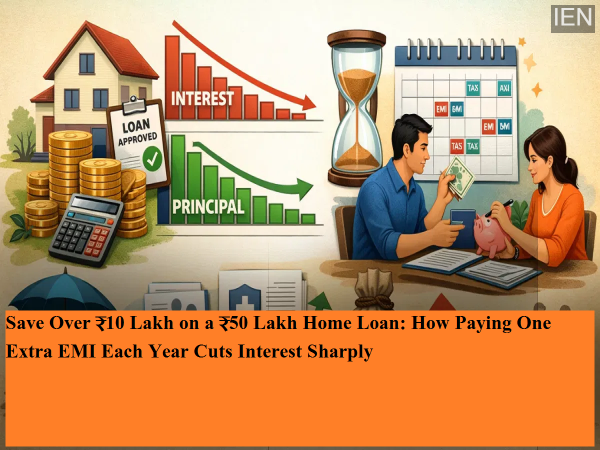
Taking a home loan for 20 to 30 years often means paying much more in interest than the original loan amount. Many borrowers focus only on the monthly EMI and overlook the long-term impact of interest. However, with a simple and disciplined strategy—paying just one extra EMI every year—you can save lakhs of rupees in interest and close your loan several years earlier.
Let’s understand how this works with clear numbers and practical planning.
Why Long-Term Home Loans Become Expensive
In long-tenure home loans, such as 20 or 25 years, the interest component dominates the early EMIs. During the initial years, a large portion of every EMI goes towards interest, while the principal reduces very slowly. This is why borrowers often end up repaying almost double the loan amount over the full tenure.
The good news is that small prepayments made early can dramatically reduce this burden.
₹50 Lakh Home Loan: Standard Calculation
Let’s take a typical example to understand the base scenario:
-
Loan Amount: ₹50,00,000
-
Tenure: 20 years
-
Interest Rate: 8.5% (fixed)
-
Monthly EMI: ₹43,391
-
Total Interest Payable: ₹54,13,879
-
Total Amount Paid: ₹1,04,13,879
This means for a ₹50 lakh loan, you end up paying over ₹1.04 crore, with interest exceeding the principal itself.
How One Extra EMI Per Year Changes Everything
Now, let’s apply a smart strategy.
Assumptions:
-
Loan taken in January 2026
-
From February 2027, you start paying one extra EMI every year
-
Extra payment amount = ₹43,391
-
Interest rate remains unchanged at 8.5%
The Result
-
Interest savings: approximately ₹10.3 lakh
-
Loan tenure reduces by several years
-
Total repayment drops significantly
This happens because extra EMIs directly reduce the outstanding principal, which in turn lowers the interest calculated for future months.
Why Early Prepayment Works Best
The earlier you prepay, the bigger the benefit. In the first few years, interest makes up the largest part of your EMI. Any reduction in principal during this phase creates a compounding advantage over the entire loan duration.
Best times to prepay include:
-
Salary hikes
-
Annual bonuses
-
Tax refunds
-
Side income or incentives
Even small lump-sum payments early in the loan cycle can lead to massive long-term savings.
Does Prepayment Help in All Types of Home Loans?
Yes, prepayment is beneficial across loan types:
-
Floating rate loans (Repo/MCLR-linked):
Usually come with no prepayment penalty, making them ideal for extra EMIs. -
Fixed rate loans:
Prepayment may attract a charge. Always check your loan agreement before proceeding.
In all cases, prepayment reduces the principal outstanding, which directly cuts future interest.
Do You Need to Inform the Lender?
Yes. Extra EMIs are not automatic and usually require action from the borrower. You can make prepayments through:
-
Net banking
-
Visiting the bank branch
-
Standing instructions
Make sure to clearly instruct the bank that the extra amount should be adjusted against the principal and loan tenure, not for reducing the EMI amount. Reducing tenure gives higher interest savings than reducing EMI.
Smart Prepayment Strategy to Follow
Before committing to prepayments, ensure financial stability:
-
Maintain an emergency fund covering at least 6 months of expenses
-
Have term life and health insurance in place
-
Continue essential investments like PF, SIPs, or retirement planning
Once these are secured:
-
Use bonuses, increments, or refunds for annual extra EMI
-
Cut unnecessary expenses to free up surplus cash
-
Stick to a consistent prepayment habit every year
This balanced approach keeps your finances safe while reducing debt faster.
Final Takeaway
Paying just one additional EMI every year on a ₹50 lakh home loan can help you save over ₹10 lakh in interest and become debt-free years earlier. It’s a low-risk, high-impact strategy that doesn’t strain monthly cash flow but delivers powerful long-term benefits.
If you’re already servicing a home loan—or planning to take one—this simple habit can make your dream home significantly more affordable in the long run.
-
Indian Navy training squadron on port call in Singapore under Act East Policy

-
IPL 2026: SWOT analysis of Sunrisers Hyderabad - Strengths, Weaknesses, Opportunities, and Threats

-
Older state pensioners given extra £110 per week from DWP in 2026

-
CBSE Launches National Letter-Writing Competition for Students Aged 9 to 15

-
CBSE Launches National Letter-Writing Competition for Students Aged 9 to 15