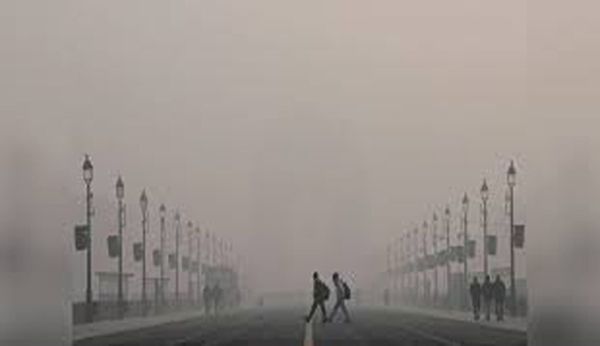
National Capital: A thick blanket of fog covered the national capital on Saturday morning, significantly disrupting daily life and sharply reducing visibility across several key locations. The dense fog, combined with an ongoing cold wave and worsening air pollution, created challenging conditions for residents, commuters, and travelers. Road, rail, and air traffic were all affected as visibility levels dropped to critical limits in many parts of the city.
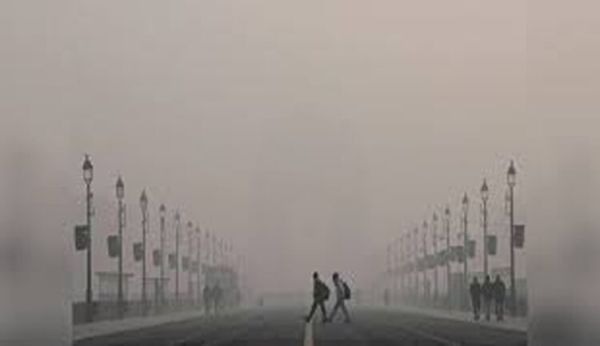
Severe Visibility Disruptions Across Key Areas
Early morning observations revealed extremely poor visibility conditions at major weather monitoring stations. At Palam, visibility showed slight improvement by mid-morning, reaching around 500 meters under shallow fog conditions. However, the situation at Safdarjung deteriorated further, with visibility plunging to nearly 200 meters amid moderate fog and calm wind conditions. These weather constraints forced airlines to cancel or delay multiple flights, leading to inconvenience for passengers and operational challenges for airport authorities.
The dense fog not only reduced visibility but also slowed down vehicular movement on highways and arterial roads. Drivers were advised to exercise caution, while traffic police implemented safety measures to prevent accidents. Public transport services also experienced delays due to low visibility during early hours.
Cold Wave Persists Despite Marginal Temperature Improvement
Alongside the fog, the city continued to reel under intense cold conditions. According to India Meteorological Department, a yellow alert was issued for cold wave conditions combined with dense fog. Although the minimum temperature on Saturday morning was recorded at around 7 degrees Celsius, slightly higher than the previous day, the cold wave had already persisted for several consecutive days.
On January 16, the cold wave marked its sixth continuous day, with temperatures dipping as low as 4.3 degrees Celsius in some areas. Such prolonged exposure to low temperatures increased health risks, particularly for children, the elderly, and those with respiratory ailments. Residents were advised to limit outdoor exposure during early mornings and late nights.
Air Quality Remains in Very Poor Category
While fog and cold dominated the weather narrative, air pollution continued to pose a serious concern. Despite the dense fog, the overall Air Quality Index remained in the very poor category. The city’s average AQI climbed to alarming levels, touching around 374, indicating hazardous breathing conditions for the general population.
High concentrations of particulate matter, especially PM10, were recorded on January 16. These particles significantly contribute to reduced visibility and respiratory discomfort, compounding the impact of fog and cold weather. Prolonged exposure to such air conditions can aggravate asthma, bronchitis, and other chronic lung diseases.
Pollution Hotspots Show Alarming Readings
Data released by the Delhi Pollution Control Board highlighted several pollution hotspots across the city. Anand Vihar emerged as one of the most polluted areas, recording an AQI of around 450 in the morning hours. Chandni Chowk, monitored by the Delhi IITM station, followed closely with AQI readings exceeding 435.
These numbers reflect severe pollution levels, prompting authorities to intensify monitoring and enforcement actions. Construction activities, vehicular emissions, and industrial outputs were closely scrutinized to limit further deterioration in air quality.
Weather Outlook and Emergency Pollution Measures
Meteorological forecasts suggest that the maximum temperature in the coming days is likely to remain between 21 and 23 degrees Celsius, while minimum temperatures may fluctuate between 6 and 8 degrees Celsius. Although a slight warming trend is expected during daytime, morning fog and cold conditions are likely to persist.
In response to the worsening air quality, the Commission for Air Quality Management invoked GRAP-III measures. These measures include restrictions on construction activities, enhanced checks on vehicular emissions, and advisories for work-from-home arrangements wherever possible to reduce pollution load.
Understanding AQI Categories and Health Implications
As per standards set by the Central Pollution Control Board, AQI values are categorized to help citizens understand health risks. An AQI between 0 and 50 is considered good, while values exceeding 400 fall under the severe category. Current readings across many parts of the capital indicate very poor to severe air quality, underscoring the urgent need for sustained pollution control measures.
Health experts recommend minimizing outdoor activities, using protective masks, and maintaining indoor air quality through ventilation and air purifiers during such conditions. Authorities continue to urge public cooperation as they work to mitigate the combined challenges of fog, cold, and pollution.
-
Hania Aamir, Asim Azhar’s pre-wedding events allegedly begin

-
Udupi all set for Paryaya ascension of Shiroor Matha seer

-
Those who have sex less often than this many times a week are suffering huge losses! Do they become old at the age of 40?

-
Emma Raducanu speaks out on brutal Australian Open schedule days after tough loss

-
NDA set to rewrite TN's political future in 2026, claims BJP