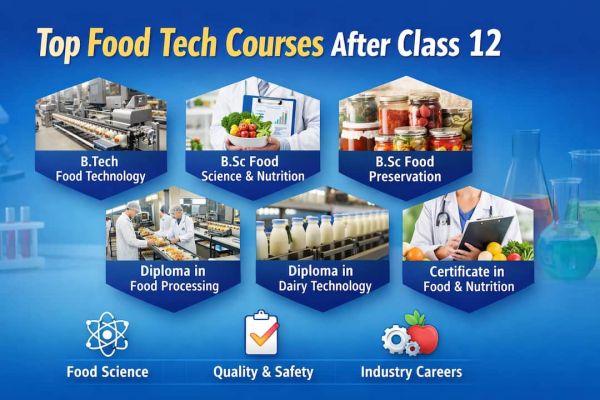
ABP Courses Guide: Food Technology has rapidly transformed into a dynamic discipline that blends scientific principles, nutritional awareness, and industrial engineering to improve the way food is produced and consumed. Students in this field explore how food is sourced, processed, packaged, tested, stored, and delivered with the ultimate objective of supplying safe, nutritious, and appealing food products to a growing population.
What You Study in Food Technology
The academic journey in Food Technology balances theory with strong hands-on exposure. Along with classroom lectures, students benefit from laboratory sessions, pilot-plant demonstrations, and skill-building workshops that simulate real industry environments.
Colleges offer this field across various levels including undergraduate, postgraduate, doctoral research, diplomas, and short-term certificate programmes. Currently, more than 340 engineering institutions in India provide structured Food Science and Technology courses, reflecting rising interest from both industry and students.
Top Food Tech Courses After Class 12
Diploma pathways are valuable for students who want quicker entry into the sector. Training focuses on operational aspects of processing plants, handling raw materials, hygiene procedures, production workflows, and basic food safety practices. Diploma graduates often find work at manufacturing units, quality labs, and packaging facilities.
This specialised diploma examines milk processing, value-added dairy products, pasteurisation systems, cold storage, and quality testing. With the dairy sector being one of India’s largest food industries, students have opportunities in cooperatives, dairy plants, ice-cream manufacturers, and dairy-based product brands.
Short-term certificate programmes offer foundational exposure to subjects like food technology, dietetics, nutrition, and food safety. These courses are suitable for students exploring the field, upgrading skills, or preparing for higher studies. They also serve as steppingstones for internships and lab-based assistant roles.
Specialisations And Where They Lead
Students can later branch into fields such as Food Safety, Nutrition & Dietetics, Food Chemistry, Quality Control, Food Preservation, or Food Engineering. These specialisations feed into diverse sectors including healthcare, research, manufacturing, agriculture, hospitality, packaging, and regulatory services. Candidates can build careers as Food Technologists, Quality Managers, Nutritionists, Research Officers, Packaging Specialists, Product Development Scientists, or Food Inspectors. With lifestyle diseases rising and consumer demand shifting toward healthier, functional, and sustainable foods, the industry’s demand for trained professionals continues to grow.
-
Bihar Kathavachak : Arrested in Minor Assault Case Raises Serious Questions on Trust and Accountability

-
Virat Kohli: A Small Dressing Room Moment That Revealed True Personality

-
Indore’s Beggar-Free : Campaign Exposes an Unexpected Story of Wealth and Welfare

-
Bigg Boss: Raqesh Bapat’s Journey in Marathi Season 6 and Insights Into His Personal Life

-
Headline: Matrimonial Deception in Bengaluru Exposes a High-Value Financial Fraud Case