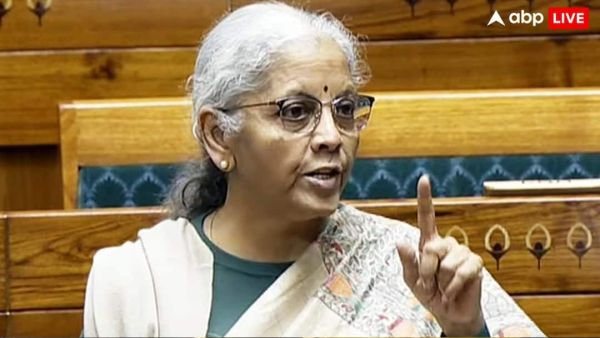
New Delhi [India], January 20 (ANI): The Centre Government of India has completed the implementation of several key direct tax reforms announced in recent Union Budgets, aiming to enhance investment certainty and reduce the compliance burden for taxpayers.
As the presentation of the Union Budget 2026-27 approaches, the Ministry of Finance, via X, detailed the progress of legislative changes. These measures, ranging from startup incentives to infrastructure funding, are designed to streamline the national tax architecture while providing relief to individual savers and institutional investors.
A primary focus of these reforms involves the classification of income for Alternative Investment Funds (AIFs). To provide "certainty of taxation" to these entities, the Finance Act, 2025, amended Section 2(14) to explicitly include any securities held by Category I and Category II AIFs as capital assets.
This ensures that income from the transfer of such securities is taxed under the head "Capital Gains" rather than "Profits and Gains of Business or Profession." This amendment, effective from April 1, 2026, applies to Assessment Year (AY) 2026-27 and brings Indian AIFs on par with Foreign Portfolio Investors.
The government also extended significant tax holidays to bolster the domestic startup and electronics manufacturing ecosystems. Section 80-IAC was amended to extend the incorporation deadline for eligible startups to March 31, 2030. These entities can claim a "100% profit deduction for 3 consecutive years in their first 10 years" of operations.
Similarly, to position India as a "global hub for electronics system design and manufacturing," a presumptive taxation regime under Section 44BBD was introduced for non-residents providing services or technology to electronics units, taxing them on a deemed profit of 25 per cent of gross receipts.
Infrastructure and logistics received further support through the extension of the Tonnage Tax Scheme to inland vessels. By amending Section 115VD, the definition of a "qualifying ship" now includes inland vessels registered under the Indian Vessels Act, 2021. This change, taking effect from April 1, 2026, aims to promote inland water transport.
Additionally, the clause for tax concessions in the International Financial Services Centre (IFSC) was extended by five years to March 31, 2030, covering ship-leasing units, insurance offices, and treasury centres of global companies.
For individual taxpayers, the Ministry highlighted reforms in the National Savings Scheme (NSS) and the National Pension System (NPS) Vatsalya. Withdrawals from NSS accounts made on or after August 29, 2024, are now "fully tax-exempt."
For NPS Vatsalya, parents or guardians are eligible for an "additional deduction of up to ₹50,000" under Section 80CCD(1B), over the standard Section 80C limit.
Furthermore, simplification in property taxation allows taxpayers to claim "nil annual value for two properties unconditionally," removing the previous requirement to prove non-occupancy due to employment.
To reduce litigation, the Finance Act introduced a three-year block period for transfer pricing assessments and expanded "Safe Harbour" rules. The turnover threshold for availing Safe Harbour increased from Rs 200 crore to Rs 300 crore, with new sectors like electric vehicle components now covered. Compliance for small charitable trusts was also eased by extending registration validity from five to ten years. (ANI)
(Disclaimer: This report has been published as part of the auto-generated syndicate wire feed. Apart from the headline, no editing has been done in the copy by ABP Live.)
-
This Dryrobe dog coat has been a game-changer for winter walks

-
How to grow avocado at home from seed: Foolproof guide to grow exotic fruits

-
Hanoi crowned Asia's top solo travel destination in 2026: Know Vietnamese capital's culture, food and history

-
The amount deducted for the Vande Bharat Sleeper ticket cancellation is enough to buy a Rajdhani ticket; see the calculation.

-
Chanakya Niti: 5 Signs Someone Is Studying You Before Outsmarting You