A businessman who played with Lego as a child has helped save 25 million colourful bricks from landfill by reselling them.
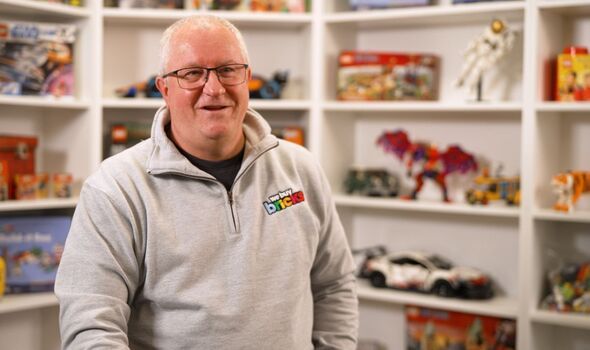
Mike Lane spent his childhood building farm sets with his brothers where the sheep were simple white bricks.
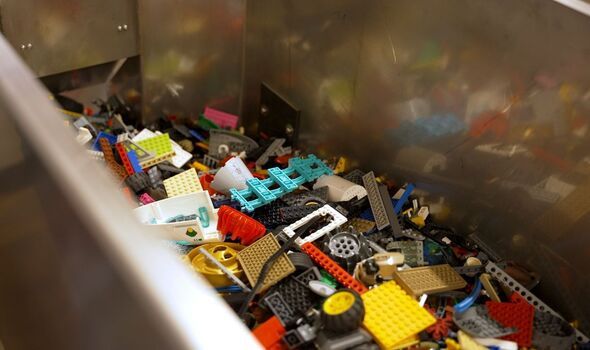
Now his We Buy Bricks factory in Rossendale, Lancashire is home to 25 million of those tiny plastic pieces which are destined for second homes.
Mike, who founded a business selling secondhand books 18 years ago, said: "Off the back of that success, we were looking for other products to branch out to in the used category because that is where we find a second life for used products. We started the great big search. We were looking for something that lasts a long time, is well engineered, holds its value, and isn't constantly updated or replaced. We also didn't want something that was a short-term trend or fad, and was worldwide. After quite a bit of research into used Lego, it ticked all of those boxes so that's where WeBuy Bricks was born, really, on the basis of that."
The firm buys used Lego bricks and then uses artificial intelligence to sift through the shapes, colours and designs to complete sets that get re-sold.
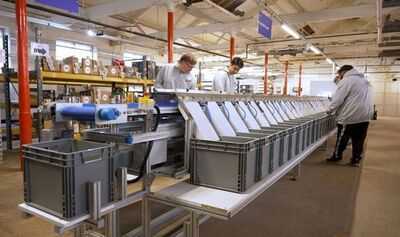
Mike said: "On the book side of the business, we get thousands of books a day. They went down a conveyor belt and the barcode reader read the barcode and so we knew what book it was and whether it was one we wanted to re-sell or recycle.
"With Lego, it's more difficult because every piece of Lego doesn't have a barcode and there's 80,000 different pieces, shapes, sizes and colours. We have developed, over the last two years, a machine that can identify what piece of Lego it is.
"What colour it is. Whether it's damaged, got a crack in it or children's teeth marks believe it or not. Then we know what set that belongs to or we can sort out a set by shape, colour or whatever."
Mike buys used Lego, sorts it and then sells sets for roughly half the price of new ones.
Although rare used collectables could go for significantly more - similarly to books.
If the company has any "critical" pieces missing from a set, they search other websites to find it before reselling it.
The entrepreneur said: "Why wouldn't you re-use Lego if you can? What's the downside? The small changes of reusing something adds up to big wins if everyone does it."
"I don't think it's quite entered the consciousness that you can rebuy and re-use Lego.
"Reuse is far more common today than previously. Over the last 20 or 30 years, reuse has been pushed aside by cheap throwaway products like fast fashion etc. We look at our grandparents and they were far more frugal and reused stuff than the modern generation. But I think young people are far more conscious about it. The trend is reversing. Bringing back reuse is good for everyone - good for value and good for the environment."
Lego bricks are mainly made from ABS (acrylonitrile butadiene styrene) plastic, chosen for its strength, durability and vibrant color retention.
But the Danish company is transitioning to more sustainable, renewable or recycled materials like bio-polyethylene and recycled plastic for some elements.
Mike told how the business has helped re-ignite his passion for his childhood playtime activity.
Asked if he was a fan of Lego, he said: "So when I was a child, I was but I've not really been an adult fan - up until we started this and then I took a bookshop set which was 2,500 pieces and it was addictive.
"I couldn't keep away from the thing. "I'll just go do another piece." It's like a 3D-jigsaw puzzle really. When you finish it, you go 'I'm quite pleased with that. I did that.' So I am now."
-
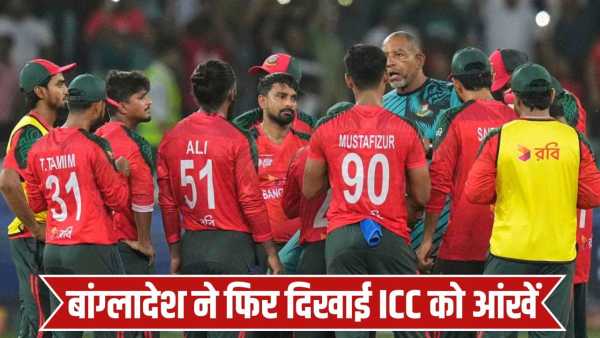
Bangladesh will accept only after being out of T20 World Cup! Showed stubborn attitude again before the deadline
-
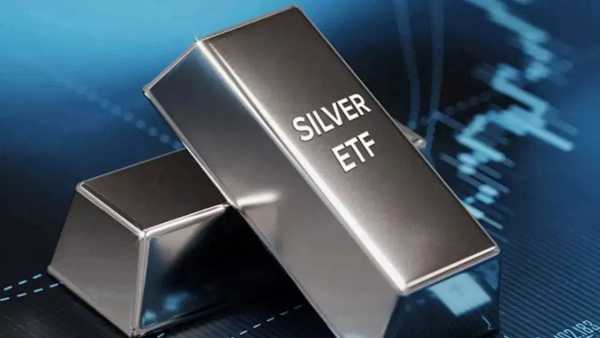
Leave silver, see the magic of silver ETF, made you rich in just 20 days
-
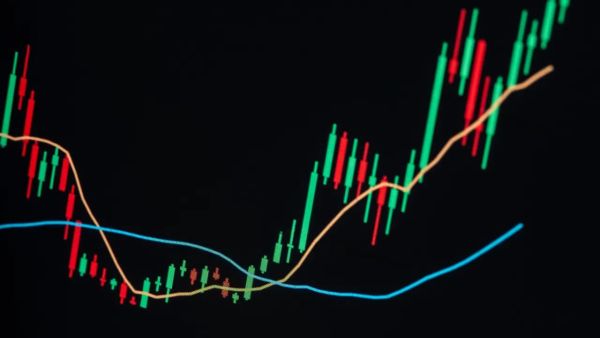
Why Did RAPT Stock Surge 63% In Pre-Market Today?
-
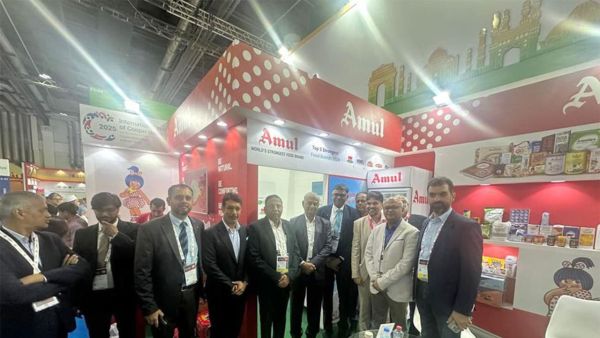
Kutch’s Revival: How Sarhad Dairy Transformed the Region’s Fortunes
-
‘Can’t wake up in the morning in cold.’, “Premanand Maharaj told 3 easy ways to wake up in the morning. – News Himachali News Himachali