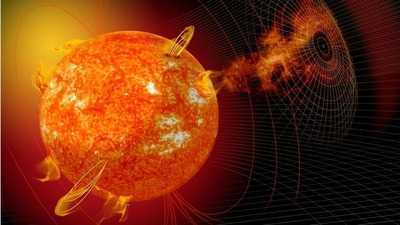
Most powerful solar radiation storm since 2003 hits Earth
20 Jan 2026
The National Weather Service's Space Weather Prediction Center (SWPC) is monitoring a powerful solar radiation storm.
Rated as an S4 on a severity scale of five, this is the largest solar radiation storm in over two decades.
The last time such high levels were recorded was in October 2003.
The SWPC announced the event on X, saying "An S4 severe solar radiation storm is now in progress."
Potential impacts and precautions
Impact assessment
The SWPC has warned that the potential effects of this solar radiation storm are mainly limited to space launch, aviation, and satellite operations.
However, extreme events can cause major disruptions on Earth. The October 2003 solar storms resulted in power outages in Sweden and damaged power transformers in South Africa.
The current storm could also pose risks for astronauts aboard the International Space Station (ISS) or passengers on polar flights due to increased radiation exposure risks.
Technological infrastructure operators alerted
Alert system
In light of the solar radiation storm, the SWPC has notified several organizations including airlines, NASA, Federal Aviation Administration (FAA), Federal Emergency Management Agency (FEMA), and North American Electric Reliability Corporation.
"We've been making all these phone calls to ensure that we are keeping all the critical technological infrastructure operators in the know of what's happening," said SWPC forecaster Shawn Dahl.
This is similar to precautions taken during previous solar storms such as an extreme geomagnetic storm in May 2024.
Geomagnetic storms and their effects
Storm impact
The SWPC also noted that a severe geomagnetic storm hit Earth on Monday at 2:20pm ET. These storms can also disrupt the electric power grid.
Unlike solar radiation storms, which are caused by intense, rapidly-moving charged particles toward Earth, geomagnetic storms are slower-moving and triggered by coronal mass ejections (CMEs).
CMEs are explosions of plasma and magnetic fields from the sun's outer atmosphere that can cause major disturbances of Earth's magnetic field when directed at it.
Coronal mass ejection and aurora displays
Eruption effects
The coronal mass ejection that erupted from the sun on Sunday was triggered by an X-class flare, the most intense type of solar flare. This is the first major solar flare of the year.
Increased solar activity causes auroras—dazzling displays of light around Earth's poles.
The energized particles from CMEs interact with atmospheric gasses to create different colored lights in the sky, potentially visible over much of northern US and as far south as Alabama and northern California.
-
Five major updates regarding the foldable iPhone: find out what special features it will offer, including the A20 Pro chipset..

-
JioHotstar: JioHotstar has introduced new Mobile, Super, and Premium subscription plans. Check out the prices..

-
Mobile photography will be transformed in 2026, with the dual 200MP camera setup becoming a game-changer..

-
WhatsApp: WhatsApp's hidden security feature that will prevent your account from being hacked..

-
Tech Tips: Turn a QR code into a smart doorbell! Your relatives will be amazed..