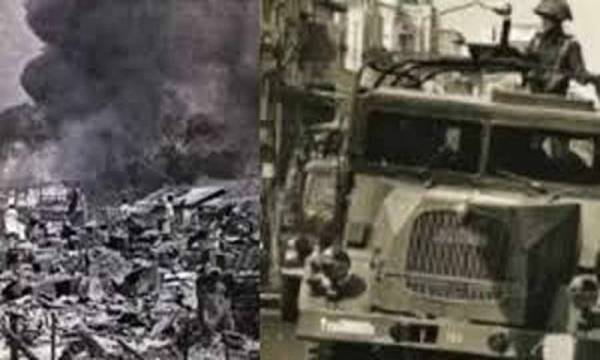
1984 Riot Case:The recent verdict delivered at Delhi’s Rouse Avenue Court has once again stirred painful memories for survivors of the 1984 anti-Sikh riots. Decades after the violence that altered thousands of lives, the acquittal of former Congress MP Sajjan Kumar in cases related to Janakpuri and Vikaspuri has reignited public debate over accountability, justice, and the long wait faced by riot-affected families. Outside the courtroom, emotions ran high as grief, anger, and determination filled the air.
Emotional Reactions From Victims’ Families
For families who lost loved ones during the riots, the verdict came as a deep emotional blow. Many survivors expressed disbelief and anguish, stating that the legal outcome failed to reflect the magnitude of their suffering. Several family members openly questioned how, after nearly four decades, the individual they believe to be responsible could walk free. Their pain was evident as they spoke of entire families wiped out during the violence.
Calls For Capital Punishment
The demand for maximum punishment dominated reactions from the victims’ side. Family members insisted that justice remains incomplete without strict accountability. Some survivors reiterated that they would continue their legal battle and approach the apex court, hoping for a reversal of the verdict. For them, the acquittal has not closed the chapter but instead strengthened their resolve to keep fighting.
Sense Of Betrayal And Loss Of Faith
Many survivors voiced a sense of betrayal by the judicial process. They argued that years of testimony, investigation, and hearings have still not delivered closure. The feeling that justice has been delayed and denied was repeatedly echoed, with victims stating that the emotional scars of 1984 have never healed and were reopened by the latest court decision.
Legal Stand of the Defense
Sajjan Kumar’s legal team welcomed the acquittal, maintaining that the prosecution failed to establish his presence at the crime scenes. According to the defence, no credible evidence or witness testimony directly linked him to the incidents in question for more than three decades. The lawyers argued that their client had been unfairly targeted and that the court’s decision reaffirmed the principle that guilt must be proven beyond reasonable doubt.
Details Of The Court Verdict
The verdict was pronounced by the Rouse Avenue Court, a prominent judicial complex in Delhi dealing with high-profile cases. The court acquitted Sajjan Kumar in matters connected to the Janakpuri and Vikaspuri police stations, which involved allegations of killings and arson during the riots. A detailed judgment is expected to be uploaded, outlining the reasoning behind the acquittal.
Background Of The Janakpuri And Vikaspuri Cases
The Janakpuri case related to the killing of two Sikh individuals on November 1, 1984, while the Vikaspuri case concerned the burning of another person the following day. These incidents were part of the widespread violence that erupted after the assassination of Prime Minister Indira Gandhi, leading to mass unrest across Delhi and other regions.
Charges And Earlier Proceedings
In earlier stages, the court had framed multiple charges under various sections of the Indian Penal Code, including rioting, promoting enmity, attempt to murder, and damage to religious property. The prosecution had argued that there was sufficient oral and documentary evidence to suggest the presence of an unlawful mob targeting Sikh localities and places of worship. However, over time, the murder charges were dropped, and the court ultimately ruled in favour of acquittal in these specific cases.
Intention To Approach Higher Judiciary
Following the verdict, victims’ families announced their intention to approach the Supreme Court of India. They believe that higher judicial scrutiny may bring renewed hope and a different interpretation of the evidence. For many survivors, the legal journey is not just about punishment but about recognition of their pain and acknowledgment of historical injustice.
Continuing Impact Of The 1984 Riots
The acquittal has once again highlighted how the legacy of the 1984 anti-Sikh riots continues to shape public discourse in India. The events remain a sensitive chapter in the nation’s history, influencing discussions around justice, political accountability, and reconciliation. As appeals loom, the case is likely to remain in focus, reflecting the enduring struggle of survivors seeking closure after decades of waiting.
-
Preparation Tips: Students can test their preparation before the CBSE admit cards are released; this is the right way to revise..

-
ICSE, ISC Admit Card: The admit cards for Class 10th and 12th examinations will be released here at cisce.org. Follow these steps to download them..

-
CMAT Admit Card 2026: The Common Management Admission Test admit card has been released; download it using these steps..
-
UGC NET Result 2026: The UGC NET exam results will be released soon. You can download them from nta.nic.in.

-
HBSE Date Sheet 2026: Haryana Board 10th and 12th class time table can be released anytime..