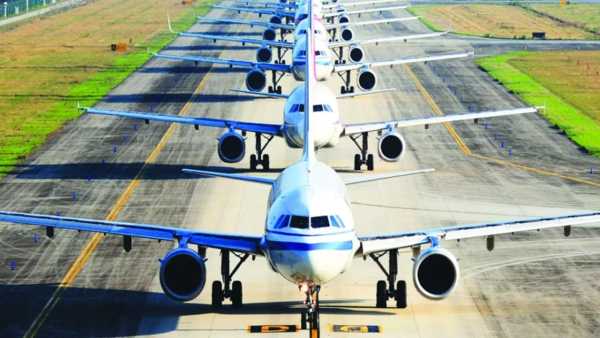
aviation sector
Anyone who has traveled by flight recently must have experienced the hassle of long delays, the fear after announcements of technical glitches, and the uncertainty after news of crashes or cyber attacks. Amidst grounding of planes, operational irregularities and increasing incidents, this is the big question before Budget 2026. Is India's aviation industry growing as fast as the systems that keep it safe are also getting stronger? Earlier the discussion was only about expansion, now the talk has started about pressure and risk.
Concern about security and decline in trust
FY26 was a very difficult year for Indian aviation. A fatal accident of Air India, cyber attacks on airlines and airport systems, frequent technical glitches and a major glitch at IndiGo in December have shown how fragile the system has become.
According to ICRA, due to all these reasons the confidence of passengers wavered and passenger growth also slowed down. Airlines suffered huge losses due to weak rupee and falling bookings. Now the estimated loss of the aviation sector in FY26 has increased to Rs 17,00018,000 crore.
Promotion of new airlines
After the irregularities of Indigo, the question arose that it is not right to have so much dependence on a few selected companies. Civil Aviation Minister Ram Mohan Naidu has said that there is space for more airlines in India. Therefore new companies like Al Hind Air, Flyexpress and Shankha Air are being approved. However, experts say that not only expansion, but also strong monitoring and training is necessary.
Investment in people and systems is necessary
According to Bhavana Yerumreddy of EY India, now the focus of policy should not be just on increasing capacity but on strengthening the system. Meaning-pilot and engineer training, modernization of air traffic management, and better maintenance (MRO) facilities in India.
UDAN scheme and connectivity of small towns
So far, more than 1.56 crore passengers have traveled on short routes under the UDAN scheme and 93 airports have been connected. In Budget 2026, the government is expected to focus on connectivity of small cities, new airports and expansion of existing airports.
Shortage of planes and problem of spare parts
Many aircraft remained grounded for long periods due to engine failure, lack of spare parts and global supply chain problems. This increased flight cancellations. Experts say that if custom duties and taxes are reduced then repairs can be done faster.
Fuel tax is also a big problem
The tax on Air Turbine Fuel (ATF) is very high and amounts to 3040% of the cost of airlines. The industry has been demanding for a long time that the tax on this should be reduced. After crashes, cyber threats and operational glitches, the aviation sector now needs trust and security, not just growth. It is expected from Budget 2026 that the government will take concrete steps in this direction.
-
Traffic Restrictions in New Delhi Ahead of Beating Retreat Rehearsal

-
Sisters' heartbreak as parents die from same disease in same hospital bed weeks apart

-
SC declines omnibus directions on stampede prevention, asks petitioner to approach Centre

-
360 ONE Asset Launches INR 1,500 Cr Fund For Defence Tech, Spacetech Investments

-
Fake Loan App Scam Alert: Government Warns Users, Follow These Steps to Stay Safe from Digital Fraud