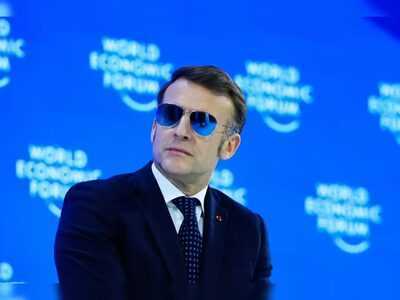
At the World Economic Forum 2026 in Davos, French President Emmanuel Macron delivered a strong message emphasizing that the European Union must not submit to coercion or abandon the principles of international law. Addressing global leaders, policymakers, and business executives, Emmanuel Macron warned that the world is drifting toward a rules-free order where the law of the strongest dominates, challenging stability, cooperation, and global governance. He highlighted that rising geopolitical tensions, including strained relations with the United States, and the resurgence of imperial ambitions demand that nations uphold sovereignty, respect multilateral frameworks, and prioritize cooperation to ensure peace, growth, and sustainable development. Emmanuel Macron’s speech underscored the urgency for Europe and its allies to reaffirm their commitment to international law, democracy, and shared global responsibilities, while navigating a rapidly evolving global order marked by uncertainty and power politics.
The Drift Toward a Rules-Free Global Order and Rising Coercion
Emmanuel Macron painted a stark picture of a world where traditional rules, treaties, and international norms are increasingly under threat. He expressed deep concern over the erosion of the rules-based global order, warning that the world is moving toward an environment where international law is disregarded, and coercion by powerful states dictates outcomes. Without directly naming any nation, Emmanuel Macron highlighted policy threats and unilateral actions that undermine cooperation, pointing to examples that signal a return of imperial ambitions and neo-colonial tendencies in modern international relations. He described the current global climate as a critical moment that demands vigilance, strategic foresight, and adherence to foundational principles rather than yielding to bullying or brute force. Macron’s analysis emphasized that economic leverage, military pressure, and political intimidation are increasingly used as instruments of influence, threatening to destabilize multilateral agreements and collaborative efforts in trade, climate action, and global security.
The French president stressed that Europe, and the EU in particular, must not compromise its core values, even in the face of geopolitical pressure. He noted that the idea of succumbing to the “law of the strongest” would set a dangerous precedent, eroding international norms that have historically underpinned peace and stability. Emmanuel Macron highlighted the importance of unity within the European Union, underscoring that collective strength, rule-based diplomacy, and adherence to the principles of sovereignty are essential tools to resist coercion and navigate an unpredictable global environment. The president also drew attention to the increasing risks posed by unilateral decisions by major powers, which not only challenge existing frameworks but also threaten the credibility of multilateral institutions designed to manage conflict, promote cooperation, and address global crises.
Emmanuel Macron’s remarks highlighted the EU’s potential use of its anti-coercion instrument, an unprecedented step reflecting the growing strain in transatlantic relations. While the EU traditionally relied on dialogue and diplomatic engagement, rising threats and unilateral actions from influential nations have forced it to consider assertive measures to safeguard its interests, maintain independence, and uphold international law. Emmanuel Macron emphasized that this is not a pursuit of confrontation but a necessary recalibration to ensure that cooperation is grounded in fairness, equity, and adherence to shared rules. He argued that the erosion of trust in multilateralism is dangerous, warning that nations that abandon collective principles in favor of coercive tactics risk long-term instability, economic disruption, and strategic fragmentation.
Europe’s Commitment to Sovereignty, Cooperation, and Global Priorities
Emmanuel Macron reaffirmed France and the European Union’s commitment to sovereignty, independence, and the United Nations Charter, emphasizing that adherence to these principles is essential for maintaining global stability and credibility. He warned against the resurgence of imperialistic and colonial ambitions in modern geopolitics, emphasizing that coercion and unilateralism are counterproductive in addressing shared global challenges such as peace, economic growth, climate change, and sustainable development. Emmanuel Macron argued that Europe’s strength lies in its commitment to multilateralism, scientific collaboration, rule of law, and the protection of democratic norms, which collectively create a platform for addressing global crises effectively and equitably.
The president urged global leaders and businesses to refocus their efforts on shared priorities rather than engaging in aggressive competition or pursuing destabilizing strategies. He emphasized that cooperation, innovation, and sustainable growth must take precedence over transactional approaches driven by power dynamics. Emmanuel Macron highlighted that the current moment represents a critical opportunity to reinforce the values of rule-based governance, international law, and collective responsibility, warning that failure to do so could accelerate the drift toward a fragmented, unstable, and coercive global order.
Emmanuel Macron also stressed the importance of prioritizing practical and cooperative approaches to pressing issues such as economic development, climate mitigation, and investment in innovation. He emphasized that the EU must lead by example, demonstrating that respect for rules, scientific evidence, and ethical governance can serve as a counterbalance to coercive pressures and unilateralism. By focusing on collaboration, Emmanuel Macron argued, Europe can strengthen its influence, preserve sovereignty, and promote an international system based on fairness and shared responsibility rather than intimidation and power projection.
Furthermore, Emmanuel Macron highlighted that global economic, political, and environmental challenges require coordinated action, stressing that unilateral, power-driven approaches are insufficient to achieve meaningful progress. He cautioned against pursuing disruptive or reckless policies, describing such actions as potentially opening a “Pandora’s box” of instability that could undermine peace, prosperity, and sustainable development. Emmanuel Macron’s remarks reflected a broader vision in which strategic cooperation, adherence to international law, and principled engagement form the backbone of a stable and resilient global order.
In addressing these issues, Emmanuel Macron also underscored that Europe must cultivate resilience, strengthen its internal capacities, and enhance strategic autonomy to withstand external pressures. He emphasized that protecting sovereignty does not imply isolation but rather involves developing the institutional, technological, and economic tools necessary to maintain influence in a complex international landscape. This includes investment in scientific research, sustainable energy, digital infrastructure, and innovation ecosystems that reduce dependency on coercive actors while promoting sustainable growth.
Emmanuel Macron’s address in Davos reflected an urgent call to recalibrate priorities in international diplomacy, economic policy, and strategic planning. By insisting that Europe and its allies uphold the rule of law, resist coercion, and focus on cooperative problem-solving, he highlighted the need for long-term strategic thinking amid a world characterized by power contests, unilateral pressures, and the gradual erosion of established norms. His remarks emphasized that adherence to principles, collective action, and scientific reasoning are not only ethical imperatives but also pragmatic strategies for maintaining influence, security, and stability in a rapidly changing global landscape.
The French president’s speech highlighted the convergence of economic, geopolitical, and environmental imperatives, urging nations to prioritize collaboration over conflict. He stressed that global leaders must resist the temptation to yield to coercion, unilateralism, or short-term advantage at the expense of long-term stability. By advocating for rule-based governance, respect for sovereignty, and proactive engagement on climate and economic challenges, Emmanuel Macron presented a vision of Europe as a stabilizing force capable of shaping global norms, promoting peace, and fostering sustainable development.
Emmanuel Macron’s remarks also underscored the evolving nature of modern geopolitics, where traditional alliances and treaties, while important, are insufficient in isolation. Nations must invest in domestic capacities, cultivate resilience, and pursue innovation to safeguard interests in a world where the use of coercive tools is increasingly normalized. He emphasized that Europe’s commitment to collective principles and multilateralism is not merely moral but strategically essential for maintaining credibility, security, and influence on the global stage.
Through his speech, Emmanuel Macron called for a renewed focus on practical, cooperative, and evidence-based approaches to address global challenges. He stressed that by prioritizing peace, growth, climate action, and scientific advancement, Europe and its allies could resist the pull of a power-driven world while demonstrating that adherence to rules, sovereignty, and ethical governance remains the most effective path to stability and prosperity.
Emmanuel Macron’s address at Davos 2026 served as both a warning and a blueprint for Europe and the global community. Highlighting the dangers of a world without rules and the rise of coercion, he urged nations to uphold sovereignty, strengthen multilateral frameworks, and focus on cooperation, innovation, and long-term strategic thinking. His message emphasized that in an era of rising geopolitical tensions and shifting power dynamics, adherence to the rule of law, respect for international norms, and principled leadership are indispensable for peace, stability, and sustainable development worldwide.
The post Davos 2026: Emmanuel Macron urges EU to uphold rule of law and resist coercion amid global geopolitical tensions | cliQ Latest appeared first on CliQ INDIA.
-
Uttar Pradesh: Amit Shah Urges Voters To Back BJP In Upcoming Assembly Elections
-
Uttar Pradesh : Foundation Day Highlights Development, Heritage, And Future Growth Vision
-
Jackie Shroff : and Anil Kapoor Celebrate Subhash Ghai’s 50-Year Cinematic Legacy

-
Delhi Police : Crack Street Robbery and Vehicle Forgery Syndicate in Major Operations

-
Mamta Kulkarni : Questions Religious Authority After Magh Mela Sangam Dispute