Indian Auto LPG Coalition urges PNGRB to include Auto LPG in TERI-led fuels study.
New Delhi: The Indian Auto LPG Coalition (IAC) has urged the Petroleum and Natural Gas Regulatory Board (PNGRB) to include Auto LPG (Autogas) in an ongoing TERI-led study assessing vehicular fuel options in India's energy transition.
In a formal representation to PNGRB, the coalition sought inclusion of Auto LPG in the study titled 'Comparative Assessment of Vehicular Fuels in India's Energy Transition -- A Multi-Dimensional Approach', commissioned by the regulator to provide evidence-based inputs to policymakers on transport decarbonisation, air-quality improvement and sustainable mobility as India moves towards its net-zero targets.
In a statement detailing its representation, IAC said the exclusion of Auto LPG would lead to an incomplete and potentially biased assessment, particularly given the study's focus on gaseous fuels and the participation of city gas distribution entities.
The coalition said Auto LPG is a proven, immediately deployable transition fuel with a significant operational footprint in India and should be part of a balanced, technology-neutral evaluation.
Globally, Auto LPG powers more than 30 million vehicles across nearly 80,000 refuelling stations.
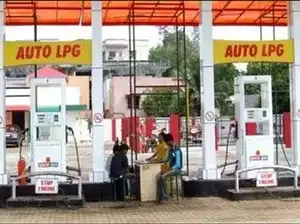
In India, millions of vehicles operate on Auto LPG, supported by about 2,500 dedicated dispensing outlets that leverage the country's established LPG infrastructure, including schemes such as the Ujjwala Yojana.
The coalition said Auto LPG offers immediate air-quality benefits by reducing particulate matter, nitrogen oxides and other urban pollutants, without the need for large-scale new infrastructure, unlike longer-term options such as full electrification or hydrogen.
Suyash Gupta, Director General of the Indian Auto LPG Coalition, said, "It is important that the PNGRB-TERI study remains truly technology-neutral and reflective of real-world conditions. Auto LPG must be explicitly included so that all practical fuel pathways are assessed on common parameters such as total cost of ownership, well-to-wheel and tank-to-wheel emissions, infrastructure requirements, safety standards, supply resilience and consumer affordability."
"With more than 30 million vehicles globally and a strong and growing footprint in India, Auto LPG already delivers measurable air-quality gains in segments where electrification will take time. Excluding it from the study risks overlooking a solution that is available today, affordable for consumers, and aligned with India's transition goals," he said.
In its submission, IAC made three specific requests to PNGRB: to include Auto LPG as an explicit fuel option across the study's comparative scenarios, assessments and recommendations; to allow the coalition to participate as a stakeholder in consultations to ensure accurate representation of infrastructure, safety standards, taxation and implementation experience; and to apply uniform evaluation criteria across all fuels, covering emissions, economics, infrastructure readiness and adoption potential.
The coalition also offered to support TERI and PNGRB by sharing operational data from the Auto LPG dispensing ecosystem, international benchmarks, safety and standards references, and by facilitating interactions with oil marketing companies, kit manufacturers and Auto LPG station operators.
IAC said that inclusion of Auto LPG would strengthen efforts to reduce urban pollution, enhance energy security through diversified fuel options, and promote affordable, cleaner mobility solutions. The coalition has sought an early meeting with PNGRB and reiterated its readiness to contribute to the study process.
In a formal representation to PNGRB, the coalition sought inclusion of Auto LPG in the study titled 'Comparative Assessment of Vehicular Fuels in India's Energy Transition -- A Multi-Dimensional Approach', commissioned by the regulator to provide evidence-based inputs to policymakers on transport decarbonisation, air-quality improvement and sustainable mobility as India moves towards its net-zero targets.
In a statement detailing its representation, IAC said the exclusion of Auto LPG would lead to an incomplete and potentially biased assessment, particularly given the study's focus on gaseous fuels and the participation of city gas distribution entities.
The coalition said Auto LPG is a proven, immediately deployable transition fuel with a significant operational footprint in India and should be part of a balanced, technology-neutral evaluation.
Globally, Auto LPG powers more than 30 million vehicles across nearly 80,000 refuelling stations.
In India, millions of vehicles operate on Auto LPG, supported by about 2,500 dedicated dispensing outlets that leverage the country's established LPG infrastructure, including schemes such as the Ujjwala Yojana.
The coalition said Auto LPG offers immediate air-quality benefits by reducing particulate matter, nitrogen oxides and other urban pollutants, without the need for large-scale new infrastructure, unlike longer-term options such as full electrification or hydrogen.
Suyash Gupta, Director General of the Indian Auto LPG Coalition, said, "It is important that the PNGRB-TERI study remains truly technology-neutral and reflective of real-world conditions. Auto LPG must be explicitly included so that all practical fuel pathways are assessed on common parameters such as total cost of ownership, well-to-wheel and tank-to-wheel emissions, infrastructure requirements, safety standards, supply resilience and consumer affordability."
"With more than 30 million vehicles globally and a strong and growing footprint in India, Auto LPG already delivers measurable air-quality gains in segments where electrification will take time. Excluding it from the study risks overlooking a solution that is available today, affordable for consumers, and aligned with India's transition goals," he said.
In its submission, IAC made three specific requests to PNGRB: to include Auto LPG as an explicit fuel option across the study's comparative scenarios, assessments and recommendations; to allow the coalition to participate as a stakeholder in consultations to ensure accurate representation of infrastructure, safety standards, taxation and implementation experience; and to apply uniform evaluation criteria across all fuels, covering emissions, economics, infrastructure readiness and adoption potential.
The coalition also offered to support TERI and PNGRB by sharing operational data from the Auto LPG dispensing ecosystem, international benchmarks, safety and standards references, and by facilitating interactions with oil marketing companies, kit manufacturers and Auto LPG station operators.
IAC said that inclusion of Auto LPG would strengthen efforts to reduce urban pollution, enhance energy security through diversified fuel options, and promote affordable, cleaner mobility solutions. The coalition has sought an early meeting with PNGRB and reiterated its readiness to contribute to the study process.