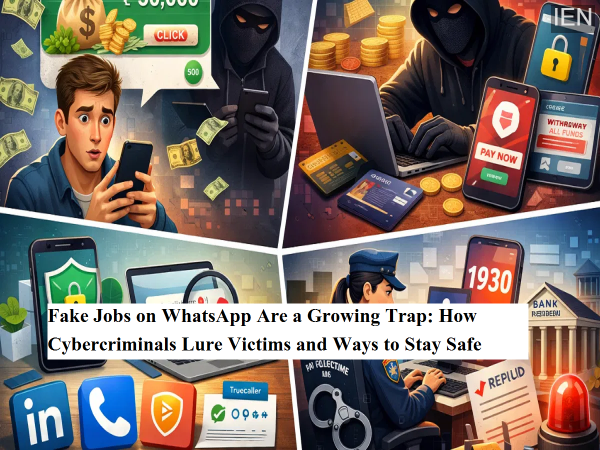
A simple WhatsApp message promising a high-paying job can quickly turn into a financial nightmare. In recent months, cybercriminals have increasingly used WhatsApp to target job seekers, exploiting unemployment and the desire for easy income. What looks like a genuine work-from-home opportunity often ends in stolen savings, compromised bank accounts, and emotional distress.
Imagine receiving a message that says, “Work from home and earn ₹50,000 per month. Just complete simple tasks. Limited slots available.” For many, such offers sound tempting, especially during uncertain economic times. However, experts warn that these messages are rarely legitimate and are part of a well-planned scam.
How the WhatsApp Job Scam Works
Cyber fraudsters usually begin by sending messages from unknown or international numbers. These messages promote part-time jobs, online tasks, or investment-based work that claims to require little effort. Victims are told to download an app, click on a link, or complete basic tasks such as liking videos or rating products.
To gain trust, scammers often send a small payment initially, typically between ₹100 and ₹300. Once confidence is established, the victim is asked to pay a “registration fee,” “security deposit,” or “investment amount” to unlock higher earnings. As soon as money is transferred, the fraudsters either disappear or demand additional payments.
In several cases, victims are directed to fake apps or websites that steal banking credentials. This leads to UPI fraud, unauthorized transactions, or even complete account takeovers. According to cybercrime experts, scammers frequently use VoIP numbers or foreign SIM cards, making it difficult to trace them.
Why So Many People Fall for It
The rise in unemployment and remote work culture has created a fertile ground for such scams. Fraudsters design messages that appear professional, use company logos, and even fake customer support chats. Psychological pressure, limited-time offers, and fear of missing out push people into making quick decisions without verification.
Smart Steps to Protect Yourself
Staying alert is the most effective defense against WhatsApp job scams. Never trust job offers received from unknown numbers. Legitimate companies do not recruit randomly through messaging apps. Always verify the employer by checking their official website or professional platforms.
Avoid clicking on suspicious links and never download apps from unofficial sources. If a job offer asks for upfront payment, consider it a red flag and reject it immediately. Enable two-step verification on WhatsApp and adjust privacy settings to limit contact from unknown users.
Using caller identification apps that flag spam numbers can also help reduce risk. Remember, if an offer sounds too good to be true, it probably is.
What to Do If You Become a Victim
If you have already fallen prey to such a scam, act quickly. Report the incident on the national cybercrime portal or call the cybercrime helpline at 1930. Inform your bank immediately to block further transactions and initiate recovery procedures.
Preserve all evidence, including screenshots of messages, payment receipts, and contact details. Prompt reporting increases the chances of recovering lost funds and helps authorities prevent similar crimes.
-
Pakistan’s Rural Areas: Unqualified Medical Clinics Continue To Endanger Lives In

-
Why is Amazon doing layoffs again and again? 14 thousand employees will lose their jobs next week

-
WEF 2026: India emerges as major AI force backed by reforms, digital infra, says IMF | Technology News

-
Self-reliant village echoes with human chain in Karmari – message of developed India

-
Refusal to suspend 10 year sentence, will have to remain in jail – Read