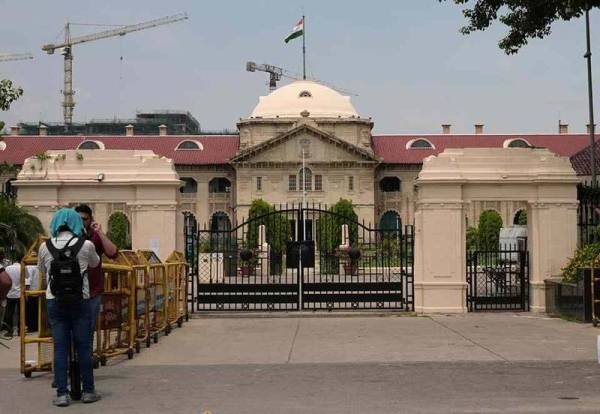
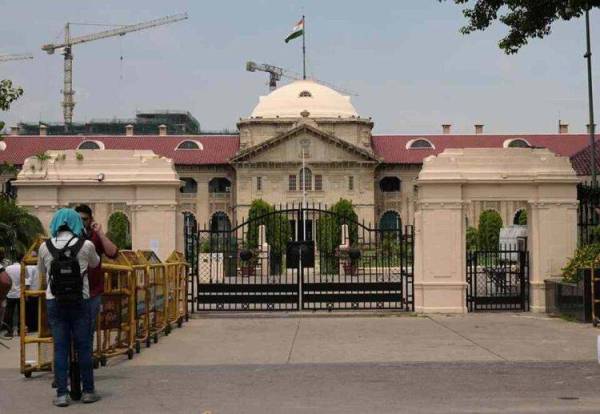
Allahabad High Court: The Allahabad High Court has delivered a significant ruling on the issue of maintenance under criminal law, holding that a wife is not entitled to claim maintenance if her own actions, or those of her close family members, have directly contributed to the husband’s inability to earn a livelihood. The Court observed that granting maintenance in such exceptional circumstances would amount to grave injustice and would defeat the purpose of the law meant to protect genuinely dependent spouses.
Background of the Case
The case originated from Kushinagar district, where a woman had approached the Family Court seeking interim maintenance from her husband under Section 125 of the Criminal Procedure Code. The husband, by profession a homeopathy doctor, opposed the application by stating that he had lost his capacity to earn due to a violent incident involving the wife’s family members. After examining the facts, the Family Court rejected the plea for interim maintenance, leading the woman to file a criminal revision petition before the High Court.
Findings of the Family Court
The Family Court at Padrauna carefully assessed the circumstances placed on record and concluded that the husband was no longer in a position to maintain himself, let alone provide financial support to his wife. The court found that the husband’s inability to work was not due to negligence or unwillingness, but was the direct result of a serious criminal act committed against him. On this basis, the trial court dismissed the application for interim maintenance.
Violent Incident and Its Impact
According to the case records, the incident occurred on April 13, 2019, when the husband was attending to his professional duties at his clinic. At that time, the wife’s father and brother, along with several other individuals, allegedly entered the clinic, verbally abused him, and escalated the confrontation. When the husband resisted, the wife’s brother reportedly fired at him, causing a severe firearm injury.
Medical evidence placed before the court revealed that a pellet from the gunshot injury remains lodged in the spinal region of the husband. Doctors advised that any attempt to remove the pellet could lead to paralysis. Due to this injury, the husband is unable to sit comfortably for extended periods and has been rendered incapable of continuing his medical practice or earning income through any regular employment.
High Court’s Legal Reasoning
While hearing the criminal revision petition, the Allahabad High Court closely examined whether the statutory right to maintenance could be enforced in such circumstances. The Court noted that Section 125 of the Criminal Procedure Code is a social welfare provision intended to prevent destitution and vagrancy. However, the benefit of this provision cannot be claimed mechanically without considering the conduct of the parties and the factual background.
The Court emphasized that if the wife or her family members are responsible for the situation that has destroyed the husband’s earning capacity, compelling him to pay maintenance would be unjust. The judges reasoned that the law does not intend to penalize a person who has been pushed into financial helplessness due to violence inflicted by the claimant’s side.
Arguments Raised by the Revisionist
The counsel representing the woman argued that the order passed by the Family Court was illegal and arbitrary, and that it lacked proper application of judicial mind. It was contended that the right to maintenance is independent of other disputes between the parties and that the wife should not be denied interim relief. However, the High Court found no merit in these submissions, stating that the lower court had passed a reasoned order after evaluating evidence and circumstances.
Significance of the Judgment
This ruling highlights an important legal principle in maintenance jurisprudence. While courts remain sensitive to the financial needs of spouses, they also recognize that relief under maintenance laws must be fair and equitable. The judgment reinforces that maintenance cannot be claimed as an absolute right when the claimant’s conduct has played a decisive role in causing the respondent’s financial incapacity.
The decision is likely to serve as a reference point in future cases involving maintenance claims where allegations of misconduct and criminal actions directly affecting earning capacity are involved.
-
Amber Khan’s bold take on staying forever young

-
The Longest-Lasting Tools I Own Are Older Than Me

-
iPhone 16 series drives 24% growth in Apple shipments in India in 2025; iPads see modest gains

-
iPhone 16 series drives 24% growth in Apple shipments in India in 2025; iPads see modest gains
-
Apple iPhone just had its best year in India as the smartphone market stays broadly flat