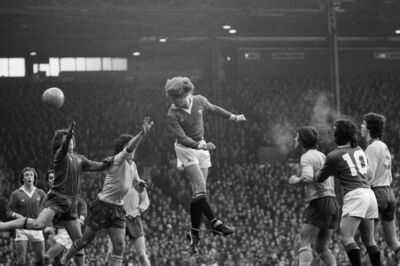
Former footballer Gordon McQueen's brain showed evidence of damage from heading the ball which contributed to his death, an inquest ruled today.
The Scottish legend died from pneumonia, vascular dementia and chronic traumatic encephalopathy, known as CTE, which the coroner said was linked to heading the ball.
Footballing greats Bryan Robson, Gary Bailey, Lou Macari and Joe Jordan gave evidence that McQueen was consistenly asked to head the ball in both defending and attacking situations in training.
Prof Willie Stewart, a consultant at Queen Elizabeth University Hospital in Glasgow who examined McQueen's brain after his death, said that CTE was present.
• Marseille chief opens up on Mason Greenwood transfer after turning to mum for advice
• Mikel Arteta accused of making 'knee-jerk reaction' as Arsenal star left unhappy
JOIN US ON FACEBOOK!Latest news, analysis and much more on Mirror Football's Facebook page
North Yorkshire senior coroner Jonathan Heath ruled that post mortem examination had found evidence of the damage caused by heading during his career.
Giving a narrative verdict, he said: "The post mortem examination confirmed the presence of CTE. The cause of death was pneumonia in the lower lung likely to be as a consequence of his vascular dementia.
"It is also likely that the impact of heading the ball contributed to his CTE. The condition has to be considered as a factor in his cause of death."
The conclusion was that McQueen had died from pneumonia, vascular dementia and CTE.
In a statement following the inquest, the McQueen family said Gordon did not simply die with CTE – he lived with it.
”Gordon loved football, but the later years of his life were incredibly difficult” the family said.
Experts increasingly warn that CTE begins in youth, develops silently over many years and that it is not confined to elite football, but can affect players from grassroots through to the professional game, wherever repetitive head impacts occur.

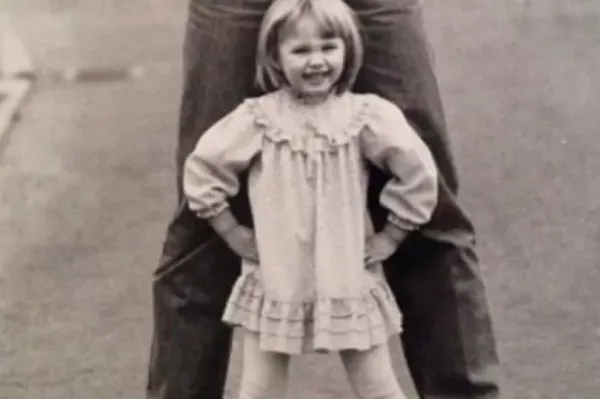
Head Safe Football, a registered charity dedicated to player welfare, said the McQueen inquest should act as a catalyst for meaningful change.
“Gordon’s story shows why football must take action to protect its future” Dr. Judith Gates, chair and Co-founder of Head Safe Football said.
"Living with CTE is devastating, both to the affected players and to their families.
"Because exposure begins early and accumulates over time, reduction in heading should start with young players and then be applied to every level.
"The message from Head Safe Football is simple. Think head safe: reduce heading in training."
Man Utd and Scotland legend McQueen was diagnosed with vascular dementia, and died in 2023 aged 70.
In evidence heard earlier this month, daughter Hayley McQueen, a Sky Sports presenter, was asked whether her dad thought football had contributed to his condition.
She told the hearing in Northallerton, North Yorkshire: "He would say 'yes, heading a football all those years probably hasn't helped'. I remember coming home from school and Dad would be in bed. Or having a lie down.
"He would say he's been having headaches. I remember thinking 'why are you having headaches?'" McQueen made almost 350 appearances for St Mirren, Leeds and United between 1970 and 1985.
Hayley told the inquest she did not remember him having head injuries during his career, other than a few concussions.
But she outlined how loved ones noticed a change in his personality not long after his 60th birthday. He struggled with his swallowing and that "continued for many years," Hayley said.
"His balance was very, very off and his personality started to change. My dad was very outgoing, dinners, part of the after-dinner circuit. He became off, which wasn't really my dad."
Dysphagia caused the problem with swallowing, though McQueen had also been diagnosed with throat cancer. "He just wouldn't really know what year it was or what day it was," Hayley added.
"He was very active and trying to do crosswords and watch football. He lost the ability to write. He couldn't make a cup of tea. He got confused about what went where. He kept saying, 'there's something not right in my head'. He used to get confused about things. Never people - he had an incredible memory for the past.
"It was more the withdrawn nature of my dad. He would be the centre of attention, but he had to be asked a question to speak."
Michael Rawlinson KC, representing the McQueen family, asked how her father scored his goals.
She replied: "Mainly with his head, from a set-piece." They learned more about his illness after her mum Yvonne spoke with Dawn Astle, daughter of ex-England striker Jeff Astle, who had the brain condition chronic traumatic encephalopathy (CTE) and died in 2002 aged 59.
Prof Stewart, a consultant at Queen Elizabeth University Hospital in Glasgow who examined McQueen's brain after his death, said that CTE was present.
"Gordon technically fell into the lower stage of the disease, although on the threshold of the higher stage," he added.
Prof Stewart said symptoms of CTE were cognitive decline and neuro-behaviour change, and that they "can't be explained by another condition."
He said symptoms were "typical in individuals who have long careers, professional footballers and rugby players". Asked if there was a causal link between CTE and repetitive head injury, he replied: "The answer to that is yes."
Mr Heath said the post-mortem found pneumonia in McQueen's right lung, mixed vascular dementia and CTE.
Prof Stewart, who conducted a 2021 study on whether certain positions on the pitch were more associated with neurodegenerative disease than others, said: "The players, the goalkeepers who don't head the ball had a risk equivalent to general population, whereas in outfield positions, particularly defenders, the risk was higher."
The English and Scottish Football Associations, and Manchester United were all represented at the inquest.
Join our new WhatsApp community and receive your daily dose of Mirror Football content. We also treat our community members to special offers, promotions, and adverts from us, and our partners. If you don't like our community, you can check out any time you like. If you're curious, you can read our Privacy Notice.
-
Sam Curran’s ‘Moon Ball’ Leaves Batters Guessing In Modern Cricket

-
Do you not lose weight in winter? Yoga and Ayurveda changed the life of civil engineer, Swami Ramdev told how
-
Antarctica Blood Falls: What is the secret of the red water flowing from the white ice of Antarctica?

-
Take advantage of remaining reward codes, get weapons and diamonds

-
Nothing confirms first Indian flagship store in Bengaluru, opening February 14