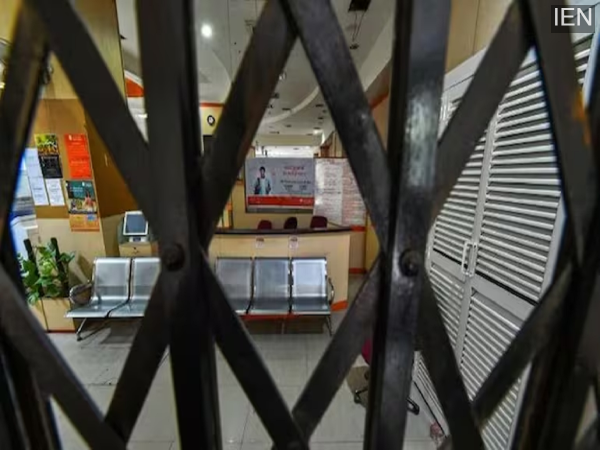
Banking operations across several public sector banks in India may face disruptions today, January 27, as bank employees have announced a nationwide strike to press for the implementation of a five-day working week. Customers visiting bank branches on Tuesday could encounter delays and limited services, especially at major government-owned banks.
The strike has been called under the banner of the United Forum of Bank Unions (UFBU), a collective body that represents nine major bank employee unions in the country. According to union leaders, repeated discussions with the government and banking authorities have failed to yield a concrete decision, leaving them with no option but to proceed with industrial action.
Why Bank Employees Are Going on Strike
At the core of the protest is the long-pending demand to introduce a uniform five-day workweek in the banking sector. This issue is linked to the wage settlement reached in March 2024 between the Indian Banks’ Association (IBA) and bank unions. Under that agreement, there was a consensus that all Saturdays would be declared holidays, effectively shifting banks to a Monday-to-Friday working schedule.
However, despite repeated assurances, the policy has not yet been implemented on the ground. Union representatives allege that the delay has continued for months without any formal notification or timeline from the authorities. Frustrated by the lack of action, UFBU decided to escalate the matter through a one-day strike.
Union leaders have also pointed out that conciliation meetings were held at the level of the Chief Labour Commissioner to prevent the strike. Despite these efforts, no resolution could be reached, as the parties failed to arrive at a mutually acceptable agreement. As a result, the strike call for January 27 has been maintained.
Which Banks Are Likely to Be Affected
If the strike is observed fully, most public sector banks are expected to see significant disruption in branch-level operations. This includes major lenders such as:
-
State Bank of India (SBI)
-
Punjab National Bank (PNB)
-
Bank of India
-
Bank of Baroda
-
Other nationalised banks
Services that may be affected include cash deposits and withdrawals, cheque clearing, account opening, loan processing, and other counter-based transactions. Several banks have already begun informing customers about the possibility of inconvenience and have advised them to plan their visits accordingly.
In contrast, private sector banks such as HDFC Bank, ICICI Bank, Axis Bank, and Kotak Mahindra Bank are not part of the strike. Their branches are expected to function normally, providing some relief to customers who urgently need banking services.
Current Working System and Union’s Proposal
At present, bank employees receive holidays on the second and fourth Saturdays of every month, while the remaining Saturdays are working days. Under the proposed five-day workweek system, all Saturdays and Sundays would be off, aligning bank working days with many other government and financial institutions.
To address concerns about productivity and customer service, unions have proposed a compensatory arrangement. According to UFBU, employees are willing to work an additional 40 minutes from Monday to Friday to ensure that the total weekly working hours remain unchanged.
Union leaders argue that several key institutions already follow a five-day schedule without any negative impact on efficiency. These include the Reserve Bank of India (RBI), Life Insurance Corporation (LIC), stock exchanges, and many central government offices. They believe that extending the same system to banks will improve work-life balance without harming customer service.
What Customers Should Do
Customers who rely on public sector banks for urgent work have been advised to complete essential transactions in advance or consider using digital banking channels where possible. Online banking, mobile apps, UPI services, and ATMs are expected to remain operational, although branch-based services could be limited.
Those with critical tasks such as large cash transactions, document submissions, or loan-related formalities may face delays if the strike is widely observed.
Outlook and Next Steps
The outcome of the strike will depend on further negotiations between the unions, the Indian Banks’ Association, and the government. If no breakthrough is achieved, unions may consider extending their agitation in the coming weeks.
For now, customers should remain cautious, track updates from their respective banks, and plan their banking activities accordingly, as January 27 could see partial or full disruption across many public sector bank branches.
-
India Set for Biggest Auto Market Opening as EU Trade Pact Nears Finish Line

-
Qualcomm backs SpotDraft to scale on-device contract AI with valuation doubling toward $400M

-
Apple launches new AirTag with longer range and louder speaker

-
Get rid of unwanted calls: Complete information about blocking spam calls in Android phone

-
WPL 2026: Historic hundred by Nat Sciver-Brunt guides Mumbai Indians to victory against RCB