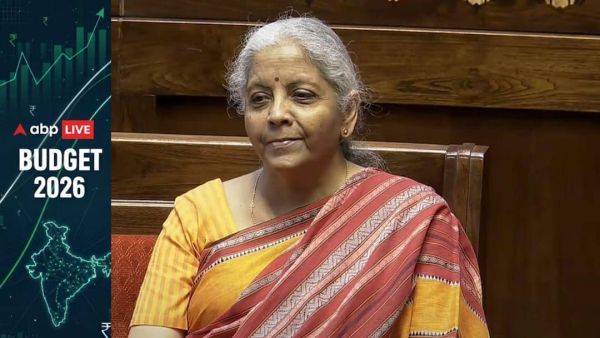
With Finance Minister Nirmala Sitharaman putting the final touches to her ninth consecutive Union Budget, attention is beginning to shift from the speech in Parliament to the team that is drafting it behind closed doors.
Against the backdrop of a 7.4 per cent growth rate, an uncertain geopolitical environment and the third full Budget of the Modi 3.0 government, a small circle of senior officials in the Finance Ministry is shaping what could be one of the most closely watched fiscal statements in recent years.
The Budget is not the work of a single office. It is the product of months of coordination between multiple departments, each guarding a critical lever of policy: taxation, spending, banking, disinvestment and macroeconomic strategy.
Together, these officials decide not only how much the government will spend and collect, but also how India signals stability, reform and ambition to investors, markets and voters.
The First Woman to Lead Economic Affairs
At the heart of the exercise is Anuradha Thakur, Secretary, Department of Economic Affairs: the primary architect of Budget 2026-27. As head of the department, she oversees the macroeconomic framework, resource allocation and the preparation of the Budget documents themselves.
A 1994-batch IAS officer of the Himachal Pradesh cadre, Thakur took charge on July 1, 2025, making this her first Budget in the top job. She is also the first woman IAS officer to head the Department of Economic Affairs, a symbolic milestone in a ministry long dominated by male leadership.
Her team in the Budget Division determines how growth assumptions, fiscal deficit targets and sectoral priorities translate into actual numbers.
The Revenue Gatekeeper: Designing the Tax Proposals
If Thakur defines the framework, Arvind Shrivastava, Revenue Secretary, decides how the money is raised. He is responsible for Part B of the Budget Speech, which covers tax proposals, from income tax and corporate tax to GST and customs duties.
This will be Shrivastava’s first Budget as Revenue Secretary, but not his first brush with Budget-making. He earlier served as Joint Secretary in the Budget Division and later handled finance-related matters in the Prime Minister’s Office.
With expectations of customs duty rationalisation and possible tweaks to TDS rules, his role is central to revenue mobilisation at a time when the government is balancing fiscal discipline with growth support.
Watching the Purse Strings: Enforcing Fiscal Discipline
On the spending side, the task falls to Vumlunmang Vualnam, Expenditure Secretary, often described as the government’s ‘guardian of the purse’.
His department oversees subsidies, monitors the implementation of central schemes and ensures that fiscal deficit targets are respected. In practical terms, this means deciding how much room ministries have to expand welfare schemes, fund infrastructure, and roll out new programmes.
In a Budget where fiscal consolidation remains a priority, Vualnam’s department plays a decisive role in determining whether ambition fits within arithmetic.
Banking, Insurance and Inclusion
The financial sector file rests with M Nagaraju, Financial Services Secretary. His department oversees public sector banks, insurance companies and pension systems, while also driving financial inclusion and social security schemes.
From credit growth and digital adoption to the health of state-owned lenders, Nagaraju’s team influences how Budget announcements translate into lending capacity and financial stability. In a system where banks are central to funding both consumption and infrastructure, this portfolio has direct implications for growth.
Disinvestment and Asset Sales: The Non-Tax Revenue Push
Another crucial lever is held by Arunish Chawla, Secretary, Department of Investment and Public Asset Management (DIPAM). He manages the government’s disinvestment and privatisation roadmap and sets non-tax revenue targets from stake sales in CPSEs.
Whether the government accelerates asset monetisation or slows down strategic sales will shape both fiscal arithmetic and market sentiment. In years when tax revenues are under pressure, disinvestment often becomes the silent balancing tool.
Public Enterprises and Capital Expenditure
Capital spending by state-owned firms is monitored by K Moses Chalai, Secretary, Department of Public Enterprises. His department tracks how CPSEs use budgetary allocations, monitors asset monetisation and assesses the financial health of government-owned companies.
With capital expenditure a key driver of growth, Chalai’s assessments influence how aggressively the state sector invests in infrastructure, energy and manufacturing.
The Macroeconomic Brain Trust
Beyond departmental silos, the broader economic narrative is shaped by V Anantha Nageswaran, Chief Economic Adviser.
His office provides forecasts of economic growth, analyses sectoral performance across agriculture, industry and services, and assesses global risks. The CEA’s inputs define the assumptions that underpin revenue projections, spending capacity and reform sequencing.
He also advises the Finance Minister on fiscal policy, structural reforms and financial strategy, ensuring that the Budget aligns with both short-term realities and long-term ambition.
Why This Team Matters More Than Ever
This year’s Budget comes at a delicate moment. India is growing at 7.4 per cent, but faces global headwinds from geopolitics, trade disruptions and volatile financial markets. It is also the third full Budget of the Modi 3.0 government, when medium-term priorities begin to crystallise.
Together, these officials must decide how to balance:
- Fiscal consolidation and growth support
- Welfare spending and capital investment
- Tax stability and reform
- Disinvestment targets and market confidence
While the Finance Minister will deliver the speech, the credibility of Budget 2026–27 will rest on the coherence of this team’s work.
-
Meta to trial premium subscriptions for Instagram, Facebook and WhatsApp

-
Meta to trial premium subscriptions for Instagram, Facebook and WhatsApp
-
5 Clever Xbox Controller Accessories You Can 3D Print At Home

-
6 Powerful Truths You Must Know

-
Now Aadhaar update possible sitting at home, new version of Aadhaar App will come with many features.