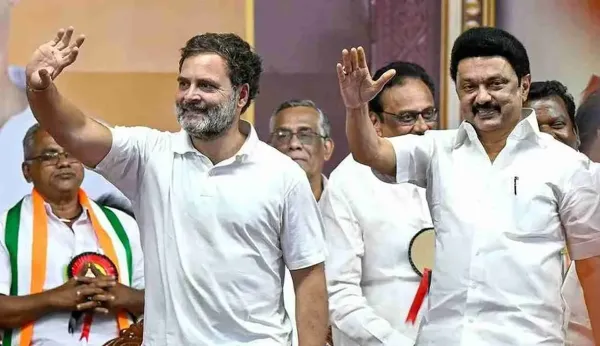
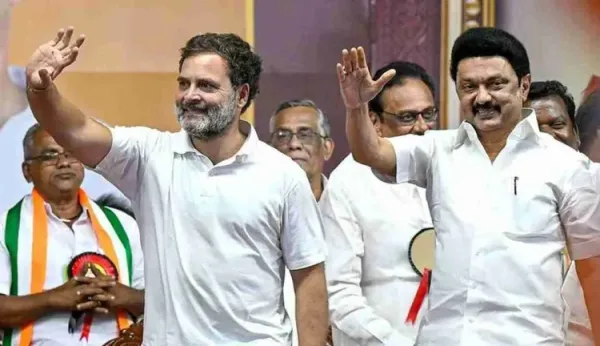
Political differences within the Congress-led INDIA opposition alliance have come into sharper focus following public remarks by leaders from Tamil Nadu’s ruling Dravida Munnetra Kazhagam (DMK). The statements have prompted strong reactions from rival parties, adding to the broader debate over unity, leadership, and electoral strength ahead of upcoming political contests.
BJP Claims Alliance Unity Is Under Strain
Reacting to the developments, National Spokesperson Rajeev Ranjan Prasad said the comments made by DMK leaders reveal growing divisions within the opposition grouping. Speaking to IANS on Tuesday, Prasad argued that the alliance is showing signs of internal stress and losing its collective appeal among voters.
He claimed the public disagreements suggest that coordination between Congress and its regional partners is weakening. According to him, the opposition alliance faces increasing political challenges and risks losing credibility if such differences continue to surface in public.
Allegations of Declining Congress Support
Prasad further asserted that Congress has seen a sharp erosion in public support, particularly in southern states. He contrasted this with what he described as a strengthening political front led by the Bharatiya Janata Party, supported by regional allies such as the AIADMK, PMK, and other parties.
He maintained that this emerging alignment is positioning itself as a serious challenger to the ruling establishment in Tamil Nadu. According to Prasad, the shifting political dynamics indicate that voter sentiment is changing, with greater attention being drawn to alternative alliances.
DMK Leader Questions Congress’ State-Level Strength
The comments from the BJP spokesperson came in response to recent remarks by DMK Madurai district secretary G. Thalapathi. Thalapathi had openly questioned the Congress party’s demand for a larger share of power in Tamil Nadu, arguing that its organisational strength in the state does not justify such expectations.
He suggested that Congress lacks a strong grassroots presence in Tamil Nadu and should assess its political standing realistically. His remarks were seen as unusually candid for a partner within the same opposition alliance.
Credit for INDIA Bloc Formation Sparks Debate
Thalapathi also pointed out that the INDIA bloc was formed through the efforts of several regional leaders, including Tamil Nadu Chief Minister M.K. Stalin, West Bengal Chief Minister Mamata Banerjee, and Samajwadi Party president Akhilesh Yadav. He accused Congress of prioritising its own interests rather than relying on electoral performance or organisational reach.
These comments have fueled debate within political circles about leadership roles and influence within the alliance, especially as regional parties seek greater recognition for their contributions.
JD(U) MP Issues Sharp Criticism
Adding to the controversy, Janata Dal (United) MP Dileshwar Kamait issued a strong rebuke of Congress, claiming the party is facing a severe political decline. He said Congress has been reduced to a minimal legislative presence in Bihar and alleged that even its remaining lawmakers are losing confidence in the party’s future.
Kamait argued that the party’s internal instability reflects its diminishing influence among both voters and elected representatives, further intensifying criticism from within the broader opposition space.
DMK Reaffirms Stand Against BJP Expansion
In his remarks, Thalapathi also cautioned against the BJP’s efforts to expand its influence in Tamil Nadu. He praised Chief Minister Stalin for maintaining what he described as a firm position on Tamil identity, federal rights, and state autonomy.
Thalapathi reiterated that the DMK remains the primary political force opposing the BJP in the state, emphasizing its commitment to protecting regional interests while countering national-level political pressure.
Political Implications Ahead
The exchange of statements has highlighted the complex dynamics within the INDIA bloc, raising questions about cohesion, leadership balance, and electoral strategy. As parties prepare for future elections, how these internal differences are managed may play a significant role in shaping opposition unity and public perception.
-
Punjab CM recalls state's sacrifices in freedom struggle, role as food bowl, sword arm
-
Delhi-NCR braces for winter rain spell, AQI in poor category
-
Today's Birthday: 27th January 2026

-
Delicious Rajasthani Black Carrot Halwa Recipe for Winter Warmth
-
If you live in a rented house, get ready to be happy! The government might give you a big gift in the budget..