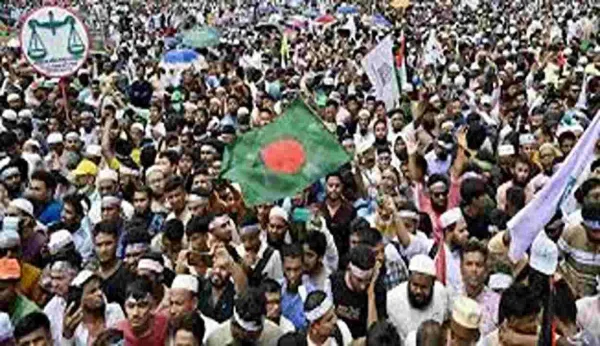
Bangladesh : is facing growing concern over the safety of its Hindu minority as political tensions intensify ahead of the country’s scheduled February elections. Intelligence officials and regional analysts warn that inflammatory rhetoric and organized disinformation campaigns are being used to polarize voters, raising fears of targeted violence during the election period.
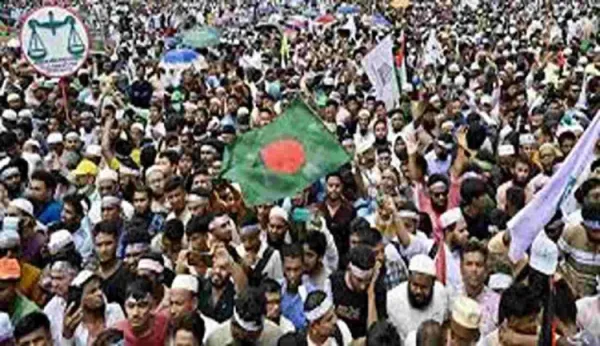
Intelligence Reports Flag Coordinated Provocations
According to officials familiar with recent intelligence assessments, senior political figures met last week to discuss strategies that could inflame communal tensions. These discussions allegedly included efforts to involve radical groups in spreading hostility toward Hindu communities. Security officials describe the situation as increasingly fragile, noting that incidents of intimidation and harassment could escalate as campaigning intensifies.
Authorities say minority groups are already living under strain, with heightened anxiety about what the coming weeks may bring. While sporadic violence has been reported in the past, officials fear the current environment could lead to more organized and widespread unrest.
Campaign Discourse Shifts Away From Policy Issues
Election observers note that traditional campaign themes such as economic growth, public safety, and governance reforms appear to be taking a back seat. Instead, the political narrative is increasingly dominated by identity-based messaging that casts minority communities in a negative light.
Analysts say the use of anti-Hindu and anti-India language has become a convenient rallying point for some candidates, particularly those seeking to consolidate conservative or hardline support. This shift has raised concerns that elections may be fought less on policy differences and more on communal divisions.
Disinformation and Targeted Narratives
Officials also point to what they describe as a deliberate attempt to circulate false narratives about Hindu communities. These alleged campaigns include spreading unverified claims of criminal activity or social unrest attributed to minorities, with the apparent aim of provoking local populations into acts of violence.
Security sources warn that misinformation can quickly inflame tensions in closely knit communities, especially during election seasons when emotions run high. They caution that such tactics could undermine social stability and erode trust between communities.
Regional Politics and the India Factor
Another prominent theme in the campaign discourse centers on former Prime Minister Sheikh Hasina. Several political groups have accused her of being overly aligned with India, framing her as acting against national interests. India has also been criticized for providing her shelter following her removal from power, despite Bangladesh’s calls for extradition.
Experts remain divided on whether this approach will resonate broadly with voters. Surveys and past trends suggest that many Bangladeshis favor stable relations with India, particularly for trade and regional security. Nonetheless, some political leaders appear convinced that religious and nationalist messaging can mobilize segments of the electorate.
Fears of Escalation and Displacement
Security officials say that hardline parties, including Jamaat-e-Islami, have benefited from the current political climate. They warn that continued rhetoric could lead to worsening conditions for minorities, potentially triggering displacement if violence intensifies.
Such an outcome, officials caution, would place additional pressure on border regions already considered sensitive. Any large-scale movement of people could strain local resources and complicate regional stability.
A Longstanding Issue With New Political Stakes
The persecution of religious minorities in Bangladesh is not a new phenomenon. Over decades, the proportion of minority populations has declined due to migration and social pressures. What distinguishes the current situation, officials say, is the explicit use of minority targeting as an electoral strategy.
At the same time, calls from some groups to replace constitutional governance with religious law have further heightened anxiety. In an atmosphere charged with political uncertainty and ideological divisions, minority communities fear that protections may weaken regardless of which party forms the next government.
Officials conclude that risks are likely to remain elevated until the election process concludes, urging vigilance to prevent violence and protect vulnerable populations during this critical period.
-
Punjab CM recalls state's sacrifices in freedom struggle, role as food bowl, sword arm
-
Delhi-NCR braces for winter rain spell, AQI in poor category
-
Today's Birthday: 27th January 2026

-
Delicious Rajasthani Black Carrot Halwa Recipe for Winter Warmth

-
If you live in a rented house, get ready to be happy! The government might give you a big gift in the budget..