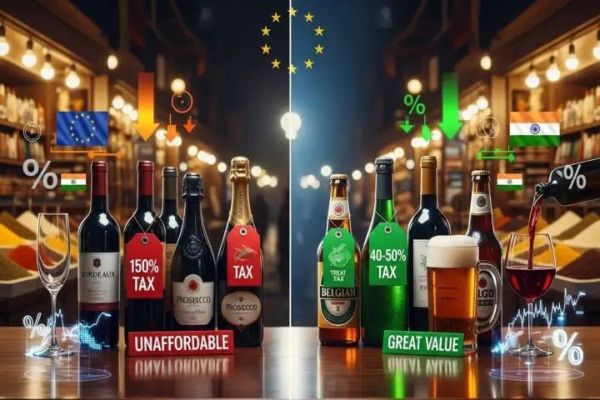
After implementation of FTA, the tariff on alcohol will be reduced to 40 percent and that on beer will be reduced to 50 percent. After the trade deal, the tariff on alcohol will be reduced in a phased manner. For example, the tax on wine will fall from 150% to 75% in the first year and then gradually come down to the minimum level.
The 27 countries of the European Union are considered world leaders in alcohol production. European brands are very popular among the urban middle class of India but their demand is limited due to their high prices. Heineken of Netherlands, Stella Artois and Leffe of Belgium, Warsteiner of Germany, Carlsberg of Denmark and Guinness beer of Ireland are very famous in India. In 2023-24, India had imported spirits worth $64.9 million from the EU, which is now expected to increase manifold.
Indians are also crazy about these wine brands
Premium drinks like France's famous Champagne Moët & Chandon, Italy's Prosecco, Spain's Rioja and Sweden's famous vodka Absolut are also sold in India. But due to high import duty these are very expensive. Because of this, the common man cannot taste them.
How much will the price be reduced?
Let us understand the effect on prices with an example. Suppose the factory price of one Heineken beer (750 ML) is around Rs 850. With 110% tariff, its landed cost was Rs 1,785, which could go up to Rs 3,000 by the time it reached the retail store. Now with 50% tariff, its landed cost will come down to Rs 1,275, due to which the retail price can come to around Rs 2,000.
Similarly, a bottle of Absolut Vodka which was available for more than Rs 4,000 can now be found in the range of Rs 2,500 to Rs 3,000. Mid-range French wines, which earlier cost Rs 2,000, can now be available for just Rs 1,200. However, the final price will also depend on the taxes imposed by the states and other local taxes.
Domestic brands will be challenged
With imported liquor becoming cheaper, not only will consumers get more options, but India's tourism and hospitality (hotels and restaurants) sector will also get a huge boost. Availability of premium wines will attract more international tourists. Experts estimate that alcohol imports could double by 2032, opening up a huge market worth 3 to 5 billion euros for European exporters. On the other hand, this agreement will create tough competition for domestic brands like Kingfisher or local spirits manufacturers. Indian companies will now have to compete with the global giants in terms of quality and price.