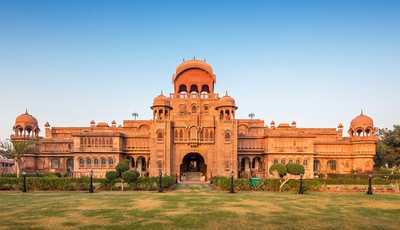
When one thinks of Bikaner, images of royal grandeur and regal charm instantly come to mind and rightly so. This historic city of Rajasthan is not only known for its magnificent heritage but also for the iconic Bikaneri Bhujia, loved across the country. However, to truly understand Bikaner, it is essential to explore its remarkable attractions in and around the city. Located in the heart of the vast golden Thar Desert, Bikaner was founded in 1488 by the Rathore ruler Rao Bika. Steeped in Rajput history, the city is dotted with splendid palaces, ornate havelis, ancient temples, and fascinating museums that vividly portray a glorious bygone era. A visit to Bikaner offers a journey back in time, where rich culture, warm hospitality, and royal traditions continue to leave a lasting impression.
# Junagarh Fort
Junagarh Fort is among the most prominent tourist attractions in Bikaner. Originally founded by Rao Bika in 1478, the fort was later expanded and enhanced by Raja Rai Singh (1571–1611), Karan Singh (1631–1639), and successive rulers. In total, sixteen generations contributed to shaping the present-day fort complex. Unlike most forts in Rajasthan, Junagarh Fort was built on plains rather than hilltops, emphasizing grandeur and aesthetics over defense.
The fort complex houses several palaces and temples built in traditional architectural styles. Its exquisitely carved balconies, courtyards, and jharokhas immediately draw attention, while the Zenana quarters stand out for their artistic finesse. Intricate mirror work, vibrant frescoes, and delicate lacquer detailing add to its visual appeal. Constructed primarily in red sandstone brought from Jaisalmer, the fort showcases Indo-Mughal architecture at its finest. Popular sections within the complex include Badal Mahal, Gaj Mandir, Phool Mahal, Anup Mahal, Hawa Mahal, and Vikram Vilas Palace, making Junagarh Fort one of the top places to visit in Bikaner.
# Gajner Palace
Located around 20 km from Bikaner, Gajner Palace is a stunning lakeside palace that now functions as a heritage hotel. Once the royal retreat of Maharaja Sir Ganga Singh, the palace offers visitors an opportunity to experience royal hospitality, either through an overnight stay or a day visit. Set against the serene Gajner Lake, the palace is divided into several sections such as Dungar Niwas, Mandir Chowk, Gulab Niwas, and Champa Niwas—each meticulously designed and maintained.
Spread over nearly 6,000 acres, Gajner Palace was originally built as a summer residence and later served as a hunting lodge for British officials. Today, the surrounding area is home to wildlife like Nilgai, Black Buck, and Chinkara. Built with red sandstone, the palace reflects a harmonious blend of Rajasthani, Mughal, and European architectural styles. Visitors can enjoy activities such as desert safaris, boating, and nature walks nearby. Converted into a heritage hotel in 1976, Gajner Palace remains one of Bikaner’s must-visit attractions.
# Karni Mata Temple
The Karni Mata Temple is one of the most unique and famous temples in India, drawing visitors from across the world. Located near Bikaner, this 15th-century temple is dedicated to Karni Mata, believed to be an incarnation of Goddess Durga. The temple is renowned for its thousands of rats—considered sacred—who freely roam the premises.
Legend states that Karni Mata granted her followers rebirth in the form of rats after Lord Yama refused to restore her son’s life. Today, around 20,000 rats reside within the temple, and it is considered auspicious if one crosses your path—especially a rare white rat. Devotees even offer food to the rats as part of worship. The temple witnesses large gatherings during the Karni Mata Festival, held twice a year during Navratri, making it one of the top tourist places in Bikaner.
# National Research Centre on Camel
One of the most fascinating attractions in Bikaner is the National Research Centre on Camels—the only institution of its kind in Rajasthan. Located about 8 km from the city, the center functions as a camel breeding and research facility and is open to visitors interested in learning more about this iconic desert animal.
The center houses five major camel breeds, including Bikaneri, Jaisalmeri, Kachchhi, Mewari, and Jalori camels. Visitors can enjoy camel rides and safaris, explore the on-site museum, and learn about the history and development of camels in the region. Spread across 2,000 acres, the center also operates a camel milk parlor offering ice creams and beverages made from camel milk. It plays an important role in supporting local camel rearers through research and innovation.
# Sand Dune Safari
A desert safari is one of the most exciting experiences in Bikaner. Thanks to its proximity to the Thar Desert, the city offers thrilling sand dune safaris that include camel rides, desert camping, and cultural experiences. Staying at desert camps allows travelers to witness local traditions, folk music, and dance performances under the starlit sky.
During the safari, visitors may spot desert wildlife such as antelope, fox, jackal, desert cats, chameleons, and monitor lizards. The experience also provides insight into the rural desert lifestyle and nearby villages. Popular safari locations include Raisar, Khichan, Balakaya Dhora, and Phalodi. Watching the sunset over the golden dunes is a magical way to conclude the day and one of the highlights of Bikaner tourism.
# Rampuria Haveli
Rampuria Haveli is a magnificent cluster of nine havelis built in the 15th century by the wealthy Rampuria merchant family. Constructed from Dulmera red sandstone, these havelis are known for their intricate carvings, ornate façades, and opulent interiors adorned with woodwork, gold paintings, and artistic artifacts.
One of the havelis now operates as a heritage hotel—Hotel Bhanwar Niwas—managed by the Rampuria family, offering visitors a chance to stay amid royal surroundings. Blending Mughal, Rajput, and Victorian architectural styles, Rampuria Haveli is among the most photographed landmarks in Bikaner and provides a glimpse into the luxurious lives of the city’s former merchant elite.
# Bhandasar Jain Temple
Bhandasar Jain Temple is one of the most revered Jain temples in Bikaner and is dedicated to the 5th Jain Tirthankara, Sumatinath. Built in the 15th century by the wealthy merchant Bhandasa Oswal, the three-storeyed temple is a stunning example of Rajputana architecture.
The temple features marble pillars, gold-leafed walls, intricately painted ceilings, and detailed mirror work. Frescoes depicting the lives of the 24 Jain Tirthankaras further enhance its beauty. A unique belief associated with the temple is that nearly 40,000 kg of ghee was used instead of water in its construction. Visitors are required to remove all leather items before entering, in keeping with Jain traditions. The peaceful ambiance makes it an ideal place for quiet reflection.
# The Royal Cenotaphs
Located about 8 km east of Bikaner at Devi Kund Sagar, the Royal Cenotaphs commemorate the city’s former rulers. These beautifully crafted memorials reflect the architectural brilliance of Rajput traditions. Cenotaphs dedicated to earlier rulers are made of red sandstone, while later ones are constructed in marble.
Each cenotaph differs in design based on whom it honors—those for men feature vertical slabs, women’s memorials bear foot imprints, and children’s cenotaphs are simpler structures without canopies. The most elaborate cenotaph belongs to Maharaja Anup Singh (1669–1698), adorned with carvings of peacocks, animals, and scenes from Lord Krishna’s life. A visit here offers deep insight into royal customs, rituals, and history.
# Lallgarh Palace and Museum
Lallgarh Palace is a striking architectural landmark built by Maharaja Ganga Singh in the early 20th century. Designed by British architect Sir Samuel Swinton Jacob, the palace beautifully blends Rajput, Mughal, and European styles. Today, it functions as a heritage hotel, offering visitors a luxurious stay amidst traditional elegance.
The palace complex houses the Shri Sadul Museum, located in Ganga Niwas, which displays miniature paintings of the Bikaner School of Art, royal armory, terracotta artifacts, and manuscripts written on parchment and metal plates. The palace’s red sandstone structure, refined interiors, and exceptional hospitality make it one of the finest places to stay and explore in Bikaner.
# Gajner Wildlife Sanctuary
Situated about 32 km from Bikaner, Gajner Wildlife Sanctuary is a haven for nature and wildlife lovers. Once a royal hunting ground, the sanctuary now protects diverse flora and fauna around Gajner Lake. It shelters animals such as Chinkara, Black Buck, Nilgai, Wild Boar, Antelope, and Desert Fox.
The sanctuary is also rich in birdlife, hosting species like Sandgrouse, Demoiselle Cranes, waterfowl, and migratory birds. Wildlife safaris here provide excellent opportunities for animal sightings and birdwatching. Often combined with visits to Gajner Palace and Lake, the sanctuary is one of the top sightseeing spots near Bikaner.
-
Warp & woof of the new trade design

-
Funding unspent is spending denied

-
Rob Schneider and wife Patricia split after 15 years — divorce filing confirms marriage is over, couple share 2 kids

-
Who is Colleen Aubrey and what is Project Dawn? Here's how Amazon supports affected employees and which teams and businesses are impacted by project

-
Word of the day: Verisimilitude