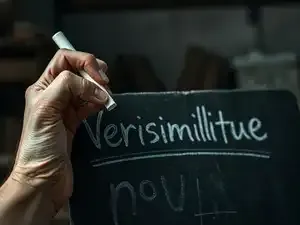
Verisimilitude means "similarity to the truth" or "looking real". Writers and filmmakers use it to make stories believable, even if the events didn’t actually happen.
The word “verisimilitude” is pronounced like this:
VEH-ruh-sim-uh-LOO-d
Oregon State University says it helps literature feel real. Characters, dialogue, places, and images should feel believable and lifelike. Details like names, cars, cities, and small actions make a story realistic.
It means the story feels real and believable to the reader.
Q2. How do writers add verisimilitude?
By adding real names, places, dialogue, and small realistic details.
History of the word Verisimilitude
The word verisimilitude comes from the Latin language. It comes from verisimilitudo, which means having the appearance of truth. The Latin parts are verum (truth) and similis (similar). English writers borrowed the word from Latin, not created it themselves. The word first appeared in English between 1595 and 1605. It was mainly used in literature, art, and philosophy. Over time, it became important in writing, films, and storytelling. Today, it is used to talk about how real or believable a story feels.The word “verisimilitude” is pronounced like this:
VEH-ruh-sim-uh-LOO-d
- VEH → like “vet” without the “t”
- ruh → soft “r” sound
- sim → like “sim” in “simple”
- uh → short “uh” sound
- LOO → like “loo” in “kangaroo”
- d → soft “d” at the end
Origin of the Word
First recorded between 1595–1605, as stated by Merriam-Webster. Comes from Latin: vērīsimilitūdō, from vērum (truth) + similitūdō (similarity).Oregon State University says it helps literature feel real. Characters, dialogue, places, and images should feel believable and lifelike. Details like names, cars, cities, and small actions make a story realistic.
How to use Verisimilitude in sentences
- The movie felt real because it had a lot of verisimilitude.
- The writer added small details to give verisimilitude to the story.
- Her painting has verisimilitude because it looks like a real garden.
- The novel’s verisimilitude made the characters feel alive.
- Even though it is a fantasy, the story has verisimilitude that makes it believable.
Opposite words for verisimilitude
- Unrealism
- Unbelievability
- Fakeness
- Artificiality
- Implausibility
Synonyms of Verisimilitude
- Realism,
- Relevance,
- Believability
FAQs
Q1. What does verisimilitude mean in stories?It means the story feels real and believable to the reader.
Q2. How do writers add verisimilitude?
By adding real names, places, dialogue, and small realistic details.