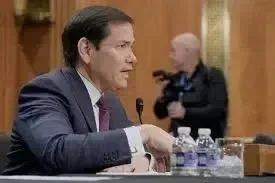
Rubio: US Secretary of State Marco Rubio appeared before a Senate panel this week amid pointed questions about the scope of presidential war powers, the future of the NATO alliance, and Washington’s recent actions in Venezuela. The hearing reflected broader concerns in Congress about how far the executive branch can go without formal authorization, and what those decisions mean for America’s role abroad.
Debate Over Constitutional War Powers
A central focus of the hearing was whether the operation that resulted in the arrest of Nicolás Maduro constituted an act of war under the US Constitution. Rubio firmly rejected that characterization, telling senators the action did not meet the legal threshold that would require a declaration of war by Congress. He argued that the administration viewed the operation as limited in scope and purpose, rather than a military conflict.
Rubio’s testimony emphasized that the administration believes it acted within established legal boundaries, a position that immediately drew skepticism from some lawmakers.
Concerns About Precedent and Executive Power
Senator Rand Paul challenged Rubio’s interpretation, warning that such actions could erode Congress’s constitutional authority over war-making decisions. Paul argued that allowing presidents to define military engagements narrowly could set a dangerous precedent for future administrations.
In response, Rubio said the United States must retain the ability to act decisively when national interests are at stake. He maintained that safeguarding the country’s political system and security sometimes requires swift decisions, even when those decisions provoke debate over constitutional roles.
Tensions Over Congressional Consultation
Rubio acknowledged that disagreements between Congress and the White House over consultation are not new. He noted that friction over briefings and advance notice has persisted across multiple administrations, regardless of party control.
Addressing why lawmakers were not informed earlier about the Venezuela operation, Rubio said the plan only became viable late in the process. According to his account, there was no opportunity for earlier consultation because the scenario had not yet materialized as a realistic option.
NATO’s Future and Burden-Sharing
The hearing also turned to the state of NATO, where Rubio defended the administration’s approach while conceding that strains exist within the alliance. He argued that the core mission of NATO remains sound, but its capabilities must evolve to reflect current security challenges.
Rubio criticized what he described as Europe’s growing dependence on US military strength, pointing to years of declining defense spending by several allies. Without American leadership and resources, he said, the alliance would struggle to function effectively. He urged European governments to meet their spending commitments and invest in the capacity needed to contribute meaningfully to collective defense.
Position on Greenland and Diplomatic Limits
Questions about US intentions toward Greenland prompted Rubio to stress diplomacy over coercion. He referenced remarks by Donald Trump, saying the president had publicly ruled out the use of military force in any discussions involving the territory.
Rubio framed the administration’s stance as one grounded in dialogue and cooperation, seeking to dispel speculation that Washington might pursue more aggressive measures in the Arctic region.
Future Military Role in Venezuela
Addressing fears of a broader conflict in Venezuela, Rubio sought to reassure lawmakers that the United States has no plans for military intervention there. He said the administration neither expects nor intends to deploy combat forces in the country.
According to Rubio, the only US military personnel present in Venezuela would be marine guards assigned to protect diplomatic facilities. He portrayed this limited presence as routine and defensive, rather than a step toward escalation.
A Broader Debate Continues
The hearing underscored enduring disagreements in Washington over foreign policy authority, alliance management, and the balance between speed and oversight. While Rubio defended the administration’s decisions as lawful and necessary, senators from both parties signaled that questions about transparency and constitutional limits are far from settled.
-
February 2026 Bank Holidays: How many days will banks be closed in February? Check the RBI holiday list before the month begins..

-
Get a fixed interest of ₹39,000+ on ₹1,00,000! This government bank is offering incredible returns on FDs; make your investment plan today..

-
Home Loan: Are you struggling with your home loan EMIs? Just one decision can save you lakhs of rupees...

-
Personal Loan vs Loan Against Securities: Need money urgently? Personal loan or LAS - find out which one is best for you..

-
Credit Score: Why is your credit score dropping, even though you feel like you're doing everything right?