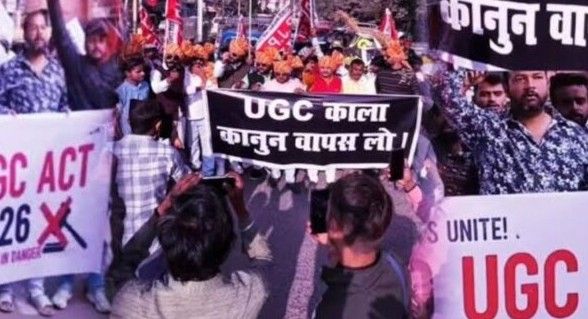
ugc act 2026: The University Grants Commission, the apex body controlling the higher education system of the country, is surrounded in controversies these days. Due to be notified on 13 January 2026“UGC Parity Regulations 2026”On one hand, it is being said to be a big step towards establishing equality in educational campuses, on the other hand, the protest against it from organizations of the general category has now reached from the streets to the Supreme Court.
What are UGC Parity Regulations 2026? (UGC ACT 2026)
The purpose of this regulation brought by the UGC is to eliminate discrimination on the basis of religion, caste, sex, place of birth and disability in universities and colleges. This regulation provides institutional protection to Scheduled Castes, Scheduled Tribes, Other Backward Classes, Economically Weaker Sections and persons with disabilities. This regulation has been prepared after the directions of the Supreme Court, to prevent recurrence of cases like Rohit Vemula and Payal Tadvi.
What are the provisions for students and teachers?
Under the new rules, in every higher educational institution
Equal Opportunity Center, parity committee And Equity Squad Formation of ESIC has been made mandatory. Students will have to give an affidavit of non-discrimination at the time of admission. Apart from this, instructions have been given to ensure 24×7 equality helpline, online complaint portal, fair hostel and mentorship arrangements.
On violation of rules, UGC can take strict action like stopping the grant or canceling the recognition.
Why are the rules being opposed?
These rules are being opposed the most by organizations of the general category. Opponents say that by misusing these provisions, false caste allegations can be made against students and teachers. They also argue that the definition of caste discrimination in the rules is one-sided, due to which all classes do not get equal protection.
What arguments are being given in support?
Supporters of the rules and UGC say that this step National Education Policy 2020 This is in line with the spirit of the Act. This will enable students from underprivileged sections to receive education without fear and will ensure accountability in institutions. Supporters believe that such rules will help prevent future tragedies to caste discrimination.
What is the matter in the Supreme Court?
A petition has been filed in the Supreme Court against this regulation, in which Regulation 3(c) has been challenged. The petitioner argues that this provision violates Articles 14, 15(1) and 21 of the Constitution, as it does not provide equal protection to all citizens.
Now the final decision on this entire controversy is in the hands of the court. Overall, the UGC Parity Regulations 2026 are an attempt at reform and equality in education, but social and constitutional debate has intensified regarding its provisions.
-
Even Half an Hour Late Will Ruin Your Year: BSEB Issues Guidelines
-
'Enchanted' and forgotten peninsula overlooked for more famous neighbour

-
Video: Car rams four parked vehicles in Hyderabad's Abids

-
Volkswagen Tayron R-Line India-spec revealed: Engine, features and launch details

-
India's automobile exports cross 53 lakh units, Economic Survey shows strong growth