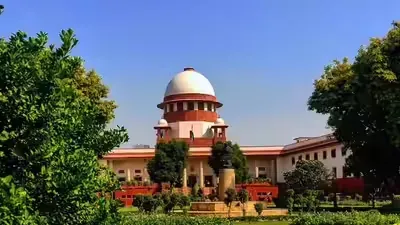
Supreme Court: India’s top court has put the recently notified University Grants Commission regulations on hold, restoring the earlier 2012 framework while it examines legal challenges to the new rules. The interim order brings temporary clarity to universities and students amid nationwide debate over the scope and wording of the revised equity guidelines.
The decision was communicated on Thursday after a hearing on petitions questioning the validity of the University Grants Commission (Promotion of Equity in Higher Education Institutions) Regulations, 2026. The matter is scheduled to be heard again on March 19.
Court Order and Interim Arrangement
Counsel for the petitioner, Vishnu Shankar Jain, said the Supreme Court has stayed the enforcement of the new regulations and directed that the UGC Regulations of 2012 will continue to operate until further notice. According to him, the court has kept the recently notified rules in abeyance, effectively pausing their implementation across colleges and universities.
The order means institutions will not be required to act on the new compliance measures outlined in the 2026 regulations while the legal challenge is pending.
Concerns Raised Over Clause 3C
Advocate and petitioner Vineet Jindal said the court’s intervention reflected concerns raised during arguments, particularly around Clause 3C, which defines caste-based discrimination. He noted that the clause referred to certain social categories while excluding others, raising questions about balance and equal treatment.
Jindal argued that the language of the provision could be interpreted as singling out specific groups, potentially leading to divisions among students. He added that such an approach may conflict with the constitutional principle of equality.
Observations From the Bench
During the hearing, the court reportedly observed that Regulation 3C suffers from a lack of clarity and could be open to misuse in its current form. The bench indicated that the wording requires reconsideration and modification to avoid ambiguity.
The court’s observations underscored the need for careful drafting when dealing with sensitive issues such as discrimination, especially in educational settings that bring together students from diverse backgrounds.
Background of the New Regulations
The UGC notified the new equity regulations on January 23 with the stated aim of strengthening safeguards against caste-based discrimination in higher education institutions. The rules mandated the creation of Equal Opportunity Centres on campuses, along with dedicated committees, helplines, and monitoring mechanisms to address complaints, particularly from Scheduled Caste, Scheduled Tribe, and Other Backward Classes students.
Petitioners challenged the regulations as arbitrary and exclusionary, arguing that they violated constitutional guarantees and provisions of the University Grants Commission Act, 1956.
Student Protests and Public Reaction
The notification of the rules triggered protests in several places. Earlier this week, students, largely from the general category, demonstrated at Delhi University’s North Campus, calling for the immediate withdrawal of the regulations. Protesters claimed the framework lacked provisions for inclusive representation and risked creating unequal treatment on campuses.
These demonstrations added to the broader public debate surrounding the intent and potential impact of the regulations.
Government’s Response to the Debate
Amid the controversy, Union Education Minister Dharmendra Pradhan sought to reassure stakeholders that the law would be implemented fairly. He stated that there would be no discrimination and that safeguards were in place to prevent misuse of the provisions.
His comments were aimed at easing concerns as the legal process unfolds.
What Lies Ahead
With the Supreme Court’s interim stay in place, the focus now shifts to the detailed hearing scheduled for March 19. Until then, higher education institutions will continue to follow the 2012 UGC regulations, while policymakers, students, and administrators await further clarity on the future of the equity framework.
-
Hong Kong singer Keung To switches to Suzuki car after BMW crash

-
Hong Kong singer Keung To switches to Suzuki car after BMW crash

-
Why foot sensitivity matters

-
Berries are considered a superfood, but if not cleaned properly, they will cause harm instead of benefits.

-
The Incredibly Subtle Typo Scammers Are Using To Fool People In Emails