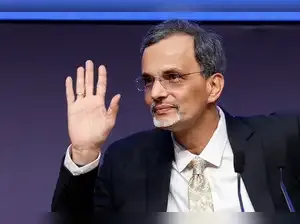
India needs to address pending issues such as land reforms, reduce cross-subsidisation, bring fuels into the GST, and shift the education sector’s focus from enrollment to learning outcomes to push growth to 8%, said Chief Economic Advisor V Anantha Nageswaran.
"What would take us from 7% to 7.5% or 8% growth depends on addressing pending issues related to land reforms, conversion of land from agricultural to non-agricultural use," said the CEA in an exclusive conversation with ETNow.
The CEA added, "Reducing cross subsidization so that the input cost to industry becomes cheaper and also bringing in fuels into GST, education sector to move from enrollment to education quality outcomes. These are all the various reform areas that would help us take it even further."
Economic Survey 2025-26, tabled in Parliament earlier in the day, has raised the country's potential growth forecast to 7 per cent from the earlier projection of 6.5 per cent estimated three years earlier.
The Economic Survey projected the GDP growth in the range of 6.8-7.2 per cent for the next fiscal year on the back of the cumulative impact of reforms, and said the economy remains on a stable footing.
The projection is a tad lower than the estimates of 7.4 per cent in the current fiscal.
Amid the domestic currency depreciating steeply in recent months, the Economic Survey 2025-26 said the rupee's valuation does not accurately reflect India's stellar economic fundamentals and that the rupee is punching below its weight.
"Of course, it does not hurt to have an undervalued rupee in these times, as it offsets to some extent the impact of higher American tariffs on Indian goods, and there is no threat of higher inflation from higher-priced crude oil imports now. However, it does cause investors to pause. Investor reluctance to commit to India warrants examination," it said.
The FY'27 GDP growth projections in the Economic Survey compare with 6.4 per cent growth projections by the International Monetary Fund (IMF), 6.5 per cent by the World Bank and Asian Development Bank (ADB).
"What would take us from 7% to 7.5% or 8% growth depends on addressing pending issues related to land reforms, conversion of land from agricultural to non-agricultural use," said the CEA in an exclusive conversation with ETNow.
The CEA added, "Reducing cross subsidization so that the input cost to industry becomes cheaper and also bringing in fuels into GST, education sector to move from enrollment to education quality outcomes. These are all the various reform areas that would help us take it even further."
Economic Survey 2025-26, tabled in Parliament earlier in the day, has raised the country's potential growth forecast to 7 per cent from the earlier projection of 6.5 per cent estimated three years earlier.
The Economic Survey projected the GDP growth in the range of 6.8-7.2 per cent for the next fiscal year on the back of the cumulative impact of reforms, and said the economy remains on a stable footing.
The projection is a tad lower than the estimates of 7.4 per cent in the current fiscal.
Amid the domestic currency depreciating steeply in recent months, the Economic Survey 2025-26 said the rupee's valuation does not accurately reflect India's stellar economic fundamentals and that the rupee is punching below its weight.
"Of course, it does not hurt to have an undervalued rupee in these times, as it offsets to some extent the impact of higher American tariffs on Indian goods, and there is no threat of higher inflation from higher-priced crude oil imports now. However, it does cause investors to pause. Investor reluctance to commit to India warrants examination," it said.
The FY'27 GDP growth projections in the Economic Survey compare with 6.4 per cent growth projections by the International Monetary Fund (IMF), 6.5 per cent by the World Bank and Asian Development Bank (ADB).