As dawn broke over the fjord, in the pastel light, the black silhouettes of mountains rising from the water made a striking picture. It was one of those quiet Arctic mornings that makes you feel like you are the only one on Earth. I was aboard an expedition cruise in Greenland—the world’s largest island—that would take us from Kangerlussuaq in western Greenland, to Reykjavik in Iceland over 12 days. The adventure had already been remarkable—we had stood before immense glaciers, drifted past iceberg cathedrals, and visited a remote settlement.
As our expedition ship Ocean explorer, run by Polar Latitudes, curved gently towards Nuuk, Greenland’s capital, and largest settlement of more than 20,000 people, many of us gathered on deck to watch the capital city materialise from the mist, hemmed in between the mountains and the fjord.
Nuuk is the Greenlandic word for ‘cape’ deriving its name from its position at the mouth of the Fjord system, on the western coast of the country. As we got off the Ocean Explorer, I felt an immediate sensation of scale, with the mountains looming in every direction. What stood out as a first impression was the sharp crimson, lemon yellows, and blues of wooden clapboard houses scattered across a windswept, grey hillside.
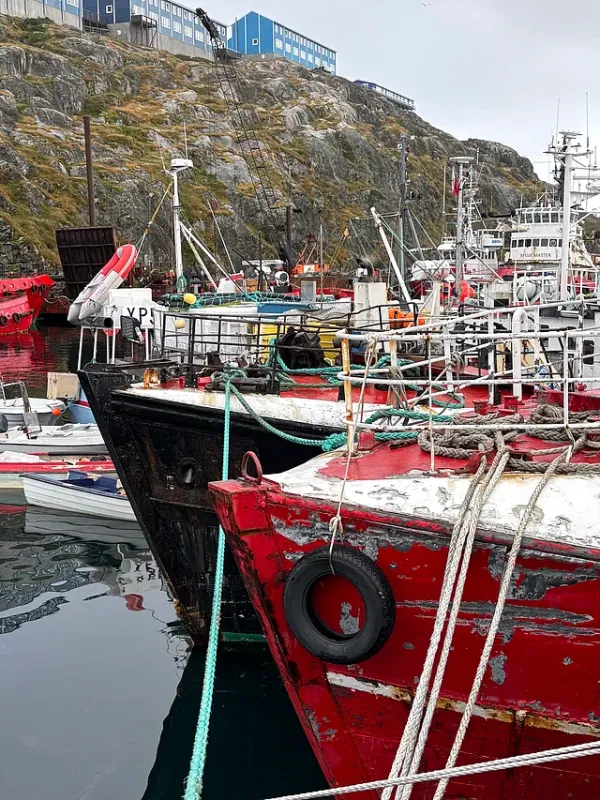
The Nuuk harbour lined with fishing vessels
The city felt walkable, compact and human in size. We first explored the harbour, with our birding guide Ab, spotting local birds like the large Icelandic and Glaucous gulls in search of fish from the trawlers, the omnipresent raven, and young purple sand pipers. A walk from the harbour led to one of Nuuk’s most interesting structures—the Katuaq Cultural Centre, a façade of wavy, golden larch wood inspired by the shimmering motion of the aurora borealis or the iconic Northern lights, across winter skies.
Inside the centre were galleries, studios, and performance spaces that hosted everything from drum dance reenactments to Arctic art installations. We took a guided walk with local guide Ulu Olsen, who explained that in Nuuk, art was not confined to buildings. It spilled outdoors, onto cliffs, streets, and waterfronts. Many of the art installations around town were inspired by Inuit legends and myths.
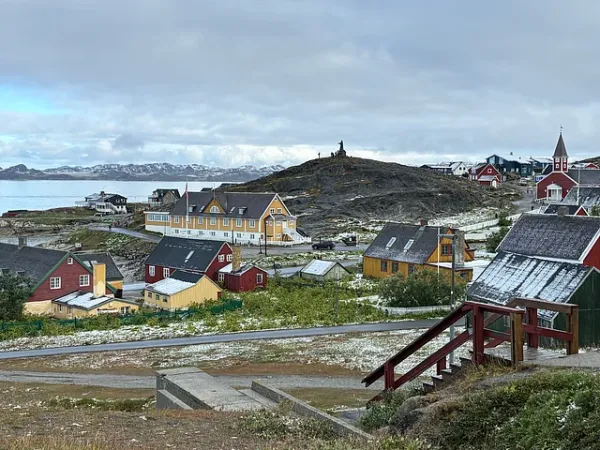
View of Old Nuuk and the waterside
Ulu pointed to the town’s lone shopping mall and high-rise building, which housed government offices in the higher floors. “We jokingly call our pint-sized city, Nuuk York,” she said with a smile. Across the street in front of the Greenlandic Parliament building, was the bronze statue of the orphan Kaassassuk with big eyes and dilated nostrils, by Greenlandic artist Simon Kristoffersen, that portrayed the legend where an orphan is bullied and humiliated, until he is flung by the lord of power and gets magical powers.
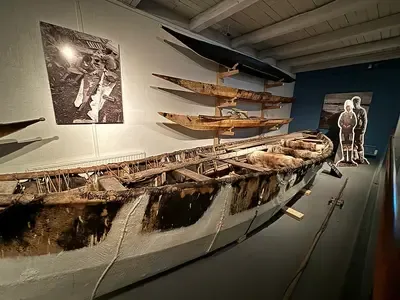
Wooden Kayaks and Umiaks on display at the Greenland National Museum in Nuuk
Wooden Kayaks and Umiaks on display at the Greenland National Museum in Nuuk
We walked to the waterfront through the tussock grass and ice-cold streams to Old Nuuk, which felt more like a fishing village than a capital city, where stood the wooden, red-painted Church of our Saviour with a clock tower. A row of kayaks stood by the waterfront. “ These have enabled our people to survive here for over 4,000 years and used to be made from driftwood, and we learn to kayak when we are kids,” Ulu said.
Not far away, high up on a hill was the statue of Hans Egede, the controversial Norwegian missionary who arrived in the 18th century. His statue atop a rocky promontory, is silhouetted against the sky. “In recent times many feel that it is a symbol of the country’s colonial past and should be removed,” says Ulu. From that vantage point, there are sweeping views across the fjord, where icebergs glint like diamonds, and the red roofs of the town.
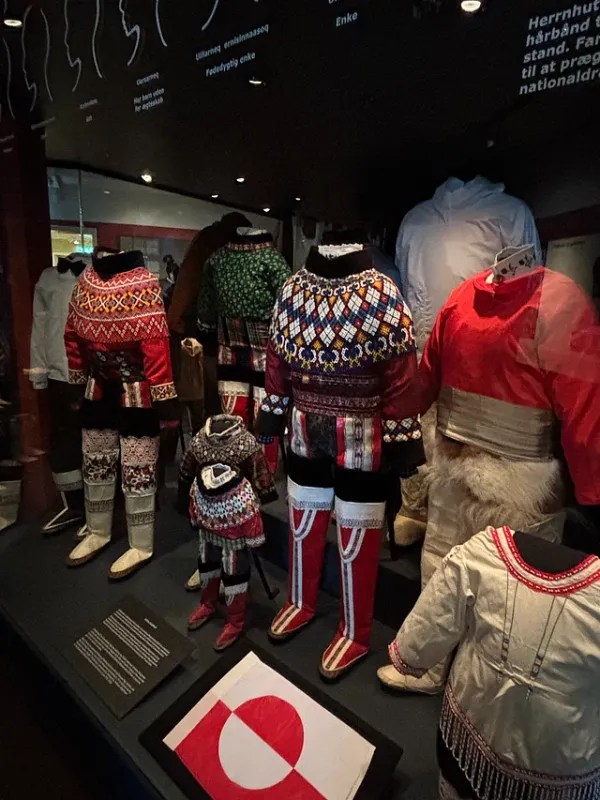
The Greenlandic national costumes made of seal skin with beads and embroidered boots are a part of national identity
Not far from here is Egede’s wooden home, painted a sunflower yellow and red, which was built in 1728, and still stands where it was first constructed. It is the oldest house in the country and still used for official receptions. Close by was one of the most iconic figures greeting travelers, the Mother of the Sea called Sassuma, a powerful bronze sculpture half submerged in the water, depicting the Inuit goddess of the sea. Surrounded by a walrus, a seal, an eel, a polar bear and a shaman combing her hair, her hair flows in wild strands, representing surf and winds. According to legend, she controls the animals of the sea, and only when humans live respectfully does she release the creatures that sustain life.
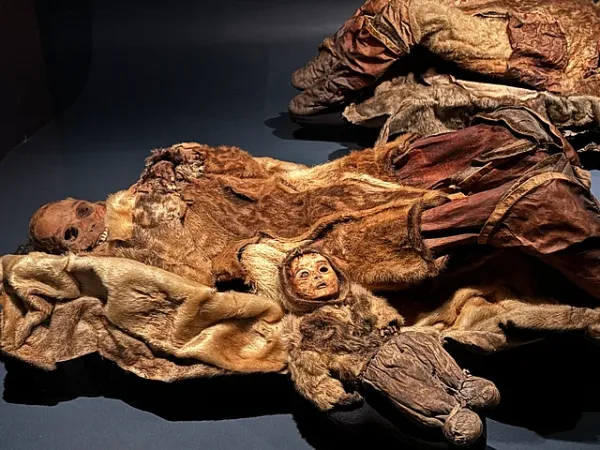
The iconic mummies and costumes from Qilakitsoq, displayed at the National Museum
The beautifully curated National Museum housed in a set of historic waterfront warehouses, was the morning’s highlight. It held artifacts from the Arctic, giving a glimpse into Greenland’s indigenous past. Outside the museum were huge cast iron pots and machines that were once used to extract whale oil. Inside, we saw shelves displaying tupilaks, small carved figures traditionally created from bone, driftwood, or antlers. Today they are sold as souvenirs, but in the past the tupilaks were powerful spiritual objects.
In a gallery, the museum’s most haunting and awe-striking treasures were displayed. The Qilakitsoq mummies were discovered in 1972, and date to the 15th century. These naturally mummified bodies, preserved under permafrost and found inside a cave, include women and children so well intact, that their facial tattoos, clothing, and even remnants of hair remain visible.
The museum’s exhibits included kayaks and umiaks made of wood and seal skin, and harpoons, an essential part of life in this country that have enabled Innuits to survive in this frigid zone. We also saw hunting tools, household objects, colourful Inuit costumes made of seal skin and intricate bead work and early colonial artifacts displayed. Taken together, they formed a tapestry of survival and ingenuity.
From the museum it was a short stroll to one of Nuuk’s most vivid sensory experiences, the Kalaaliaraq fish market. This is where local hunters and fishers bring in the day’s catch straight from the fjord or tundra. I saw snow-white halibut fillets, deep-red reindeer meat, shrimp, lumps of seaweed, sea urchins, and even whale mattak (skin and blubber) displayed on large tables and locals filling their baskets with fresh catch.
The market revealed to me how Greenlanders continued to rely on traditional f
-
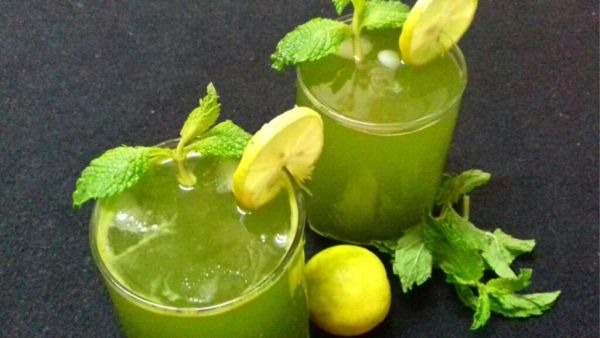
The treasure of good health is hidden in mint water, but it is important to know how to drink it.
-
Khan Sir’s Motivational Thoughts: Inspiration for Success

-
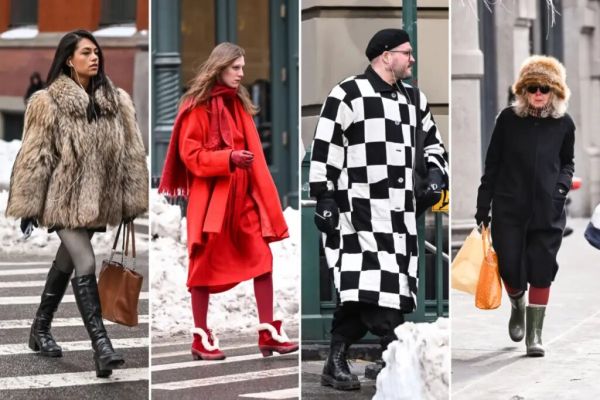
NYC’s best cold weather fashions as temperatures plummet
-
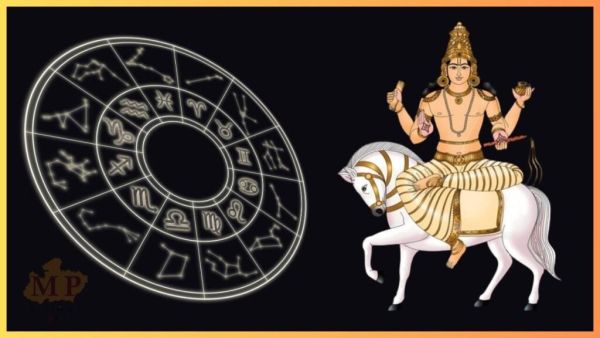
Golden time of these 3 zodiac signs can start from 6th February, Venus, the giver of wealth, will make double transit.
-
If money goes to wrong UPI then is it all over? Know the truth, otherwise one mistake can cost you dearly.