The Classic “Employee of the Year” plaque is on its way to becoming an obsolete symbol. The plaques and bonuses have met their match - incentive travel. Today’s businesses are realising that incentive travel is a strategic move with quantifiable benefits that go beyond a bonus. This could look like presenting employees with a well-planned and unique vacation experience and it definitely goes a long way in raising morale, increasing output and organically cultivating an enduring loyalty.
Companies today are slowly shifting from transactional rewards to investing in their employees’ benefits and experiences.
Experience the returns on experiential investment
While a monetary bonus sticks around until it gets sucked into everyday expenses, a well-curated trip creates long lasting memories and emotional ties to the organisation. It tells your employees “we see your hard work, we appreciate your contributions and we value your time as an individual. Here’s a contribution from our end towards your growth and well-being”.
You know what else we’ve noticed after all these years in travel?
The real journey isn’t the destination. It’s what happens between people along the way.
We see it all the time. A team goes to Liwa for a day. They’re laughing, struggling through an activity together, sharing a meal under the stars. By the end, something shifts. It’s not a seminar—it’s a shared memory.
And that memory comes back to the office with them. Suddenly, that person from finance isn’t just an email address. Communication gets easier. Walls come down. We’ve seen projects move 30-40% faster not only because of a new software, but because the team finally clicked. The data backs this —LinkedIn recently found that over 80% of professionals here say team bonding is essential for better work.
So these incentive activities are not just activities. They’re investments. You’re investing in trust, in understanding, in a common story. And, that’s the most important trip you can book for your company’s future.
The blueprint of today’s businesses: Culture, adventure, and learning
Gone are the days of resort stays. Modern incentive travel is a layered experience. It combines all the potential of group learning, customised adventure experiences and truly immersive cultural interactions.
We’re looking at resorts with multidimensional entertainment activities like stargazing, archery, food tasting, trekking, camel trekking, etc. The ME region is slowly and thoroughly expanding its avenues, and brands are expanding with it. The first gaming resort in the ME region set to open in 2027, Wynn Al Marjan, Al Dhafra in Abu Dhabi, Oman’s St Regis, Signia by Hilton Amman - these are all top-notch examples of resort stays but with nuanced experiences packed into them. That’s what incentive travel is all about. It’s no longer just a hotel stay, but a collection of boutique experiences peppered throughout.
Boutique staycation experiences are a great way to make your employees’ contributions feel seen and valued. The ATM Trends Travel Report of 2025 has forecasted an increase in global corporate tourism in the region going from 2.5% in 2024 to over 3% by 2030. This sets the stage for corporates to work on building excellent strategic partnerships with boutique hospitality brands with the aim of providing layered experiences to their professionals.
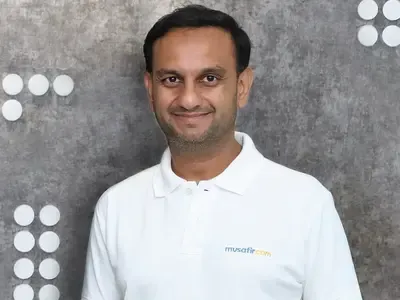
Sachin Gadoya, CEO & Co-Founder musafir.com & musafirbi
The UAE specifically emphasises on new investment incentives and sustainable growth plans to create an environment that nudges incentive travel along the right path. With the UAE’s MICE market forecasted to grow to US$ 9.26 billion by 2030, with a compound annual growth rate (CAGR) of 8.96%, this presents an opportunity for companies to capitalise on the incentive travel trend and leverage the region’s expanding network.
Similarly, the KSA region is projected to hit USD 5.33 billion by 2030 with a CAGR of 10.93%. Taken together, organisations should view these markets as strong strategic partners for incentive travel, supported by a robust air network and a growing appeal for the ME region as a platform for trade and innovation. Incentive travel can truly be leveraged here by simply expanding an employee’s professional milieu through innovative initiatives and providing them with a direct understanding of global trends.
Thinking of destinations as your strategic partners
Here’s what we believe about incentive travel: it’s the difference between a transaction and a transformation.
We see it every time. You send a top team to a ryokan in Kyoto, and something clicks over the morning matcha that twelve months of weekly meetings couldn’t unlock. You take high performers to a desert camp in Morocco, or for an offsite experience to Bali and the trust built under that sky doesn’t stay there—it flies back with them to the office in DIFC. The destination stops being a venue and starts being a co-facilitator.
And we’re not the only ones noticing. The data’s catching up to the feeling. Last year, EventMB found that 73% of planners now choose a place based on the experience it offers, not just the price tag. That’s a seismic shift. Planners are finally recognising what we’ve seen for years: you’re not booking a hotel, you’re choosing a partner in your team’s growth.
Some countries have built their entire strategy around this partnership. Europe’s stronghold, still over half the global conference market, isn’t about convention ng 6centres anymore. It’s about the specific vibe of a city. You go to Berlin to hack the future. To Barcelona to spark creativity. To Vienna to negotiate the big deal. Each city brings its own energy to the table. Europe has dominated the MICE market with a 51.61% in the year 2024. This was supported by a high demand for in-person meetings and robust infrastructure built around business travel across countries like Germany, UK, Spain and Italy.
The UAE has strategically expanded on its global tourism appeal through fastidious policy and infrastructure that appeals to the high-value experiential tourist.
Personally, the most powerful incentives happen where the location does the heavy lifting. In the quiet of a Finnish forest, where the only agenda is the sound of snow. In the disciplined chaos of a Marrakech souk, where a team has to navigate together. These places don’t just host your gathering—they change its chemistry.
So here’s the main take: if you want a checkbox exercise, any boardroom will do. But if you want to change how your team thinks, feels, and works together? You don’t need a better agenda. You need a better partner. And sometimes, that partner is a place.
It’s time to strategically re-evaluate
The proof is undeniable. Businesses only stand to gain by understanding the benefits of human capital through stratified and high value experiences that will expand their employees’ growth and world views. Talent is the ultimate differentiator in today’s markets and when used strategically, incentive travel can nudge professionals towards world views and progressive mindsets that ultimately begets innovation.
Because ultimately, the future they create for your organization could be defined by the incentive travel path that you provide.
The writer is CEO & Co-founder, musafir.com.
-
People’s Armwrestling Federation Of India Receives Affiliation From Paralympic Committee Of India
-
Harshit Rana's Childhood Coach: 'Can't Call Yourself All-Rounder For The Sake Of It, Have To...'
-
Border 2 Box Office Collection Day 7: Sunny Deol, Varun Dhawan’s patriotic drama fails to gain momentum after massive dip, earns Rs…

-
Google Launches Free JEE Mains Practice Tests on Gemini App
-
Exciting Job Opportunities in Himachal Pradesh: 234 Junior Office Assistant Positions Available