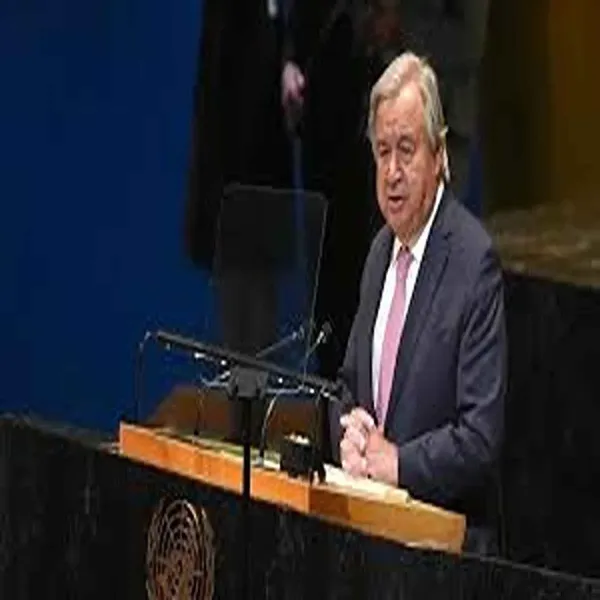
UN: Secretary-General Antonio Guterres has renewed his call for long-delayed reforms of the UN Security Council, arguing that Asia remains inadequately represented among its permanent members. Speaking to reporters while outlining his priorities for the year, Guterres said the credibility and effectiveness of the global peace and security system depend on updating the Council to better reflect today’s geopolitical realities.
He stressed that the United Nations, and particularly the Security Council, remains central to maintaining international peace and security. Without meaningful reform, he warned, the institution risks falling short of expectations placed upon it by the global community.
Asia’s Representation Gap on the Security Council
Guterres said Asia’s limited presence among the Council’s permanent members is increasingly difficult to justify given the region’s population size, economic influence, and growing role in global affairs. In his view, this imbalance should be corrected as part of a broader effort to rebalance representation across regions.
While careful to distinguish between his official role and personal views, Guterres noted that Africa and Latin America also deserve stronger and more equal representation. He emphasized that any reform effort should aim for fairness and inclusivity rather than preserving outdated power structures.
India’s Long-Standing Bid and Member State Support
India has consistently advocated for reforms that would expand permanent membership, including greater representation from Asia, Africa, and Latin America. Its position has received support from a wide range of UN member states who argue that the current structure reflects the world of 1945 rather than present-day realities.
Supporters of reform contend that updating the Council would enhance its legitimacy and make its decisions more broadly acceptable. However, despite years of discussions, progress has remained slow.
Criticism of Countries Blocking Reform Efforts
Without naming specific governments, Guterres criticized countries that oppose moving the reform process forward. He pointed out the contradiction between frequent complaints about the UN’s lack of effectiveness and resistance to changes that could improve its functioning.
According to him, this resistance has contributed directly to institutional paralysis. Negotiations have struggled to advance in the absence of a formal negotiating framework that would define priorities and track progress.
Role of the Uniting for Consensus Group
A small coalition of countries known as Uniting for Consensus has played a central role in slowing reform discussions. Led by Italy and including nations such as Pakistan, the group has opposed the adoption of a negotiating text for over a decade.
Diplomats familiar with the process say that without such a text, talks lack structure and accountability, leaving reform efforts effectively stalled. This procedural deadlock has frustrated many member states seeking tangible outcomes.
Support for Limiting the Use of Veto Power
Guterres also expressed support for initiatives aimed at restricting the use of veto power by permanent members, particularly in cases involving severe humanitarian crises. He said vetoes have often prevented the Council from acting decisively on urgent global conflicts.
He welcomed proposals put forward by France and the United Kingdom that would voluntarily limit veto use in situations involving genocide or serious crimes against humanity. Such measures, he suggested, could help ensure the Council responds more consistently to extreme human suffering.
Security Council’s Unique Legal Authority
Responding to questions about alternative international initiatives addressing conflicts such as Gaza, Guterres reaffirmed the Security Council’s exclusive legal authority under the UN Charter. He emphasized that no other body or coalition can replace the Council’s mandate to make binding decisions on peace and security matters.
According to the Secretary-General, while partnerships and regional efforts can support peace initiatives, only the Security Council has the legitimacy to act on behalf of all UN member states in this domain.
-
How we empower the ugly Indian abroad every day

-
The great Indian non-fiction reading cop-out

-
Taking the sting off the venom: Why Mammootty's Kalamkaval falls short of its true story

-
Is ‘AI-washing’ behind new wave of tech layoffs?

-
SpaceX seeks FCC nod for solar-powered satellite data centres for AI