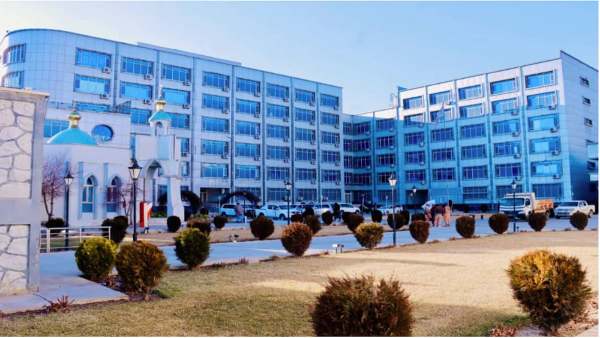
As the smoke of conflict clears, Afghanistan faces a burgeoning health crisis. With a landmark 200-bed facility in Kabul and strategic support from India, the nation is finally moving to data-driven oncology care
Long after the guns have fallen silent in the rugged terrain of the Hindu Kush, Afghanistan has woken up to a very scary truth. Even as the country has got respite from bloodbath, the reality of cancer turning into a deadly and silent killer is fast dawning. In such a scenario, the inauguration of the nation’s first national cancer treatment hospital in the capital, Kabul, by the Ministry of Public Health could not be more timely.
The inauguration ceremony on Thursday was led by Public Health Minister Mawlawi Noor Jalal Jalali, who described the facility's opening as the realisation of a long-held national goal. The new 200-bed facility is designed to provide localised care, significantly reducing the burden on patients who previously had to travel abroad for diagnosis and treatment.
While regional dynamics remain complex, India has emerged as a key partner in this humanitarian endeavour. Minister Jalali announced a strategic collaboration with India to introduce advanced radiotherapy services at the hospital. India’s contribution of $1 million, including essential medical supplies, shows a significant commitment to bolstering Afghanistan's healthcare infrastructure.
Historically, Afghan patients were forced to seek oncology services in Pakistan, India or Iran. This new centre aims to break that cycle, acting not only as a treatment hub but also as a premier training centre for Afghan oncologists and medical staff. By investing in local expertise, the initiative seeks to build a resilient and self-sustaining healthcare system for the long term.
“It is a great pleasure to inaugurate the national cancer treatment hospital together,” Jalali said. “This was our dream, achieved through joint efforts, and we will continue working to provide standardised, high-quality medical services to our people. For this reason, we are committed to expanding medical facilities inside the country and ending the necessity of travelling abroad for treatment.”
For over forty years, the narrative of Afghanistan was written in the language of geopolitical conflict, leaving the nation's internal health crises largely unmapped. A landmark study titled Cancer Incidence in Kabul, Afghanistan: The First Report From the Population-Based Cancer Registry, published by the National Library of Medicine in April 2025, reveals that a severe oncology crisis was quietly unfolding even as global attention remained fixed on war and social upheaval. The lack of reliable data has long been a casualty of instability, with the country’s last formal frequency report dating back to a mid-1960s study at Kabul University that documented fewer than nine hundred tumours.

There has been a dramatic rise of cancer patients in Afghanistan | Representational Image
Historically, the medical community operated in a data vacuum, forced to rely on fragmented reports from isolated health facilities or regional estimates provided by the International Agency for Research on Cancer. Because Afghanistan lacked its own monitoring systems, policymakers and donors were essentially looking through a blurred lens, using cancer trends from neighbouring countries to guess the needs of the Afghan people. This reliance on external data made it nearly impossible to design effective national control programmes or allocate medical resources where they were most desperately required.
The tide began to turn with the establishment of the Kabul Cancer Registry (KCR) in 2018 under the National Cancer Control Programme. Unlike previous facility-based snapshots, this population-based registry provides a comprehensive measure of the epidemiology of the disease, tracking not just new diagnoses but also mortality rates and the effectiveness of public policy. As the Ministry of Public Health moves toward self-reliance, the KCR serves as the analytical foundation for the country's new oncology infrastructure, ensuring that the fight against this invisible enemy is guided by local evidence rather than regional assumptions.
The findings from the KCR offer a detailed look into the epidemiological landscape of a region long obscured by conflict. By shifting from regional estimations to direct observation, the 2025 report identifies specific trends that challenge global assumptions about health in Afghanistan.
In Kabul, the most prevalent cancers among males are stomach cancer (18.6 per cent), aesophageal cancer (10.9 per cent) and colorectal cancer (7.7 per cent). These local figures present a significant departure from national estimates provided by the International Agency for Research on Cancer (IARC), which placed lung and oral cavity cancers much higher on the list. The dominance of gastrointestinal malignancies in Kabul aligns more closely with specific neighbouring Iranian provinces like Razavi Khorasan than with broader national projections. These differences highlight how local lifestyle factors in the capital, such as the high consumption of salted foods and hot tea, may be driving a distinct oncological profile.
Breast cancer remains the primary threat for women in Kabul, accounting for 26.2 per cent of all female cases. While this matches the top ranking seen in neighbouring regions and global data, other cancers show surprising deviations. For instance, aesophageal cancer is the second most common for women in Kabul (8.8 per cent), occurring nearly at a rate 20 per cent higher than in men. This sharply contrasts with the global trend, where men are typically diagnosed with aesophageal cancer at more than double the rate of women. Additionally, cervical cancer appears much less frequent in the KCR data (1.8 per cent) than in previous national estimates (9.3 per cent), suggesting that localised screening or environmental factors in the capital are influencing the data.
Overall, cancer incidence in Kabul is higher among females than males. This gender distribution is consistent with several other South Asian cities like Lahore and Kathmandu, but it stands in opposition to the global average where males generally face a higher risk. Interestingly, the total incidence rates recorded in Kabul (44.3 for males and 60.9 for females) are substantially lower than IARC’s national estimates and rates in neighbouring regional hubs like New Delhi. While this could reflect a lower prevalence of certain risk factors, researchers also point to potential under-diagnosis and the lack of specialised hospitals for specific sites like the lungs or oral cavity as contributing factors to these lower numbers.
The prevalence of stomach and aesophageal cancers in the region is closely linked to environmental and behavioural risk factors. While Afghanistan reports lower rates of obesity, alcohol consumption and tobacco smoking compared to its neighbours, the high intake of salt and traditional use of snuff (naswar) are significant contributors. Looking ahead, the burden on the healthcare system is set to intensify. Projections indicate that by 2050, Afghanistan will see a 154.6 per cent increase in cancer cases—the highest projected rise in the region. This looming crisis only reaffirms that accurate local data is the only way to move from regional guesswork to effective, evidence-based national health policy.
-
Mine collapse in eastern DR Congo kills more than 200, reports say
-
Mine collapse in eastern DR Congo kills more than 200, reports say
-
Budget 2026: Will Electric Cars Become More Affordable? Middle Class Awaits Big Relief from Sitharaman
-
Bank of Baroda Announces Bumper Vacancies: Learn Who Can Apply and How

-
Two injured Tottenham players set to return just in time to face Arsenal in north London derby