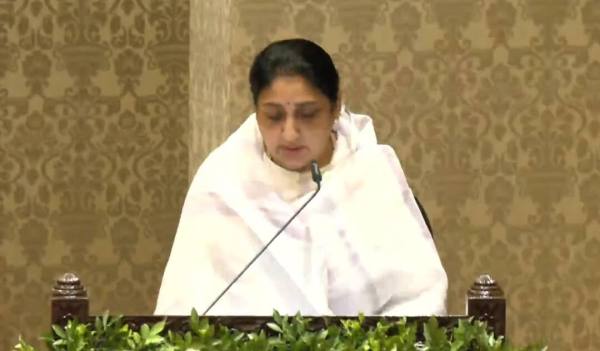
Sunetra Pawar’s elevation as Maharashtra’s Deputy Chief Minister following the death of her husband Ajit Pawar has renewed focus on a recurring moment in Indian politics, women stepping into leadership roles during periods of political or personal crisis. Her induction places her in a lineage of women leaders who not only inherited political responsibility at turning points, but went on to leave distinct marks on governance and power structures.
Mamata Banerjee: From Street Politics To State Power
Mamata Banerjee rose from grassroots activism to become West Bengal’s longest-serving chief minister, ending over three decades of Left Front rule in 2011. Known for her confrontational political style and populist outreach, her tenure has seen both electoral dominance and controversies ranging from governance challenges to allegations of political intolerance. Her biggest breakthrough remains dismantling one of India’s most entrenched political regimes.
Sheila Dikshit: The Administrator Who Defined Modern Delhi
Sheila Dikshit served as Delhi’s chief minister for three consecutive terms from 1998 to 2013, overseeing a period of rapid infrastructure expansion, including the Delhi Metro and Commonwealth Games-era development. While praised for transforming the capital’s urban landscape, her tenure was later overshadowed by corruption allegations linked to the 2010 Games. She remains one of the longest-serving women chief ministers in the country.
Vasundhara Raje: Rajasthan’s First Woman At The Helm
Vasundhara Raje became Rajasthan’s first woman chief minister in 2003 and returned to office a decade later, establishing herself as a central figure in the BJP’s state leadership. Her tenure was marked by welfare schemes and administrative reforms, alongside controversies involving internal party rifts and allegations related to land and business dealings. Despite setbacks, she retained significant influence within Rajasthan politics for years.
Jayalalithaa: The Unchallenged Power Centre Of Tamil Nadu
Jayalalithaa’s political journey saw her transform from film star to one of India’s most commanding chief ministers, ruling Tamil Nadu across multiple terms. Her tenure combined expansive welfare programmes with a highly centralised style of governance, while legal battles and corruption cases repeatedly intersected with her political career. Yet, her electoral comebacks cemented her image as an unassailable mass leader.
Mayawati: Breaking Barriers In North Indian Politics
Mayawati rose from a Dalit political movement to become Uttar Pradesh’s chief minister four times, a first for a woman from a marginalised community. Her tenure focused on social representation and symbolic assertion, even as it attracted criticism over governance style and allegations of financial impropriety. Her political breakthrough lay in reshaping caste equations through electoral power.
Sunetra Pawar: A New Entry At A Defining Moment
Sunetra Pawar’s entry into executive office comes at a moment of transition for both the Nationalist Congress Party and Maharashtra’s political establishment. While her long-term political imprint is yet to unfold, her swearing-in reflects a familiar trajectory in Indian politics — where moments of crisis open pathways for women to step into power and redefine leadership on their own terms.
-
Indoor plants believed to attract prosperity and peace

-
Denim, leather or puffer jacket? Choose the perfect look according to your body type and age

-
Essential Procedures for Your Skin

-
New Yorkers’ anonymous love letters placed in red mailboxes across NYC featured in exhibit

-
PM Modi meets Arab foreign ministers, important discussion took place on trade-investment and Palestine issue