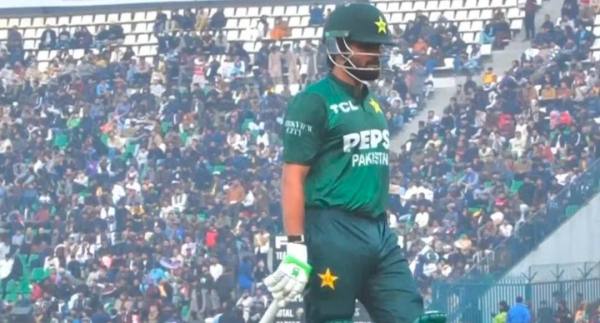
The saying "shooting yourself in the foot" appears to sum up Pakistan's current situation perfectly. There is growing concern that selecting Babar Azam for 2026 T20 World Cup could turn out to be a costly decision for Men in Green.
The star batter once again struggled in the ongoing T20 series against Australia, managing just 2 runs in the second T20I played in Lahore.
After winning the toss, Pakistan opted to bat first in the second T20I. Captain Salman Agha led from the front with a breathtaking knock of 76 off 40 balls, which included eight boundaries and three sixes.
In contrast, Babar Azam's stay at the crease was brief, as he was dismissed for 2 runs from 5 deliveries. In the 1st T20I against Australia on January 29, Babar played a steady but relatively quiet knock (24 runs off 20 balls).
Despite his lack of form, Babar Azam has been named in Pakistan's squad for the 2026 T20 World Cup.
He scored 24 runs off 20 balls in the opening T20 against Australia, once again drawing criticism for his slow scoring rate. Continued struggles with form and strike rate could severely impact Pakistan's chances at the global event.
Babar's recent performances in franchise cricket have also raised alarms. During BBL 2025-26 season, he accumulated 202 runs in 11 matches, averaging 22.44 with a strike rate of just 103. These numbers attracted heavy criticism, yet he still found a place in the World Cup squad.
Pakistan eventually posted a competitive total of 198 runs in their 20 overs. After Salman Agha’s explosive innings, Usman Khan played a crucial supporting role, scoring 53 off 36 balls to prevent a collapse. Shadab Khan also chipped in with a useful 28-run contribution.
-
Indoor plants believed to attract prosperity and peace

-
Denim, leather or puffer jacket? Choose the perfect look according to your body type and age

-
Essential Procedures for Your Skin

-
New Yorkers’ anonymous love letters placed in red mailboxes across NYC featured in exhibit

-
PM Modi meets Arab foreign ministers, important discussion took place on trade-investment and Palestine issue