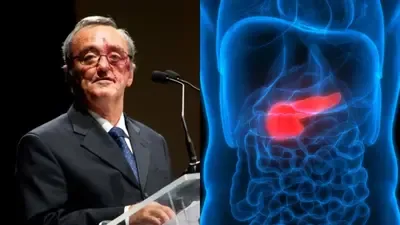
A team of Spanish scientists has reported a significant breakthrough in the fight against pancreatic cancer, one of the deadliest and most treatment-resistant forms of cancer. Led by Mariano Barbacid at Spain’s National Cancer Research Centre (CNIO), the researchers developed a novel triple-drug therapy that has demonstrated the complete elimination of pancreatic tumours in laboratory mice. The study revealed that treated animals experienced no tumour recurrence even after extended follow-ups, while showing minimal side effects, raising cautious optimism in the scientific community about a potential pathway for more effective therapies against pancreatic cancer. The results, if replicated in humans, could mark a pivotal moment in the decades-long battle against this particularly aggressive malignancy.
Innovative Triple-Drug Approach Targets Pancreatic Tumours at Multiple Levels
Pancreatic cancer, specifically pancreatic ductal adenocarcinoma, is widely regarded as one of the most lethal cancers due to its rapid progression, resistance to conventional therapies, and late-stage detection. Standard treatment strategies often fail because the tumours adapt quickly to single-target drugs, bypassing the blocked pathway and continuing to grow. Unlike traditional therapies that aim at one molecular target, the CNIO team adopted a multi-pronged approach by combining three different drugs designed to simultaneously block multiple tumour survival mechanisms. This strategy prevents cancer cells from rerouting their growth signals, a common mechanism that allows tumours to resist treatment.
Mariano Barbacid, a prominent figure in cancer research, has long emphasized that pancreatic cancer cannot be effectively addressed using a single-drug strategy. He has previously noted that the tumours are extraordinarily adaptable, capable of evading targeted treatments unless multiple critical pathways are inhibited at the same time. The current research confirms this hypothesis, demonstrating that coordinated inhibition across different molecular mechanisms can lead to durable responses that were previously considered exceptionally difficult to achieve in pancreatic cancer models.
In laboratory experiments, mice with advanced pancreatic tumours were treated with this triple-drug therapy, resulting in complete tumour elimination in all test subjects. Importantly, the follow-up period revealed no signs of relapse, suggesting that the therapy not only eradicates existing tumours but may also suppress the underlying biological processes that typically drive tumour recurrence. These findings are particularly notable given the historic difficulty of achieving long-term remission in pancreatic cancer, where relapses are almost universal even after aggressive treatment.
The study has been published in the Proceedings of the National Academy of Sciences (PNAS), with reviewers highlighting both the durability of the response and the unusually low toxicity observed in treated animals. Low toxicity is a critical consideration in the development of cancer therapies, as treatments must not only be effective but also safe enough for patients to tolerate, particularly when multiple drugs are administered in combination. Independent cancer researchers have noted that the results are exceptional, as complete tumour elimination without relapse is rarely observed in pancreatic cancer models. This lends additional credibility to the potential of this therapy as a transformative advance in the field.
Mariano Barbacid’s Pioneering Work and the Significance of KRAS Pathway Targeting
Mariano Barbacid is among Europe’s most influential cancer researchers. In the early 1980s, he played a pivotal role in the discovery of the first human oncogene, a milestone that laid the foundation for modern cancer biology and established a genetic basis for the disease. Over the past four decades, Barbacid’s work has consistently focused on KRAS-driven tumours, which are notoriously difficult to treat. KRAS mutations are found in approximately 90 percent of pancreatic cancer cases, making the targeting of this pathway particularly critical for meaningful therapeutic interventions.
The current study builds upon this extensive body of work, combining Barbacid’s deep understanding of KRAS biology with innovative drug design to create a therapy capable of shutting down multiple tumour survival pathways simultaneously. By addressing both the genetic drivers and the adaptive mechanisms of pancreatic cancer, the researchers have created a model that has not only demonstrated efficacy but also minimized harmful side effects, a balance that is rarely achieved in experimental cancer therapies.
The CNIO team’s research was conducted in collaboration with Fundación CRIS Contra el Cáncer, a Spanish foundation that supports high-risk, high-impact cancer research. The study followed rigorous experimental protocols, underwent independent peer review, and was published in a leading scientific journal, ensuring the credibility and integrity of the findings. Unlike many high-profile claims in cancer research, this study emphasizes careful scientific methodology, reproducibility, and transparency in reporting. Researchers have stressed that while the results are exceptionally promising, further work is needed to evaluate the therapy’s potential effectiveness in humans.
Public reaction to the announcement of this research has been mixed, with excitement about the breakthrough tempered by caution due to the long and complex path from laboratory studies to human application. News of the therapy spread rapidly on social media, with some celebrating it as a potential cure, while others expressed skepticism about the challenges of translating animal model success into clinical outcomes. These discussions highlight the tension between scientific caution and public expectation, particularly for diseases like pancreatic cancer, which has historically presented grim survival statistics and few effective treatment options.
The therapy’s design offers unprecedented insight into the potential for multi-drug approaches to overcome the limitations of single-target treatments. By focusing on the tumour’s ability to adapt, the research addresses one of the most significant obstacles in pancreatic cancer therapy: the tumour’s remarkable capacity to evade conventional interventions. Through simultaneous targeting of multiple pathways, the triple-drug combination effectively shuts down the tumour’s adaptive mechanisms, offering a model for future therapeutic strategies against other hard-to-treat cancers.
Beyond the laboratory results, the study also underscores the importance of ongoing research into cancer biology and the mechanisms of resistance. Pancreatic cancer has long been considered a formidable opponent due to its dense stromal environment, late detection, and rapid progression. This study demonstrates that with innovative experimental design, long-standing barriers in cancer treatment can be challenged, providing a template for similar approaches in other malignancies.
The triple-drug therapy also draws attention to the broader implications of personalized and targeted medicine in oncology. By tailoring interventions to address multiple critical pathways simultaneously, researchers may be able to achieve outcomes that are both effective and sustainable, reducing the likelihood of relapse while minimizing systemic toxicity. This approach aligns with the evolving understanding of cancer as a complex, adaptive system, requiring multi-dimensional strategies rather than linear, one-size-fits-all interventions.
Mariano Barbacid’s influence in the field adds significant weight to these findings. His decades-long focus on KRAS and other oncogenic drivers has contributed to a more nuanced understanding of how certain cancers evade treatment. This foundational knowledge was instrumental in designing a therapy that could target both tumour growth and relapse mechanisms, providing hope for a cancer type that has long resisted meaningful intervention.
The potential of this research extends beyond pancreatic cancer, offering a framework for developing combination therapies for other malignancies with high rates of treatment resistance. By demonstrating that coordinated inhibition of multiple survival pathways can produce durable remissions in a preclinical setting, the study challenges conventional paradigms of cancer therapy and encourages exploration of similarly comprehensive approaches in other contexts.
The research also illustrates the importance of sustained, long-term commitment in scientific discovery. The CNIO team spent six years developing and refining this therapy, emphasizing that breakthroughs in cancer treatment often require persistent experimentation, careful validation, and iterative improvements. This patient, methodical approach stands in contrast to the often sensationalized claims surrounding potential cures in the media, highlighting the careful balance between optimism and scientific rigor.
In addition to its scientific implications, the study prompts broader discussions about public engagement with cancer research. The reaction on social media and in online forums demonstrates the intense public interest in pancreatic cancer and the hope for breakthrough treatments. At the same time, it underscores the need for clear, accurate communication from scientists and institutions to manage expectations and convey the complexities of translating laboratory findings into clinical practice.
The findings also emphasize the critical role of foundational research in enabling applied therapeutic advances. Without decades of prior study into the genetic drivers of pancreatic cancer, particularly KRAS mutations, the development of a therapy capable of complete tumour elimination would not have been possible. This highlights the interdependence of basic science and translational research in producing meaningful advances in patient care.
Moving forward, the key challenges will involve determining whether the therapy can be safely and effectively adapted for human use. This will require rigorous clinical trials, careful monitoring of side effects, and continued evaluation of the therapy’s long-term efficacy. While laboratory models provide a controlled environment for testing, the complexity of human biology introduces additional variables that must be addressed before the therapy can be widely implemented.
Despite these challenges, the current findings provide a rare glimpse of hope for a cancer type that has historically been associated with extremely poor prognoses. By achieving complete tumour elimination with minimal side effects in preclinical models, the CNIO research team has demonstrated the potential of innovative combination therapies to overcome long-standing obstacles in oncology.
The research also highlights the importance of collaboration and support for high-risk, high-impact projects. Fundación CRIS Contra el Cáncer’s backing enabled the CNIO team to pursue an ambitious and unconventional approach, illustrating the value of targeted funding in accelerating breakthroughs in difficult-to-treat diseases. This collaborative model may serve as a blueprint for future initiatives aimed at tackling other complex medical challenges.
As the study gains attention within the scientific community, it may inspire additional research into multi-drug strategies for resistant cancers. Researchers are likely to explore variations of the triple-drug approach, seeking to identify optimal combinations, dosing strategies, and delivery mechanisms that maximize efficacy while minimizing toxicity. The principles demonstrated in this study could inform a new generation of cancer therapies focused on coordinated pathway inhibition rather than single-target interventions.
Overall, the CNIO research represents a landmark achievement in preclinical pancreatic cancer studies, combining rigorous experimental design, innovative therapy development, and careful attention to safety and long-term outcomes. By demonstrating complete tumour elimination without relapse in laboratory mice, the study has set a new benchmark for what may be possible in the treatment of one of the most challenging cancers known to medicine.
The post Spanish research breakthrough shows promising triple-drug therapy eliminates aggressive pancreatic cancer in laboratory mice | cliQ Latest appeared first on CliQ INDIA.
-
Newcastle bought player with £100m release clause in record January transfer

-
Tottenham wrapped up deadline day transfer for PSG star with Neymar calling deal 'unfair'

-
Cheme Serdeon Conquers Mount Kilimanjaro: A Journey of Determination

-
Should Wi-Fi and Mobile Internet Be Turned Off at Night? What Science Really Says

-
Golmaal 5 Gets Bigger! Akshay Kumar To Play The Antagonist In Ajay Devgn Film