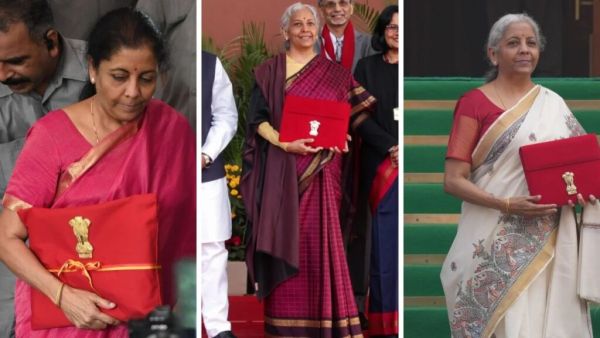
Union Budget 2026-27: In order to give a fillip to the labour-intensive textiles sector, Union Finance Minister Nirmala Sitharaman proposed an integrated programme with five key components. “The first is the National Fibre Scheme, aimed at achieving self-reliance in natural fibres such as silk, wool, and jute, as well as man-made and new industrial-age fibres,” she said while presenting the Union Budget 2026-27 on Sunday, her ninth consecutive Budget.
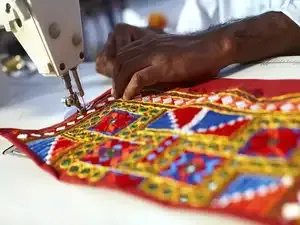
The second measure, the FM added, is the Textile Expansion and Employment Scheme, which seeks to modernise traditional clusters by providing capital support for machinery, technology upgrades, and common testing and certification centres. “The third component is the National Handloom and Handicraft Programme (NHHP), designed to integrate and strengthen existing schemes while ensuring targeted support for weavers and artisans,” she added.
“Techs echo initiatives to promote globally competitive and sustainable apparel. Samarth 2.0 to upgrade the textile skilling ecosystem with industry and academic institutions,” she stated.
FM Sitharaman also proposed the Mahatma Gandhi Gram Swaraj initiative to strengthen khadi, handloom, and handicraft sectors. “The initiative aims to provide global market linkages and branding support while streamlining training, skilling, and quality of production. It is expected to benefit weavers, village industries, the One District One Product (ODOP) programme, and rural youth,” she said.
Budget 2026 Live
Budget 2026: Catch all the live action here
Income Tax Slabs Live Updates
Stock Market Live Updates
“Techs echo initiatives to promote globally competitive and sustainable apparel. Samarth 2.0 to upgrade the textile skilling ecosystem with industry and academic institutions,” she stated.
FM Sitharaman also proposed the Mahatma Gandhi Gram Swaraj initiative to strengthen khadi, handloom, and handicraft sectors. “The initiative aims to provide global market linkages and branding support while streamlining training, skilling, and quality of production. It is expected to benefit weavers, village industries, the One District One Product (ODOP) programme, and rural youth,” she said.