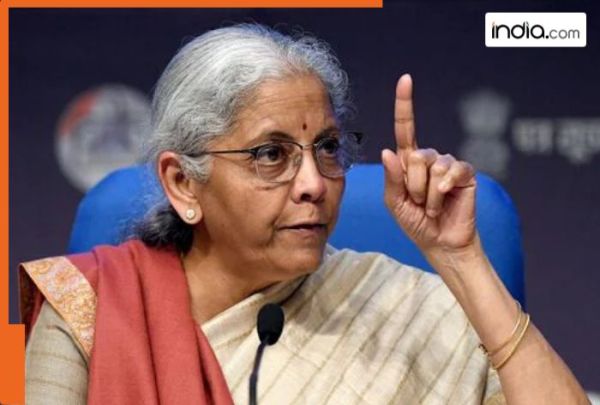
Union Budget 2026: The Finance Minister of India Nirmala Sitharaman has given her ninth speech announcing the budget. The speech was 1 hour and 24 minutes long and covered all the sectors. One such announcement was made for the stock market investors. The speech had the mention of an increase in the Securities Transaction Tax (STT) features and options. This may sound like a small change. However experts are looking at it in a way that may impact the costs of trading. Here we explain what STT is and why the increase raises concerns. What is STT (Securities Transaction Tax)? The Securities Transaction Tax (STT) is a tax imposed on the buying and selling of securities with respect to stock exchanges in India. In addition it applies to the transactions which involve shares equity mutual funds and derivatives like options and futures. The tax is levied during the transaction time itself. It doesnt matter if the trader makes a profit or not. It also implies that every trade attracts the Securities Transaction Tax as one of its parts of the overall cost which occurs on an automatic basis. Also Read: Budget 2026: Good news for taxpayers as Nirmala Sitharaman announces new ITR timelines for tax filing History of STT (Securities Transaction Tax) STT was introduced on October 1 2004. The main aim of its introduction was to simplify the tax collection and reduce the evasion of taxes in stock market transactions along with the gradual replacement of the long-term capital gains tax. However its important to note that in the year 2018 the long-term capital gains tax on equities was introduced again when the STT continued to exist. What has changed about STT in the Budget 2026? The Finance Minister Nirmala Sitharaman announced an increase in the STT derivatives while giving the Union Budget 2026-27. Initially the tax stood at 0.02 per cent and has now increased to 0.05 per cent. The tax-selling option was increased from 0.0625 per cent to 0.1 per cent of the option premium. Alongside the capital gains were also increased like long-term capital gains and short-term capital gains. The long-term gains increased from 10 per cent to 12.5 per cent and the short-term gains increased from 15 per cent to 20 per cent.
-
Union Budget 2026 Academicians Speak: Professors Give A Thumbs-Up To Budget; Laud Rise In Capex, Focus On Green Logistics & Pharma

-
Taxes to bring in 64 paise of every rupee govt earns: Union Budget 2026

-
Budget 2026: ₹28,500cr capital infusion announced for BSNL

-
Budget 2026 adds to govt's 'Purvodaya' initiative, development of North-East

-
Budget 2026: What gets cheaper, what gets costlier
