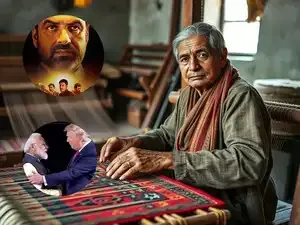
Mirzapur’s most famous fictional don may be returning on screen in 2026, but the real district in eastern Uttar Pradesh already has a reason to smile. A new India-US trade understanding that cuts steep American tariffs could revive exports from Mirzapur, one of India’s biggest carpet hubs. The move eases pressure on districts that were badly hit by higher duties during Donald Trump’s presidency.
“Delighted that Made in India products will now have a reduced tariff of 18%. Big thanks to President Trump on behalf of the 1.4 billion people of India for this wonderful announcement,” Prime Minister Narendra Modi had said on social media platform X.
Mirzapur and neighbouring Bhadohi were among the districts most exposed when the 50 percent tariff was imposed. Their strong dependence on the US market meant higher duties directly hurt exporters, weavers, and traders across the supply chain.
In Uttar Pradesh, Varanasi’s handicraft clusters were also vulnerable. A large share of the district’s export value was concentrated in US-dominated categories, leaving artisans sensitive to tariff shocks.
Even agricultural exporters felt the heat. In Baghpat, Uttar Pradesh, honey shipments were at risk, with 32 percent of the district’s exports falling into categories where more than 78 percent of India’s total exports went to the US.
For Mirzapur, the tariff cut may not turn fiction into reality overnight. But for a district whose fortunes are tightly woven into global trade, the India-US deal offers some real-world relief, enough to make even 'Kaleen Bhaiya' quietly nod in approval.
“Delighted that Made in India products will now have a reduced tariff of 18%. Big thanks to President Trump on behalf of the 1.4 billion people of India for this wonderful announcement,” Prime Minister Narendra Modi had said on social media platform X.
India-US Trade Deal: A sharp tariff rollback
On February 2, the US President announced a lowering of tariff to 18 percent from 50 percent earlier. The decision marks a major shift for Indian exporters who depend heavily on American buyers, especially in labour-intensive sectors such as carpets and handicrafts.Mirzapur and neighbouring Bhadohi were among the districts most exposed when the 50 percent tariff was imposed. Their strong dependence on the US market meant higher duties directly hurt exporters, weavers, and traders across the supply chain.
Why Mirzapur's Kaalen Bhaiyaas were unhappy
In Mirzapur, majority of exports came from such high-dependence categories. Carpet manufacturing dominates Mirzapur’s local economy. Any disruption in US demand quickly translates into slower orders, lower incomes, and stress for thousands of households linked to the trade.Not just Uttar Pradesh
The exposure goes well beyond Mirzapur. Pathanamthitta in Kerala showed a similar reliance on the US market through turmeric oil, a food additive in strong demand. In FY25 alone, the district exported Rs 67.6 crore worth of turmeric oil, with most of it going to American buyers.In Uttar Pradesh, Varanasi’s handicraft clusters were also vulnerable. A large share of the district’s export value was concentrated in US-dominated categories, leaving artisans sensitive to tariff shocks.
Carpets remain a big export story
Carpets continue to be one of India’s top export items to the US, alongside electronics and gems and jewellery. In FY25, India exported $1.23 billion worth of carpets as part of its $86.5 billion goods trade with the US. Lower tariffs could help exporters regain price competitiveness and stabilise demand.From linen to honey, risks were widespread
Commerce ministry data show that Sehore in Madhya Pradesh faced high exposure in cotton linen products such as bed and toilet linen, with over a third of its exports tied to US-heavy categories. Udaipur in Rajasthan also stood out, with 36 percent of its plastic strip exports linked to US-dominated markets.Even agricultural exporters felt the heat. In Baghpat, Uttar Pradesh, honey shipments were at risk, with 32 percent of the district’s exports falling into categories where more than 78 percent of India’s total exports went to the US.
For Mirzapur, the tariff cut may not turn fiction into reality overnight. But for a district whose fortunes are tightly woven into global trade, the India-US deal offers some real-world relief, enough to make even 'Kaleen Bhaiya' quietly nod in approval.