Why Even Temple Priests Are Forced to Leave Tirupati at Night
Times Life | February 3, 2026 10:40 PM CST
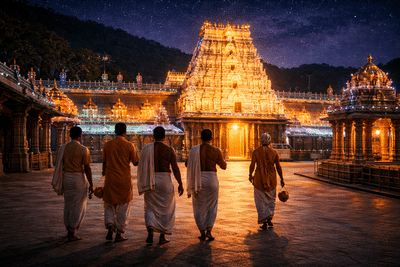
When the day ends at Tirumala, something deeply symbolic begins. The long queues fade away, chants soften, lamps glow briefly, and then the temple slowly withdraws from human presence. By night, the sanctum is completely empty. No priest stays back. No guard rests inside. No human sleeps within the temple.
This practice is not based on fear, mystery, or secrecy. It comes from scripture, ritual discipline, and a very human understanding of respect and boundaries. In the tradition followed at Tirupati, Lord Venkateswara is not treated as a distant god, but as a living being with His own space, routine, and rest.
1. The temple is treated as the Lord’s private home
During the day, devotees are allowed to enter as guests. At night, the home is believed to return to complete privacy. Sleeping inside is seen as staying uninvited in someone’s personal space. This belief shapes the emotional foundation of the rule.
2. Ekantha Seva means complete solitudeThe last ritual of the day is Ekantha Seva. The word Ekantha clearly means solitude, not rest with others around. This ritual is described in temple manuals as the moment when the Lord withdraws from all public interaction.
After Ekantha Seva, priests leave immediately. The sanctum is symbolically sealed. From that moment until the next morning, no human role exists inside the temple. This is not optional or flexible. Scripture treats this solitude as essential to the daily cycle of worship.
3. The Lord is worshipped as a living being Lord Venkateswara is believed to be a Swayambhu, a self manifested form. Because of this, the temple follows a daily routine similar to human life, clearly described in Agamic texts.
The Lord is awakened through Suprabhatam, bathed, dressed, offered food, entertained through rituals, and finally allowed to rest. Allowing humans to sleep inside would disturb this rhythm and reduce a living presence to an object of convenience, which scripture strictly avoids.
4. Silence at night is itself a form of worshipVaikhanasa tradition places great importance on Mauna, sacred silence. Silence is not seen as absence. It is seen as presence without noise.
At night, when chanting stops and movement ends, the silence inside the sanctum is believed to become a form of devotion. By leaving the space completely empty, devotees offer restraint instead of activity. This is considered a higher form of surrender than constant presence.
5. Spiritual energy is believed to intensify after ritualsTemple scriptures and oral traditions mention that divine energy concentrates when human activity withdraws. Darkness and stillness are believed to deepen spiritual presence rather than weaken it.
Priests believe that human bodies and minds are not prepared to remain inside such an intense space for long hours. Complete absence is seen as protection for humans and respect for the divine balance.
6. Ritual purity depends on timing and separation The grand hilltop temple surrounded by green slopes and streams of devotees walking upward
Vaikhanasa Agama stresses that purity is not only about cleanliness but also about correct timing. Worship, rest, and silence each have their place.
Night is considered a pause in human interaction. This pause preserves the sanctum’s purity for the next day’s rituals. Sleeping inside would break this cycle and disturb a tradition that has remained unchanged for centuries.
7. Equality and humility are enforced through this ruleScripture does not allow exceptions based on power, wealth, or status. Kings in ancient times and officials today all followed the same rule.
Everyone leaves when the temple closes. This reinforces a core spiritual idea. The temple belongs to the Lord alone. Humans may serve, donate, and pray, but they do not stay unless invited by divine time.
This practice is not based on fear, mystery, or secrecy. It comes from scripture, ritual discipline, and a very human understanding of respect and boundaries. In the tradition followed at Tirupati, Lord Venkateswara is not treated as a distant god, but as a living being with His own space, routine, and rest.
1. The temple is treated as the Lord’s private home
Tirupati, Nov 28 (IANS) The Supreme Court-appointed Special Investigation Team (SIT) has arrested a serving official of Tirumala Tirupati Devasthanam (TTD) in the Laddu prasadam ghee adulteration case.
According to Vaikhanasa Agama, the scriptural system followed at Tirupati, the sanctum is not just a shrine. It is the residence of the deity. The Lord is called Nityavasan, one who permanently resides there.During the day, devotees are allowed to enter as guests. At night, the home is believed to return to complete privacy. Sleeping inside is seen as staying uninvited in someone’s personal space. This belief shapes the emotional foundation of the rule.
2. Ekantha Seva means complete solitudeThe last ritual of the day is Ekantha Seva. The word Ekantha clearly means solitude, not rest with others around. This ritual is described in temple manuals as the moment when the Lord withdraws from all public interaction.
After Ekantha Seva, priests leave immediately. The sanctum is symbolically sealed. From that moment until the next morning, no human role exists inside the temple. This is not optional or flexible. Scripture treats this solitude as essential to the daily cycle of worship.
3. The Lord is worshipped as a living being
Lord Venkateswara is believed to be a Swayambhu, a self manifested form. Because of this, the temple follows a daily routine similar to human life, clearly described in Agamic texts.
The Lord is awakened through Suprabhatam, bathed, dressed, offered food, entertained through rituals, and finally allowed to rest. Allowing humans to sleep inside would disturb this rhythm and reduce a living presence to an object of convenience, which scripture strictly avoids.
4. Silence at night is itself a form of worshipVaikhanasa tradition places great importance on Mauna, sacred silence. Silence is not seen as absence. It is seen as presence without noise.
At night, when chanting stops and movement ends, the silence inside the sanctum is believed to become a form of devotion. By leaving the space completely empty, devotees offer restraint instead of activity. This is considered a higher form of surrender than constant presence.
5. Spiritual energy is believed to intensify after ritualsTemple scriptures and oral traditions mention that divine energy concentrates when human activity withdraws. Darkness and stillness are believed to deepen spiritual presence rather than weaken it.
Priests believe that human bodies and minds are not prepared to remain inside such an intense space for long hours. Complete absence is seen as protection for humans and respect for the divine balance.
6. Ritual purity depends on timing and separation
The grand hilltop temple surrounded by green slopes and streams of devotees walking upward
Vaikhanasa Agama stresses that purity is not only about cleanliness but also about correct timing. Worship, rest, and silence each have their place.
Night is considered a pause in human interaction. This pause preserves the sanctum’s purity for the next day’s rituals. Sleeping inside would break this cycle and disturb a tradition that has remained unchanged for centuries.
7. Equality and humility are enforced through this ruleScripture does not allow exceptions based on power, wealth, or status. Kings in ancient times and officials today all followed the same rule.
Everyone leaves when the temple closes. This reinforces a core spiritual idea. The temple belongs to the Lord alone. Humans may serve, donate, and pray, but they do not stay unless invited by divine time.
READ NEXT
-
Section 87A Explained: Why Equity Gains and Lottery Income Won’t Get the ₹60,000 Tax Rebate

-
Dreamliner Fuel Switch Issue: Aviation Ministry Says Air India Inspections Found No Fault

-
Rahul Gandhi Writes To Speaker Om Birla, Slams Govt For Blocking President’s Address As ‘Blot on Democracy’

-
Strong Tremors In Kolkata After 6.0 Earthquake Strikes Myanmar
-
MSSA Girls Cricket: KEM High School Thrashes Omkar International By 41 Runs