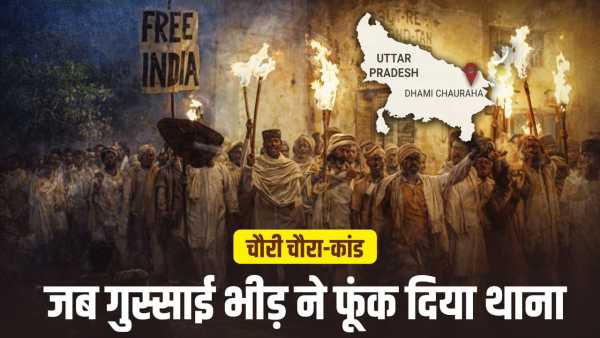
The incident took place on February 4, 1922, at a place called Chauri-Chaura in Gorakhpur district of Uttar Pradesh.
Chauri-Chaura incident is such an epoch-making event of the Indian freedom struggle, which changed the direction of the non-cooperation movement going on the path of non-violence. What happened on February 4, 1922, at a place called Chauri-Chaura in Gorakhpur district of Uttar Pradesh, not only shook the British rule, but also forced Mahatma Gandhi to withdraw his biggest movement.
Let us know the whole story on the occasion of 105th anniversary of Chauri Chaura incident. In this case, the British government had sentenced 172 people to death but only 19 were hanged? What is the truth of this whole matter? Let us understand in detail.
How did the Chauri-Chaura incident begin?
In the year 1920, Mahatma Gandhi started the non-cooperation movement. The main objective of this movement was to peacefully oppose the British rule, boycott foreign goods and adopt Swadeshi. This movement was getting huge public support throughout the country. Chauri Chaura area of Gorakhpur was also not untouched by this. In January 1922, local people intensified their protests against rising inflation and the sale of liquor.
On 2 February 1922, the protesters, led by a retired soldier named Bhagwan Ahir, protested, where the police lathicharged them and arrested several leaders. To protest against this repression, a huge meeting and procession was organized on 4th February.
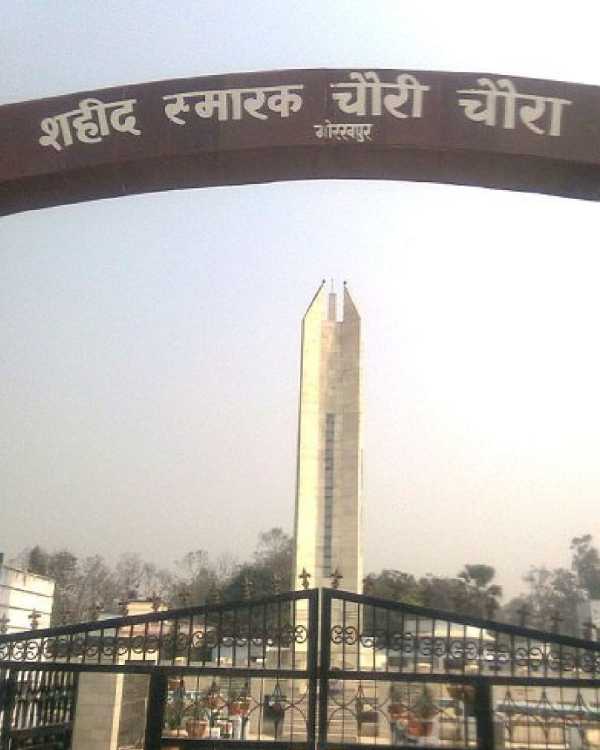
Memorial built in Chauri-Chaura in the name of martyrs.
That historic day of 4 February 1922
On the morning of 4 February, about two-two and a half thousand protesters gathered in Chauri-Chaura market. They were passing in front of the police station while taking out a peaceful procession. Then the police fired bullets in the air to scare the crowd. When the crowd did not step back, the police started firing directly on the protesters, in which three people were martyred and many were injured. The crowd lost its patience after seeing the death of their comrades and police brutality.
The angry crowd started chasing the police force. To save their lives, the policemen hid inside the police station and locked the door from inside. The angry mob surrounded the police station from all sides and set it on fire. 22 policemen were burnt alive to death in this fire. According to some sources the number of policemen killed was 23.
Mahatma Gandhi's decision and return of the movement
When the news of this violence reached Mahatma Gandhi, he was extremely saddened. Mahatma Gandhi believed that the Indian people were not yet completely ready to follow the path of non-violence. He argued that if the movement turned violent, the British government would get an excuse to crush it.
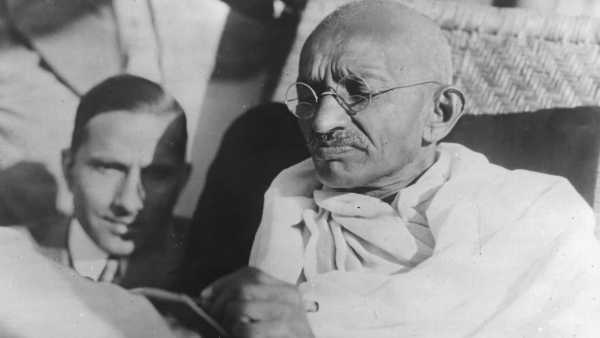
Mahatma Gandhi. Photo: Getty Images
On 12 February 1922, a meeting of the Congress Working Committee was called in Bardoli and Gandhiji announced the withdrawal of the non-cooperation movement with immediate effect. Leaders like Jawaharlal Nehru, Subhash Chandra Bose and Chittaranjan Das were surprised by this decision of Mahatma Gandhi, because the movement was at its peak. But Gandhiji remained firm on his principles and kept a fast for five days to atone for this sin.
Death sentence to 172 and the role of Madan Mohan Malviya
After the Chauri-Chaura incident, the British government started a cycle of repression. Hundreds of people were arrested. The sessions court of Gorakhpur gave its verdict on 9 January 1923, in which 172 out of 225 accused were sentenced to death. This was a dark chapter in Indian judicial history.
Pandit Madan Mohan Malviya advocated against this mass death penalty in Allahabad High Court. It was the result of Madan Mohan Malviya's arguments and legal acumen that the death sentence of 153 out of 172 people was commuted. Ultimately, the death sentence of 19 people was upheld, while the rest were sentenced to life imprisonment or longer prison terms.
Pandit Madan Mohan Malviya.
He Defended And Saved Life of 150 Accused In Chauri Chaura Incident
Four Time He Served as The President of Indian National Congress @INCIndia pic.twitter.com/c1CPuZM0y8
— indianhistorypics (@IndiaHistorypic) December 25, 2025
19 martyrs were hanged
The names of the 19 revolutionaries who were hanged for this incident are immortalized in the pages of history. They were hanged in different jails between 2 and 11 July 1923. These martyrs included Abdullah, Bhagwan Ahir, Bikram Ahir, Dudhai, Kali Charan, Lal Mohammad, Lauti, Madev, Meghu Ali, Nazar Ali, Raghuveer, Ramlagan, Ramroop, Rudrali, Sahdev, Sampat, Shyam Sundar, Sitaram and Vikrami.
Importance and legacy of Chauri-Chaura incident
The Chauri-Chaura incident was not just a violent incident, but it was a manifestation of the pent-up anger within the Indian people, which was the result of decades of colonial exploitation. After the withdrawal of the movement, many types of reactions came to the fore.
- Rise of Revolutionary Movement: Disappointed by the return of the non-cooperation movement, many young leaders became disillusioned with non-violence. Only after this, revolutionaries like Chandrashekhar Azad, Bhagat Singh and Ramprasad Bismil chose the path of armed revolution.
- Realization of Manpower: This incident gave a clear message to the British that if the Indian people became angry, it would become impossible for them to rule India.
- Centenary Celebrations: The Government of India celebrated the centenary of the Chauri-Chaura massacre from 4 February 2021 to 4 February 2022, to honor the unsung martyrs who had not received adequate space in the mainstream of history.
Today, when we celebrate the anniversary of Chauri-Chaura incident, we should understand how difficult the path to independence was. This incident reminds us that the price of freedom was paid with blood. The death sentence awarded to 172 people was a proof of the cruelty of the British justice system, while the sacrifice of 19 people was a story of Indian bravery. The martyrs of Chauri-Chaura are still alive in the soil of Gorakhpur and in the heart of every Indian.
-
Jason Holder returns, Shai Hope to lead as West Indies name strong squad for T20 World Cup

-
Gaddafi’s son Saif al-Islam killed in armed attack in Libya
-
DU Student Groups Hold ‘Equity March’, Demand Immediate Implementation of UGC Equity Regulations
-
Rajasthan: 3-Year-Old Suffers Severe Injuries After Shopkeeper Gives Explosive Instead Of Toffee

-
Bungalow and Chef Vikas Khanna: A Milestone for Indian Cuisine in the West