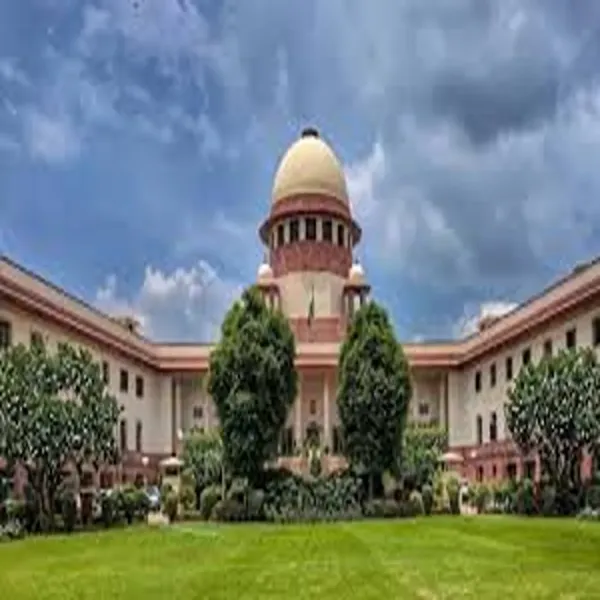
DearnessAllowance – The Supreme Court is expected to announce its much-awaited judgment on petitions related to the payment of Dearness Allowance (DA) to West Bengal government employees, a case that has drawn significant attention from administrative and financial circles across the country. The ruling will address whether state employees are entitled to DA rates similar to those offered to central government staff and whether long-pending arrears must be released.
Background of the Legal Dispute
The matter stems from a challenge filed by the West Bengal government against a 2022 decision of the Calcutta High Court. The High Court had directed the state administration to match DA payments with the rates provided to central government employees. It also instructed the state to clear unpaid DA dues dating back to July 2009. The ruling was viewed as a major relief for thousands of state government workers who had been demanding parity for years.
The state government, however, disagreed with the decision and moved the Supreme Court, arguing that financial policies of individual states differ from those of the Centre and that DA payments are not a legally enforceable entitlement.
Supreme Court Bench and Timeline of Proceedings
The verdict will be delivered by a Division Bench comprising Justice Sanjay Karol and Justice Prashant Kumar Mishra. The apex court had concluded hearings on the case in September last year and reserved its judgment. After nearly five months of anticipation, the court is now prepared to pronounce its final order, which is expected to have wide administrative and financial implications.
Earlier in the proceedings, the Supreme Court directed the West Bengal government to settle 25 percent of the outstanding DA dues within six months. The state administration later sought additional time, stating that immediate compliance would put excessive pressure on its financial resources.
Arguments Presented by the State Government
During the hearings, the state government maintained that DA should not be considered a statutory or fundamental right. Its counsel argued that economic conditions, revenue generation capacity, and fiscal responsibilities vary significantly between the Centre and state governments. According to the state’s submission, these structural differences justify variations in employee compensation policies, including DA rates.
The state also contended that automatically aligning its DA payments with those of the central government could lead to unsustainable financial commitments, potentially affecting welfare schemes and development projects.
Employees’ Stand and Previous Court Observations
Employee associations and petitioners supporting parity argued that DA is meant to offset the impact of inflation on salaries. They maintained that failing to provide DA at comparable rates results in financial hardship for state employees, especially amid rising living costs. The Calcutta High Court had earlier supported this view, stating that DA forms an integral part of employee compensation and cannot be withheld arbitrarily.
The High Court’s observation strengthened employee demands and prompted several legal petitions, ultimately bringing the issue before the Supreme Court.
Possible Impact of the Verdict
The Supreme Court’s decision is expected to influence not only West Bengal but potentially other states facing similar demands from government staff. A ruling in favor of employees could lead to significant financial obligations for the state government, including payment of accumulated arrears over more than a decade.
On the other hand, if the court upholds the state government’s arguments, it could reinforce the authority of states to independently determine compensation structures based on their fiscal capacity.
Wider Administrative and Financial Implications
Experts believe the judgment may also set a legal precedent regarding the classification of DA as either a statutory entitlement or a discretionary component of employee benefits. The outcome could shape future litigation involving public sector wages and influence negotiations between governments and employee unions.
As government employees await clarity, the verdict is likely to play a crucial role in shaping pay policies and administrative decision-making in the coming years.
-
Injury Scare For India Before T20 World Cup, Star Bowler Unable To Walk Properly

-
ABP Live Pet First | 8 Dog Body Language Signals That Show What Your Pet Wants

-
Rupee Inches Up But Rally On Hold As RBI, Trade Deal Clarity Awaited
-
NEET UG 2026: NTA To Begin Registration Shortly At neet.nta.nic.in, Know How To Register

-
Dream Sports Championship Table Tennis 2026 Confirms U-15 Semi-final Line-up After Day 5 Action