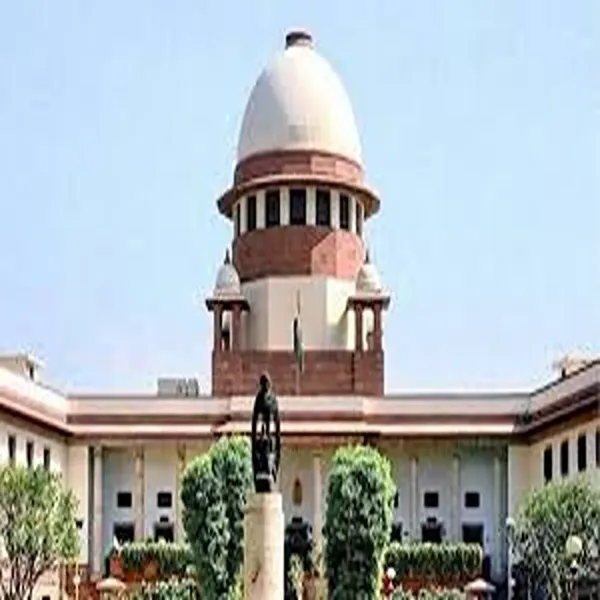
Arrest Procedure – The Supreme Court on Thursday underlined that police authorities must strictly follow the requirement of issuing a formal notice to accused persons under Section 35(3) of the Bharatiya Nagarik Suraksha Sanhita before making an arrest in cases involving offences punishable with imprisonment of up to seven years.
Court clarifies limits on police arrest powers
A bench comprising Justices M M Sundresh and N Kotiswar Singh ruled that arrests cannot be made mechanically in such cases unless the mandatory notice has been properly served. The judges made it clear that failure to comply with Section 35(3) would render any arrest invalid. According to the court, the law places a clear obligation on investigating officers to inform the accused through a notice before resorting to custodial action.
The bench observed that police agencies, including investigating officers and prosecutors, must treat the issuance of notice as the first procedural step. Arrest should follow only if circumstances genuinely justify it and not as a default response during investigations.
Arrest not to be treated as routine action
The court strongly emphasized that arrest is neither automatic nor compulsory. It described arrest as a discretionary measure that should depend on the specific facts and context of each case. The judges cautioned law enforcement authorities against viewing arrest as a routine administrative tool, stressing that such power must be exercised with restraint.
The ruling noted that even after a notice is issued, the decision to arrest must be taken carefully and sparingly. The bench stated that the purpose of the law is to balance effective investigation with protection of individual liberty, particularly in cases involving less severe offences.
Emphasis on justification and transparency
While examining whether notices under Section 35(3) are compulsory for all offences punishable up to seven years, the court answered in the affirmative. It held that any arrest in such cases must be backed by clear reasoning and proper justification.
The judges further explained that even if conditions listed under Section 35(1)(b) of the BNSS appear to support an arrest, police officers must still consider whether detention is absolutely necessary. Arrest, the court said, should be the last option, not the first reaction.
Guidance aimed at preventing misuse
The ruling is expected to serve as a guiding principle for police departments across the country. By reinforcing procedural safeguards, the court aims to prevent unnecessary arrests and reduce misuse of authority, while ensuring that investigations remain effective and lawful.
The bench reiterated that transparency and accountability are essential components of criminal procedure, particularly when personal liberty is at stake. The judgment reinforces earlier judicial views that protecting citizens from arbitrary arrest is a cornerstone of constitutional governance.
Supreme Court grants relief in BCCI-related matter
In a separate development, the Supreme Court modified its earlier 2017 direction concerning former BCCI president Anurag Thakur. The court allowed him to participate in the affairs of the cricket board in accordance with existing rules and regulations.
The modification comes after the court took note of Thakur’s unconditional apology submitted earlier. In its 2017 order, the court had directed him to step away from the board’s activities, a restriction that has now been eased.
Plea seeks fresh hearing on environmental clearances
Meanwhile, the Supreme Court was also urged to constitute a fresh bench to reconsider pleas related to retrospective environmental clearances granted to projects found violating environmental norms. A lawyer informed the court that a three-judge bench should be set up to hear the matter anew.
The request reflects continuing legal scrutiny over environmental compliance and the process through which approvals are granted to development projects.
-
These habits of the child give indications, this is how you can identify if your child is becoming a victim of child abuse.

-
Solution to every kidney problem, Baba Ramdev told panacea Ayurvedic remedies – Read
-
Samsung introduces new camera experience in Galaxy S26 series

-
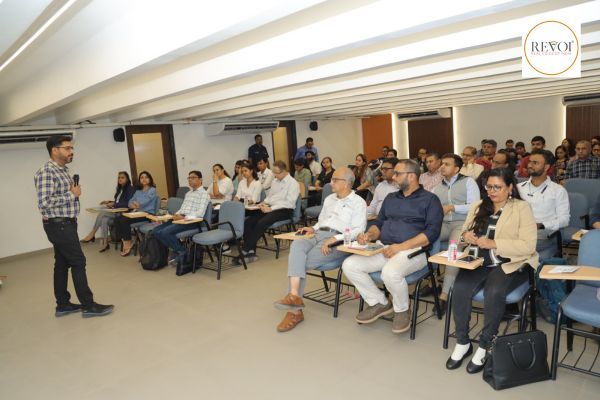
Special session organized at GCCI on use of social media marketing for business growth
-
Single camera but powerful upgrade! Apple brings the cheapest iPhone for its users, know when it will be launched