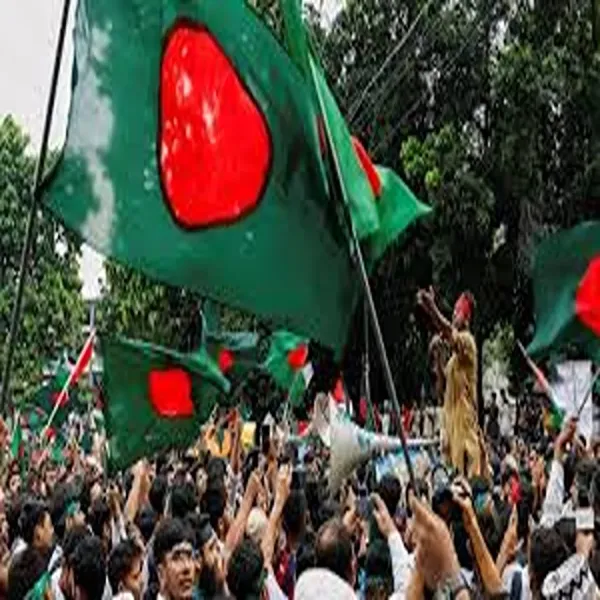
Protests – Large demonstrations unfolded in Dhaka on Friday as government employees gathered to demand the immediate enforcement of the Ninth National Pay Scale, according to local media reports. The protest centered around Jamuna, the official residence of Chief Adviser Muhammad Yunus, where tensions rose as crowds attempted to move closer to the premises.
Demonstrations Intensify Near Jamuna
From early morning, groups of protesters assembled with placards and banners calling for long-awaited salary reforms. As the gathering grew, law enforcement agencies moved in to restrict access to sensitive areas surrounding Jamuna. Barricades were erected, while water cannons and sound grenades were deployed to prevent the crowd from advancing further.
Despite police efforts, demonstrators continued chanting slogans in support of their demands. United News of Bangladesh reported that the protesters remained vocal, insisting their movement was peaceful and solely focused on pay scale implementation.
Protesters Cite Financial Strain
Several participants spoke to local media about the personal impact of stagnant wages. One female protester stated that the sole purpose of their assembly was to press the government to revise salaries in line with the proposed pay scale, stressing that the protest carried no political motive.
Another demonstrator, who was briefly detained during the dispersal, shared his financial struggles. He explained that as the only earning member of his family, his current salary was insufficient to meet household expenses, leaving him with no choice but to join the movement.
March Toward Jamuna Blocked by Police
Earlier in the day, protesters first convened at Shahbagh around 10:30 a.m. local time. From there, they attempted to march toward Jamuna in a coordinated procession. Police intervened multiple times, blocking their route and urging the crowd to disperse. These repeated interventions heightened tensions, eventually leading to confrontations near the Chief Adviser’s residence.
Authorities maintained that the measures were necessary to ensure public safety and protect key government locations, while protesters argued that their right to peaceful assembly was being curtailed.
December Standoff at Bangladesh Secretariat
The latest protest follows a series of earlier confrontations between government employees and officials. In December, staff members from various ministries and divisions staged a dramatic demonstration at the Bangladesh Secretariat, temporarily confining Finance Adviser Salehuddin Ahmed inside his office.
According to reports from Dhaka Tribune, employees gathered outside the adviser’s fourth-floor office, refusing to leave until their long-standing demands for additional allowances were addressed. The situation drew widespread attention due to its intensity and the involvement of senior officials.
Employees Demand Formal Government Notification
The Secretariat protest was led by Badiul Kabir, identified as a factional president of the Bangladesh Secretariat Officers and Employees Combined Council. Speaking to reporters at the time, Kabir emphasized that employees had been waiting for years for official recognition of their demands.
He stated that the protesters would not withdraw until the government issued a formal gazette notification confirming the allowances and benefits they were seeking. The demonstration ended only after assurances of further discussions, though no immediate resolution was announced.
Warning of Stronger Movement Ahead
Tensions have continued to simmer since then. On December 3, Secretariat employees warned of a more forceful movement if their demands were not met within a set timeline. In a memorandum submitted to the Finance Adviser, the organization’s Secretary General, Nizam Uddin Ahmed, stated that employees would escalate their protests from January 10 if no gazette notification on the pay commission was issued by the end of December.
As negotiations remain unresolved, Friday’s protest near Jamuna underscores the growing frustration among public sector workers. With warnings of further action already on record, the coming weeks may prove critical in determining how the government addresses pay reform demands across its workforce.
-
Uttarakhand 4th Grade Vacancy 2026: Recruitment for 2364 posts of fourth grade in Uttarakhand..

-
iPhone: A major update is coming for iPhone users, bringing several features including the ability to transfer data to Android..

-
A Korean dating game claimed the lives of 3 sisters; here's how to keep an eye on your children's online gaming..

-
YRF Rejects Claims Of Using Delhi ‘Missing Girls’ Panic To Promote ‘Mardaani 3’
-
ABP Exclusive | Opposition Overreacted, Disrupted Parliament Unnecessarily: Chirag Paswan
