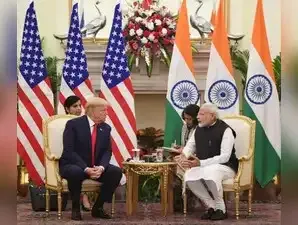
India and the United States have reached a framework for an Interim Trade Agreement that sets out areas where India will gain improved access to the US market. The framework reaffirms both countries’ commitment to continue talks on a broader US-India Bilateral Trade Agreement launched earlier this year by President Donald Trump and Prime Minister Narendra Modi.
The agreement focuses on reciprocal and balanced trade and is intended to deliver concrete outcomes while supporting more resilient supply chains between the two countries.
Also Read| Lower tariffs, bigger buys: India-US sketch $500bn trade plan
These products include generic pharmaceuticals, gems and diamonds, and aircraft parts. The move is aimed at improving market access for Indian exporters in sectors where India has strong export capacity.
India will also receive a preferential tariff rate quota for automotive parts that are otherwise subject to US national security tariffs on automobiles and auto components. This provides Indian auto part manufacturers an advantage in the US market compared with non-preferred suppliers.
This keeps open market access for Indian drug makers, who play a major role in supplying generic medicines to the United States.
The agreement also includes the establishment of rules of origin to ensure that the benefits of the deal mainly accrue to India and the United States.
Also Read| US drops 25% tariff on India goods tied to Russian oil buys
The framework also allows India to adjust its commitments if the United States makes changes to the agreed tariff structure in the future.
This provides scope for additional tariff reductions as talks progress beyond the Interim Agreement.
Trade in technology products, including graphics processing units and goods used in data centres, is expected to increase, along with expanded joint technology cooperation.
The United States and India have said they will move quickly to implement the framework and work toward finalising the Interim Agreement, with the goal of concluding a mutually beneficial Bilateral Trade Agreement in line with the agreed roadmap.
The agreement focuses on reciprocal and balanced trade and is intended to deliver concrete outcomes while supporting more resilient supply chains between the two countries.
Also Read| Lower tariffs, bigger buys: India-US sketch $500bn trade plan
Tariff relief planned for key Indian exports
Under the framework, the United States will apply a reciprocal tariff rate of 18 percent on Indian goods. However, after the Interim Agreement is concluded, the United States has committed to removing these tariffs on a wide range of Indian products.These products include generic pharmaceuticals, gems and diamonds, and aircraft parts. The move is aimed at improving market access for Indian exporters in sectors where India has strong export capacity.
Aircraft and auto parts to get better access
The United States will remove tariffs on certain aircraft and aircraft parts from India that were earlier imposed under national security-related measures covering aluminum, steel, and copper imports.India will also receive a preferential tariff rate quota for automotive parts that are otherwise subject to US national security tariffs on automobiles and auto components. This provides Indian auto part manufacturers an advantage in the US market compared with non-preferred suppliers.
Pharmaceuticals included, subject to US review
Generic pharmaceuticals and pharmaceutical ingredients from India are included in the framework. Subject to the findings of a US investigation under Section 232, India will receive negotiated outcomes related to these products.This keeps open market access for Indian drug makers, who play a major role in supplying generic medicines to the United States.
Preferential market access across sectors
Both countries have committed to providing each other preferential market access in sectors of respective interest on a sustained basis. This commitment is intended to support stable and predictable trade conditions for Indian exporters.The agreement also includes the establishment of rules of origin to ensure that the benefits of the deal mainly accrue to India and the United States.
Also Read| US drops 25% tariff on India goods tied to Russian oil buys
Easing standards and compliance requirements
To improve ease of trade, India and the United States will discuss standards and conformity assessment procedures in mutually agreed sectors. This is aimed at reducing compliance challenges for Indian exporters entering the US market.The framework also allows India to adjust its commitments if the United States makes changes to the agreed tariff structure in the future.
Scope for further tariff cuts under full trade deal
During negotiations for the broader Bilateral Trade Agreement, the United States has said it will take into consideration India’s request to further lower tariffs on Indian goods.This provides scope for additional tariff reductions as talks progress beyond the Interim Agreement.
Technology and supply chains in focus
The framework places strong emphasis on economic security and supply chain resilience. India and the United States will work together on investment reviews, export controls, and addressing non-market policies of third countries.Trade in technology products, including graphics processing units and goods used in data centres, is expected to increase, along with expanded joint technology cooperation.
Digital trade and next steps
The agreement also addresses digital trade. Both sides have committed to tackling discriminatory or burdensome practices and to setting a clear pathway for strong digital trade rules under the broader trade agreement.The United States and India have said they will move quickly to implement the framework and work toward finalising the Interim Agreement, with the goal of concluding a mutually beneficial Bilateral Trade Agreement in line with the agreed roadmap.